
Changes After Construction
The mosque was built in 1655 by Abbas Ağa, who served as Agha of the Darüssaade, the official responsible for the Imperial Harem, between 1668 and 1670.
It is thought, though not certain, that the building was designed by Mustafa Ağa bin Abdülmennan, chief architect of the Imperial Architects’ Corps of the period.
In 1834, it underwent a comprehensive repair by order of Sultan Mahmud II.
During the reign of Sultan Abdülhamid II, the mosque and its minaret were repaired, and a wooden residence was added for the mosque staff.
In 1944, the building was transferred to the Turkish Grain Board and was used for a time as a flour warehouse.
After various restorations in the 20th century, it acquired its present form.
Featured Highlights
Built with ashlar stone walls, the structure has a wooden roof covered with tiles.
It is one of the rare mosques with a sultan’s gallery.
Next to the mosque stands a fountain dated 1669.
Over time, the district in which the mosque is located came to be known as Abbasağa Quarter.
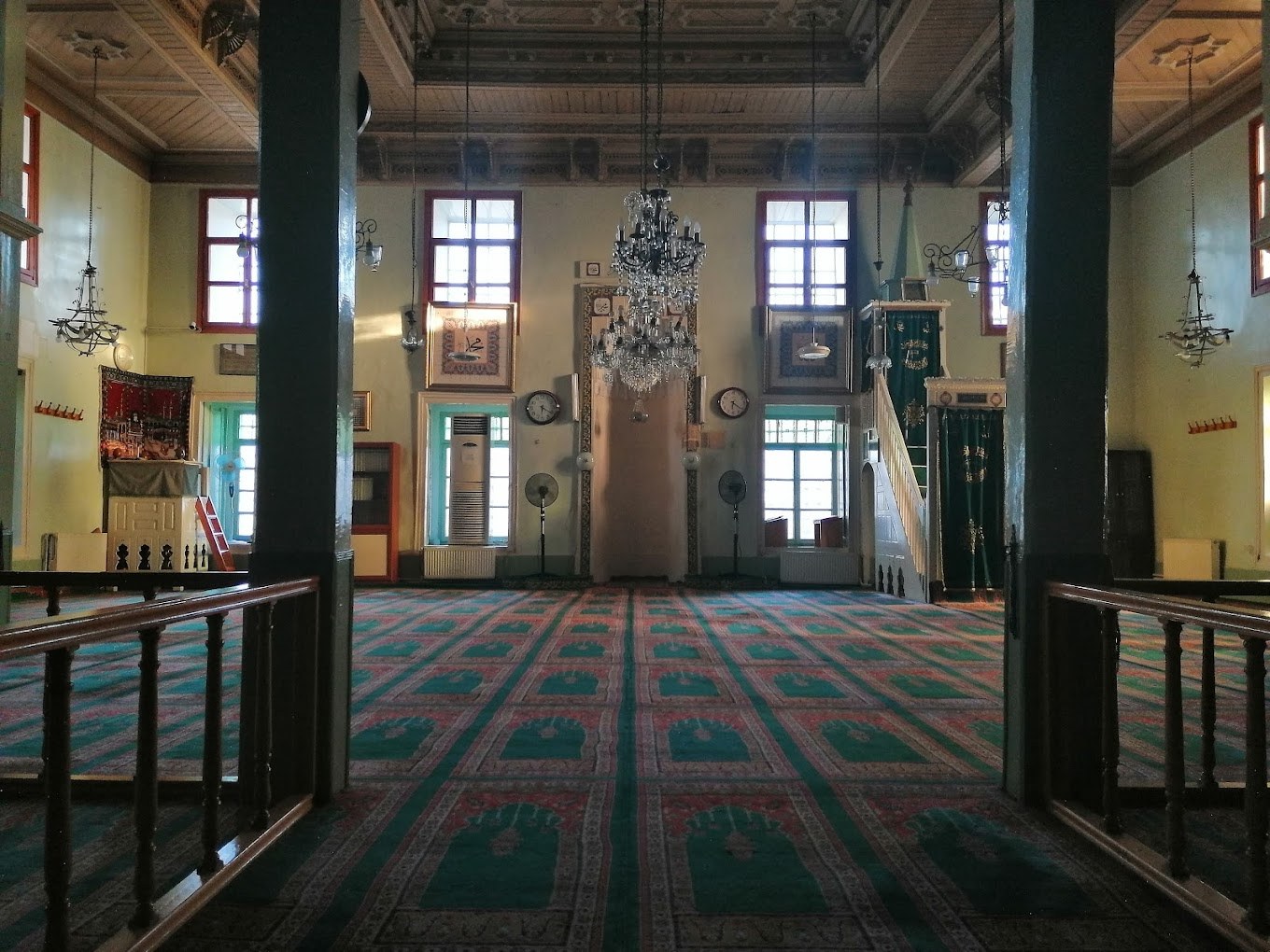
The interior has a wooden ceiling and contains geometric decorations, gilded motifs, and elegant examples of Ottoman woodwork.
The mosque’s minaret rises on a square base, has a cylindrical shaft, and features a single balcony.