Changes After Construction
After World War I it was devastated and in the 1920s and became a plot of land.
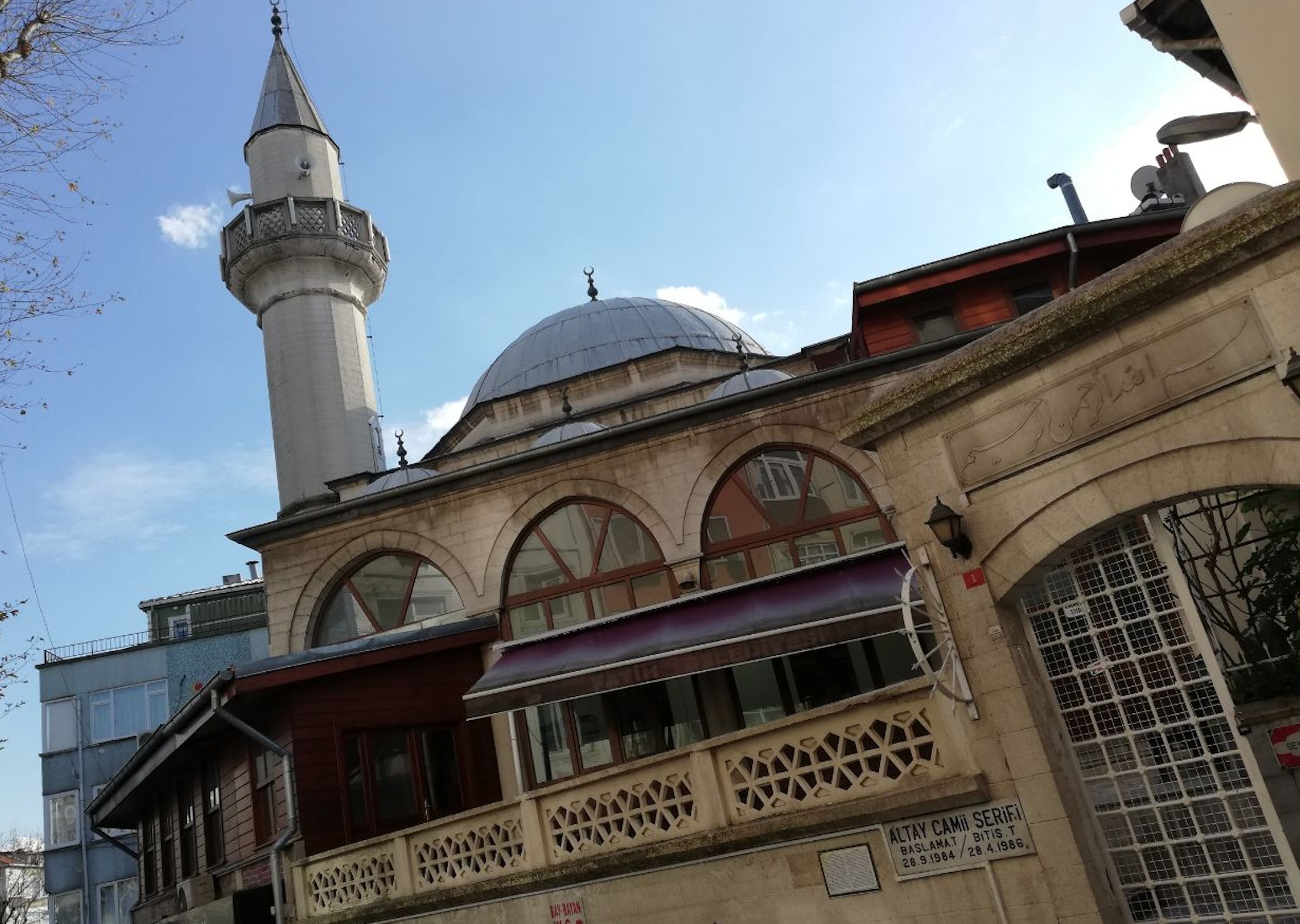
It was rebuilt by the Mosque Reconstruction Association under the control of the Foundations Administration in 1984. It was opened for worship in 1987.
Featured Highlights
It was built in the classical style; its main dome is placed on an eight-sided drum on 4 walls, and the arcades in the narthex are covered with 3 small domes.
Its single-balcony minaret is made of stone. It has a main gate.
The mihrab is decorated with Kütahya tiles; the minbar, the pulpit and the gallery are decorated with wooden decorations.
Its dome is decorated with carvings, embroidery and inscriptions.
There is a small, well-maintained cemetery in the courtyard.
Its pulpit, minbar and gallery are made of wood; its mihrab is made of tiles.
There are shops belonging to the foundation under the mosque.
There is a small burial ground in its courtyard and its founder is buried there.