
Changes After Construction
During World War II, the Land Office attempted to expropriate the building, but this attempt was abandoned because it was determined that the building could not withstand the load of food supplies.
It underwent a major renovation in 1960.
Between 2001 and 2004, repair and painting work was carried out without damaging the historical texture.
Over time, some sections were used for mufti services.
Featured Highlights
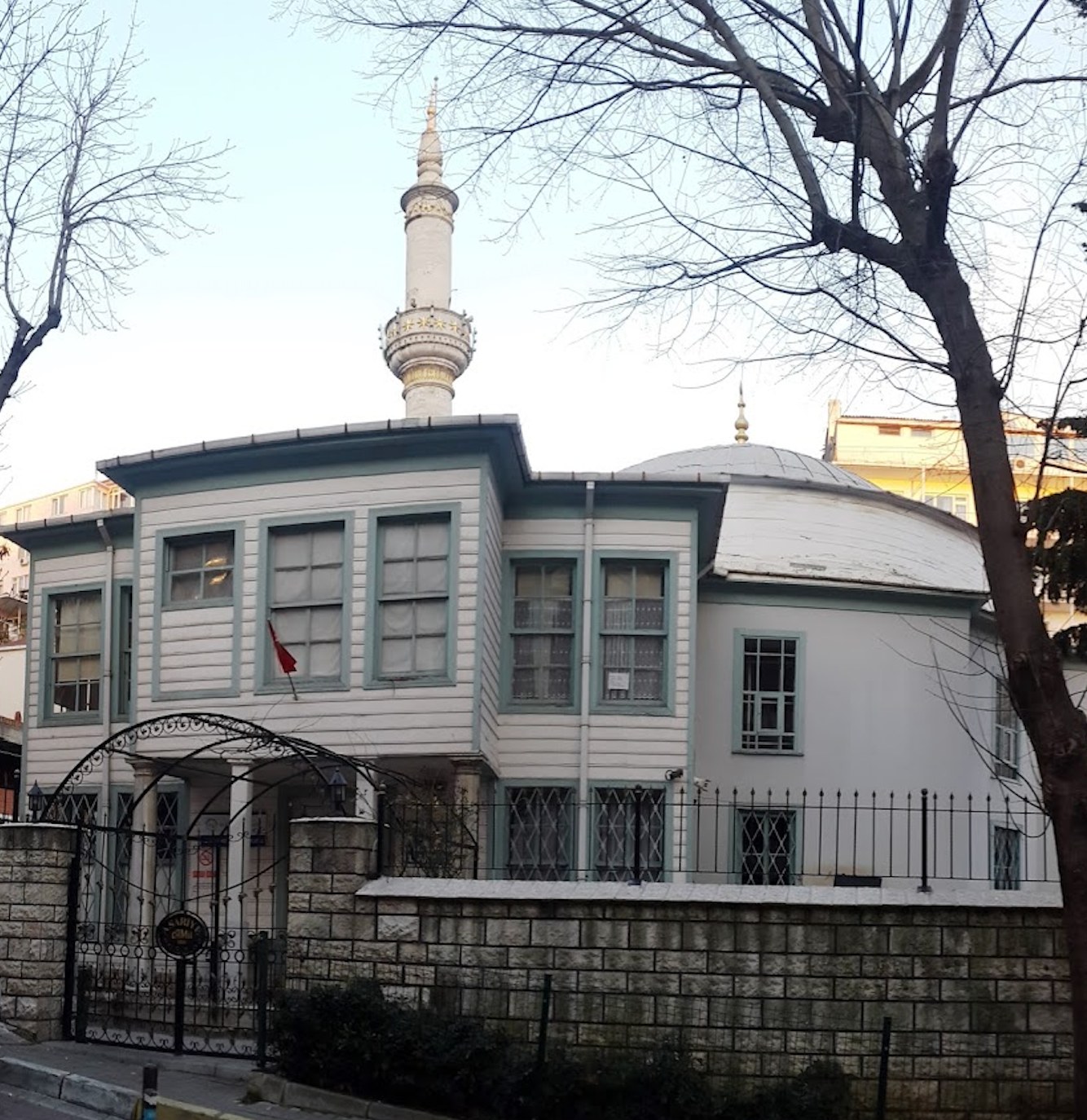
The circular planned masonry prayer hall is covered with a single dome.
There is a wooden Sultan’s Lodge, a muezzin's gallery and a women's gallery.
Its minaret, built on a high square-section cut stone base, has a single balcony.
The mosque has two entrances: The door on the west side opens to the Sultan’s Lodge, and the door on the north side opens directly into the mosque.
The interior is circular, unlike conventional mosque plans.
The dome surface is divided into eight sections and decorated with leafy wreaths and ribbon motifs.
The wooden minbar, brass candlesticks and mihrab bear the architectural features of the period of Sultan Mahmud II.
Its exterior façade and the Sultan’s Lodge have a baroque influence with its columned entrance and exit sections.
The Sultan's Lodge, located in the northwest corner of the mosque, is one of the most striking parts of the building with its special entrance.
The most striking feature of the minaret is its conical cap in the shape of a Mevlevi Sikke (Ceremonial headgear of the Mawlawi Order).