Changes After Construction
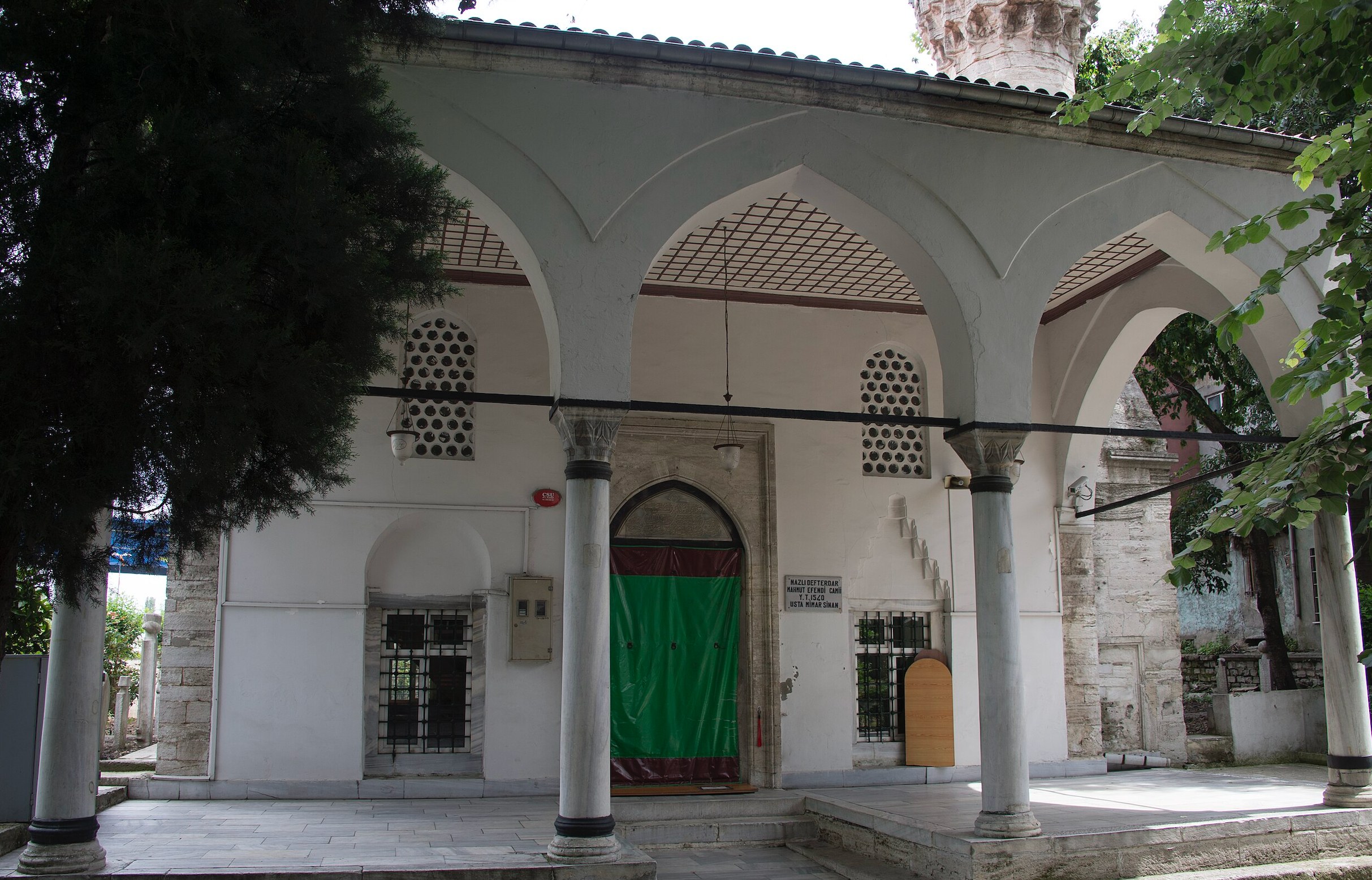
The mosque was damaged in the 1766 earthquake. During the repairs, the original portico of the mosque was demolished and a wooden narthex was added.
In the 1940s, the pencil figure on the mosque's minaret fell; in the 1970s, the inkwell also disappeared.
In 1973, the courtyard gates opening onto Defterdar Street remained in a pit due to the road elevation.
During the coastal clearing works carried out on the Golden Horn in 1985, the coffeehouses and shops on both sides of the dock were demolished.
In 1997, the inkwell and pen box in the mosque's finials fell down due to a storm and were replaced in 2007.
As of November 2023, the mosque has been closed to worship for restoration purposes.
Featured Highlights
The mosque is built with a rectangular plan of regular cut stone. It has a tiled wooden roof and it is known that the top of the Harim is not covered with a dome. The main door of the mosque is not in the middle of the narthex but on the right side.
The narthex was originally built on masonry columns and was later replaced with a wooden portico. The mosque's minaret is a low, traditional minaret.
Since the mosque's benefactor was a calligrapher, the minaret finial was designed in the form of a pen and an inkwell. The pen figure was lost in 1766 and the 1940s, and the inkwell in the 1970s; it was re-added in 2007.
The tomb of its founder, Nazlı Mahmud Çelebi, located in the graveyard of the mosque, consists of a tomb with four marble columns and four pointed arches. It is in the classical style and is decorated with elegant workmanship.
To the left of the mihrab, there is a tile panel depicting the Kaaba, which is rare in Ottoman tile art.
The fountain, made of cut stone in the classical style and located on the street side wall of the mosque, dates back to 950 AH (1543-44) and is one of the oldest fountains with inscriptions that have survived to the present day in Istanbul.