
Changes After Construction
Official records state that a small mosque built in 1710 once stood on the site of the present structure.
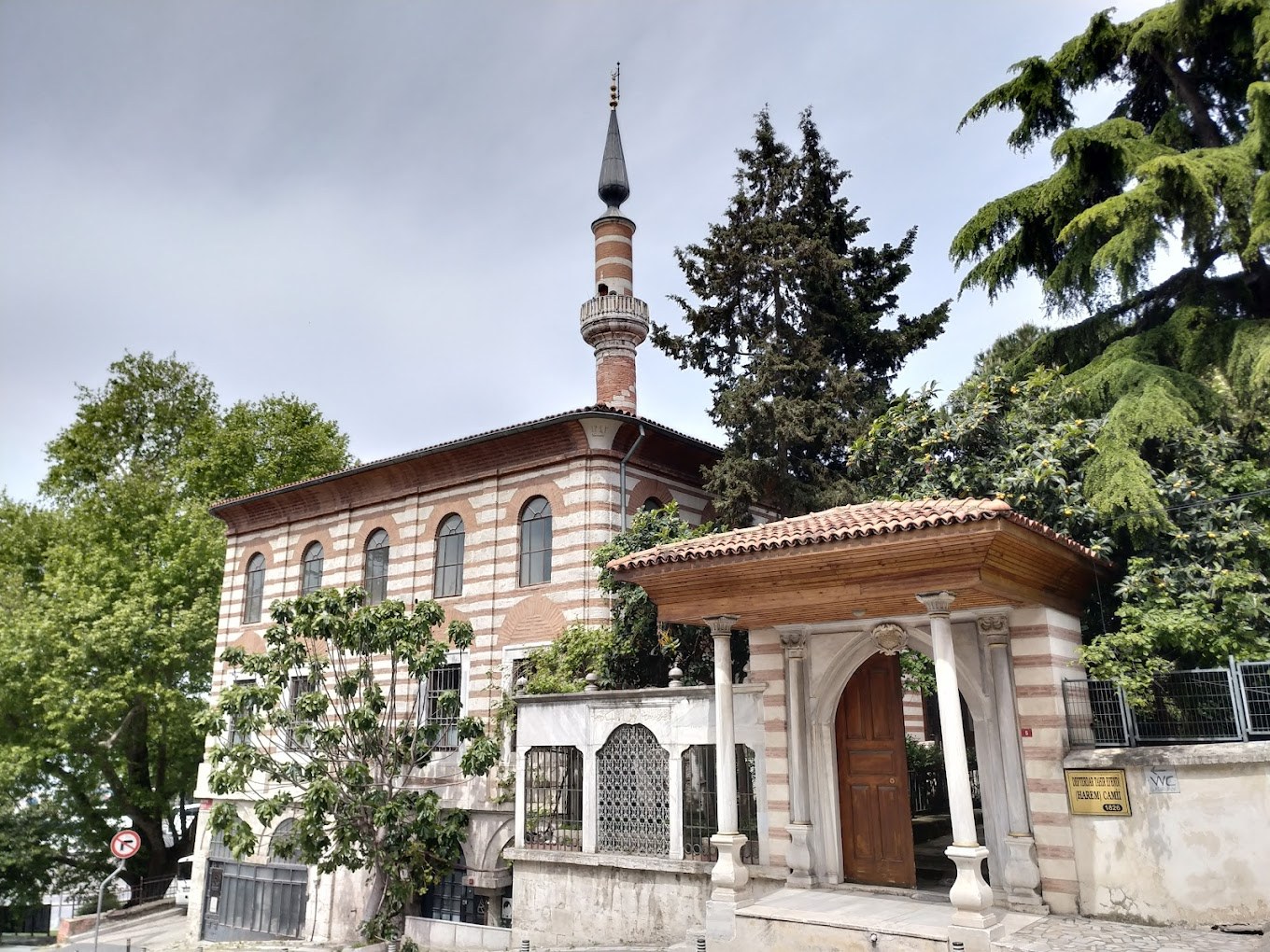
In 1826, the present mosque was built in place of the old, ruined mescid by the Ottoman statesman and tughrakesh Mehmed Tahir Efendi.
It underwent a comprehensive repair in 1898; the northern side was extended and Western-style decorations were added.
The primary school built to the north of the mosque by Defterdar Tahir Efendi has not survived; a hotel was later built in its place.
Two fountains were built adjoining the northern wall of the mosque courtyard, together with a third fountain facing west; only one of these fountains has survived to the present day.
Featured Highlights
Also known as Harem Mosque or Harem İskele Mosque, the structure stood by the seashore when it was first built.
The mosque has a plain design reflecting the Empire style and is constructed of ashlar stone and brick. Its roof is also wooden and tiled.
The mosque courtyard has two entrance gates; the main gate on the street is built with marble workmanship in the Turkish Baroque style and has a canopy.
The mihrab features a hanging oil-lamp motif; the pulpit and preacher’s platform are made of wood and decorated with green and gilded paint.
The panel bearing the inscription “Yâ Hazret-i Bilâl-i Habeşî” and the ketebe record of Tahir Efendi is among the mosque’s original elements.
Its single-balconied brick minaret is decorated with white ashlar stone details and ends in a tapering conical cap.
The patron of the mosque, Mehmed Tahir Efendi, was one of the most important tughrakesh of his period. A tughrakesh was an official of the Imperial Council responsible for drawing the sultan’s signature on official decrees, treaties, and letters.