
Changes After Construction
After the first construction, the tomb of Abu Dharr al-Ghifari, one of the Companions of the Prophet Muhammad, was discovered as a result of a dream seen by its founder, and it was revived and is also known as the "Ebuzer Gıfari (Abu Dharr al-Ghifari) Mosque".
In 1812, it was rebuilt from cut stone by Nakşidil Valide Sultan; during this process, the tomb of Abu Dharr al-Ghifari was also revived.
It remained well-maintained until the end of the Ottoman Empire, then fell into ruin due to neglect; only its mihrab remained.
It was completely rebuilt by the Foundations Administration and opened for worship in 1996.
Featured Highlights
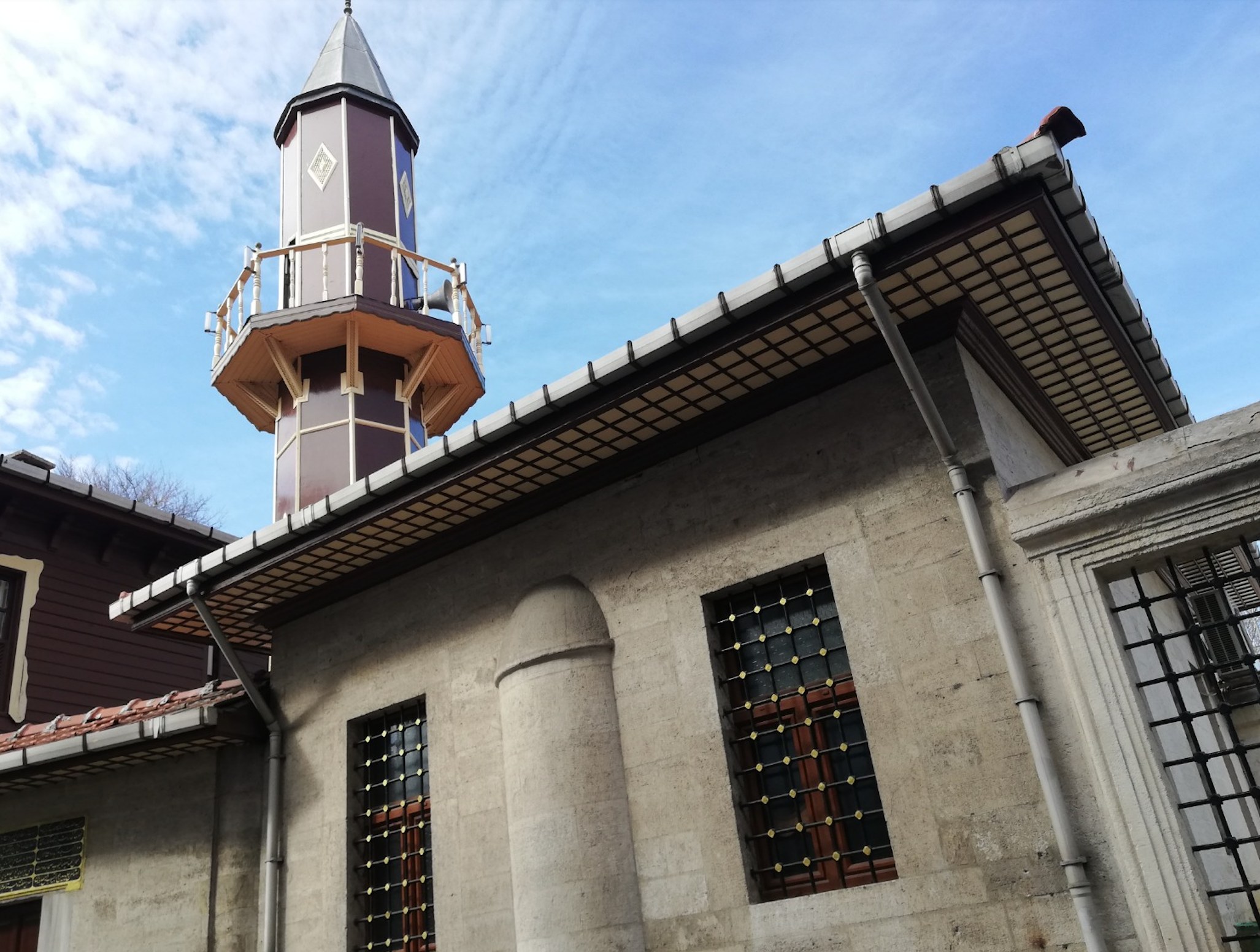
It is built of cut stone and has two rectangular windows.
It has a wooden roof covered with tiles and wide eaves.
The qibla wall was carved and the mihrab was made outwards; the mihrab is made of stone and attracts attention with its simple design.
Both the minbar and the ceiling are made of wood; the ceiling has a flat structure divided by slats.
It has a single-balcony minaret made of wood and surrounded by iron railings.
The mosque continued its existence as an important center of worship in the past; it gained a mystical atmosphere under the influence of dreams and companions, and for this reason it was known by different titles.