Changes After Construction
Fatih Masjid was commissioned by Mehmed the Conqueror in the courtyard of Yedikule Fortress following the conquest of Istanbul; this historical act is important both because it was one of the first intramural masjids witnessing the conquest and because it established a direct link between the military structure and the religious rituals of the city.
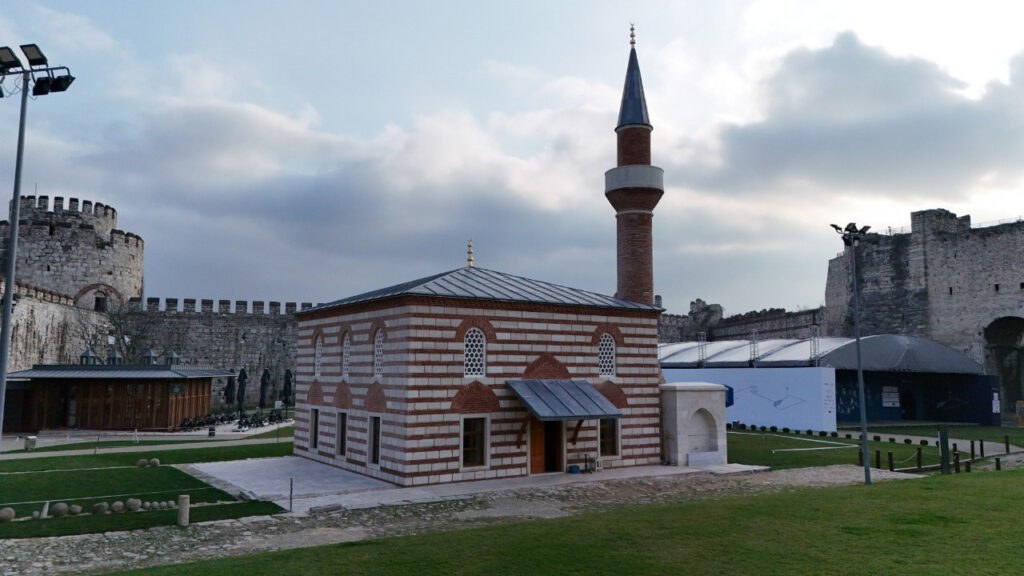
Of the original structure of the masjid, only part of its minaret has survived to the present day; over time, most of the structure was demolished, and it largely lost its architectural integrity especially because of environmental factors and human interventions continuing since the Byzantine and Ottoman periods.
From the 2020s onward, a long-term restoration and revival process was initiated by Fatih Municipality; the minaret, dome, and spiritual symbols of this historical masjid in Yedikule Fortress were rearranged in keeping with an understanding faithful to the original, and it is being prepared to be reopened for worship in accordance with its former function.
A historical fountain structure located immediately next to the masjid was also refunctionalized; this context is noteworthy in terms of preserving the historical fabric of Yedikule Fortress both for worship and for social life.
Featured Highlights
Fatih Masjid is one of the earliest structures to establish an architectural link with the religious rituals of the moment of conquest, as one of the first intramural masjids built immediately after the conquest of Istanbul.
The plain structure of the masjid, positioned parallel to the courtyard of Yedikule Fortress, with its rectangular plan and tile-covered roof, carries typological features responding to the need for an Ottoman military and daily worship space in the 15th century.
The intramural location of the masjid offers historical contexts that should be considered together with Byzantine-period monumental gateways such as the Golden Gate; this shows that the structure is not only a place of worship, but also part of the transformed spatial identity of the city after the conquest.
In the restoration process, especially the faithful revival of the details in the minaret and domes was handled in a way that could sustain the spatial and spiritual continuity of Ottoman architectural symbols.
The revitalization of Fatih Masjid together with the historical fountain and Fortress fabric around it as a structure complex contributing to cultural and social continuity strengthens the meaning of the structure for visitors both historically and architecturally.