
Changes After Construction
The earthquake of 1648 caused damage to the minaret and the courtyard walls; the chimneys of the eight cells of the madrasa collapsed.
Sabîh Ali Efendi had a minbar installed in the masjid; with this intervention, the structure acquired the function of a mosque.
The 1894 earthquake caused severe damage to the structure; two walls collapsed completely, and the part of the minaret above the balcony fell down.
In the records dated 1914 and 1918, the structure was assessed as being in a ruined condition and was removed from the official roster by the administration.
In the period 1930–1960, the masjid remained in ruins; the madrasa section remained neglected and saw uses for sheltering purposes.
In the recent period, its surroundings were cleared through expropriation; the structure was arranged within a university property, and the boundaries of the site were incorporated into institutional use.
Featured Highlights
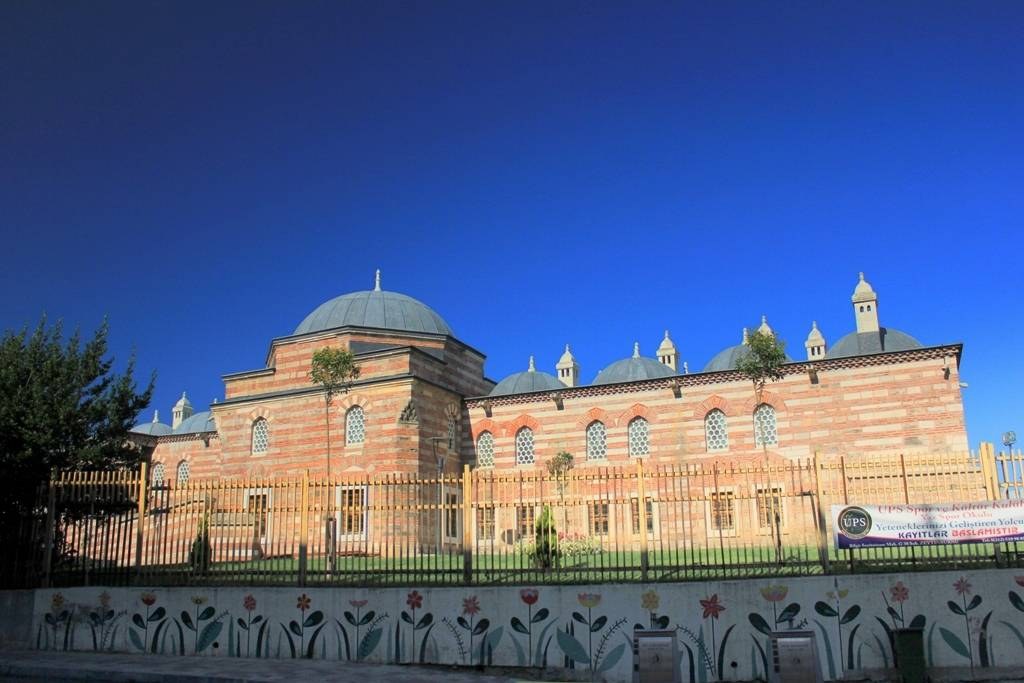
The madrasa is the educational structure of a small complex formed by the conversion of a small Byzantine-period church (chapel) into a masjid.
Mimar Sinan incorporated the structure into the integrity of the complex by building the madrasa around the masjid.
The madrasa was positioned on one side of the courtyard and outside the masjid in a way that would fit the street fabric.
In the plan, there is an arrangement of a large domed classroom at the center and cells with domed porticoes in front of them; in the survey, an arrangement of 11 cells, one of them small, and one classroom is given.
Marble columns with baklava capitals were used in the porticoes; the arch of the classroom door was made in an interlocking pattern with two-coloured stones.
In the interior, a stamped ornamental band on plaster was found; a part of this band is today in a museum collection.