
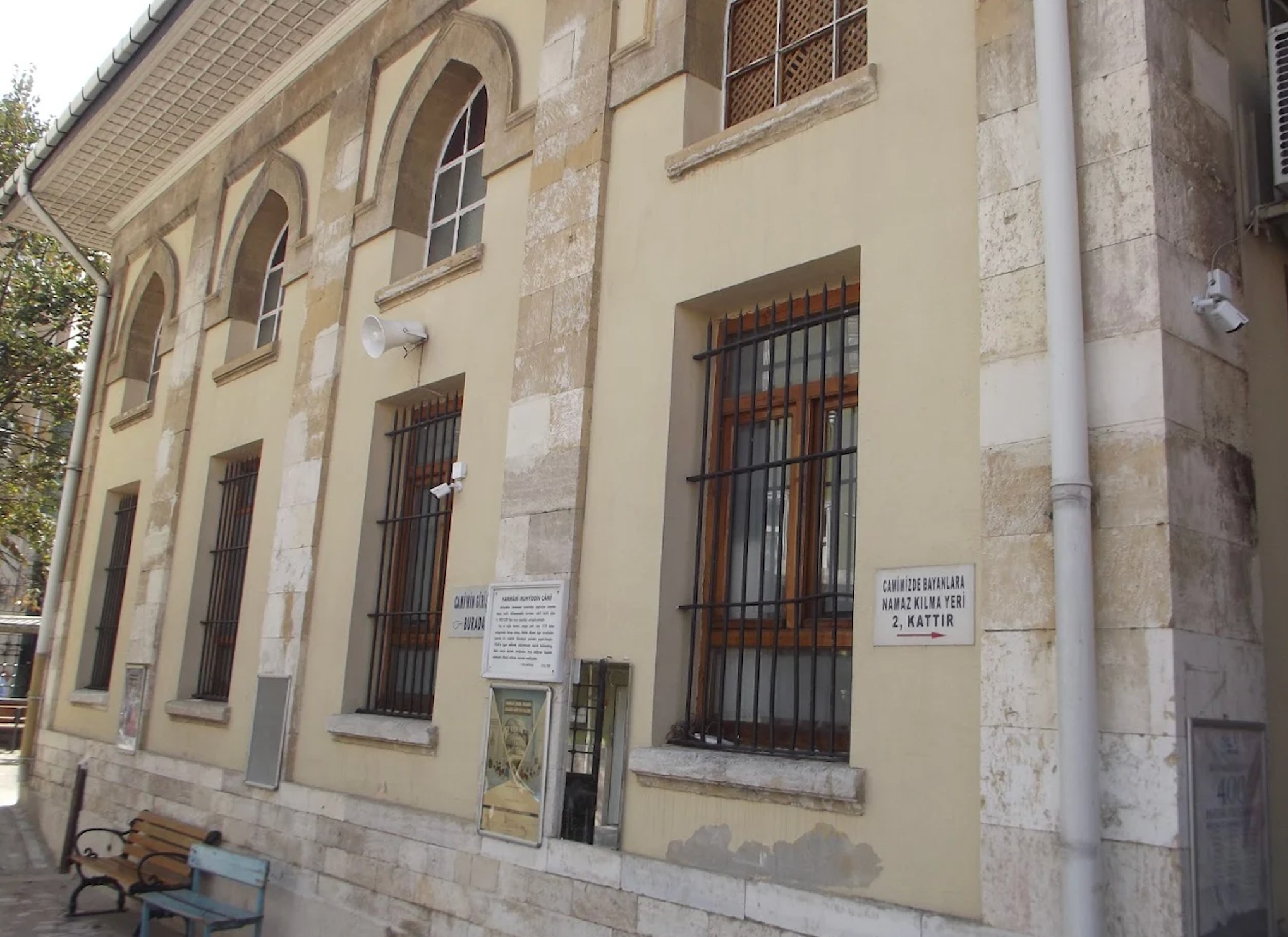
Changes After Construction
This mosque was destroyed in the Balat fire of 1729 and was rebuilt by Melek Ahmed Agha by adding a school next to it, as the state officials ordered the mosques that were burned in this fire to be rebuilt.
In 1954, the mosque was occupied and used as a foundry, and later it was revived and opened for worship by an association established by the locals.
Featured Highlights
Also known as the “Kesme Kaya Masjid” or “Muhiddin-i Hamami Mosque”
Its mihrab is made of tiles, its minbar is made of lathe wood, and its pulpit, ceiling and women's gallery are also made of wood.
The women's gallery is accessed by stairs from the muezzin's gallery on the right. The interior of the mosque is covered with paneling about one meter from the ground.
The inscription “Fatih’s Bathkeeper Haham-i Muhiddin Mosque - 1140” is placed above the courtyard entrance gate.
The grave of Hamam-ı Muhiddin, the founder of the mosque, is in front of the mihrab.