Changes After Construction
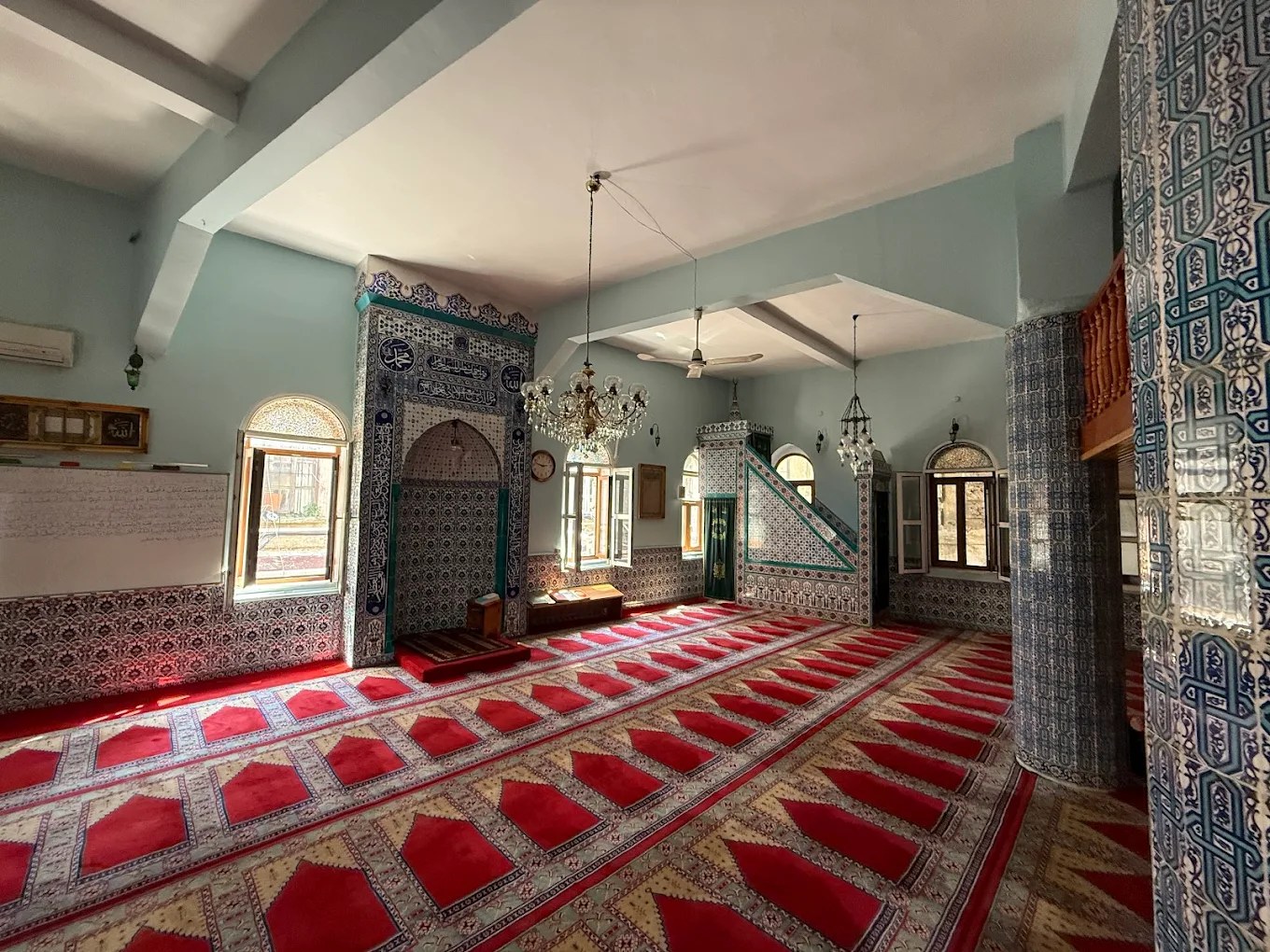
The masjid is referred to as a structure dated to the early 16th century, together with the record in the inscription/tombstone text indicating the date Hijri 911 / 1505.
The surrounding urban fabric in which the masjid was first established changed over time; as a result of the han structure built in a later period enclosing the masjid, the place of worship remained within the han courtyard.
The repairs and transformations of the han over time reduced the public visibility of the masjid; the structure remained under environmental pressure in a way that could also subject it to uses outside its purpose for a period.
In recent assessments, the masjid is stated to be closed.
Dated and detailed intervention records regarding the repairs the masjid underwent are limited.
Featured Highlights
Its location within a han courtyard distinguishes the masjid from the classic “neighborhood masjid” type; the place of worship and the trade/han use coexist side by side in the same courtyard.
The ascent to the structure by a few steps is a spatial detail that makes the relationship between the courtyard level and the place of worship more distinct.
The grave in the same courtyard, associated with its patron, gives the masjid a layer of “worship + visitation/remembrance”; the date and identity information on the grave are among the elements that directly carry the memory of the structure.
The fountain and inscribed water structures in the courtyard make it possible for the masjid to be perceived not only as a place of worship, but also with the logic of a small complex that meets the daily need for water/ablution.
The names “İmam Hanı,” “Camili Han,” and “Ahi Durmuş Baba” circulating together show that the structure is a place of worship that lives in urban memory under multiple names and is referred to in different contexts.