Person in the Tomb
According to tradition, Karaca Ahmed was the son of Süleyman al-Khorasani, ruler of the Persian lands. He initially lived a life of pleasure before turning to dervishhood. He came to Anatolia, participated in the conquest of Geyve Akhisar, and after the Battle of Pelekanon during the reign of Orhan Gazi, settled in Üsküdar where he founded the tekke and tomb that bear his name.
His tekke served as a buffer zone on the Ottoman-Byzantine border. He was associated with Saint George in the Balkans, aiding in the spread of Islam.
His affiliation with the Bektashi order is linked to Abdal Musa.
Tombs and symbolic graves attributed to him are found in Istanbul, Afyon, and Manisa. He is popularly remembered as a great saint known for healing mental illnesses—a belief that persists to this day.
About the Mausoleum
- Year Built
- Commissioned By
- Architect
- Location
Featured Highlights
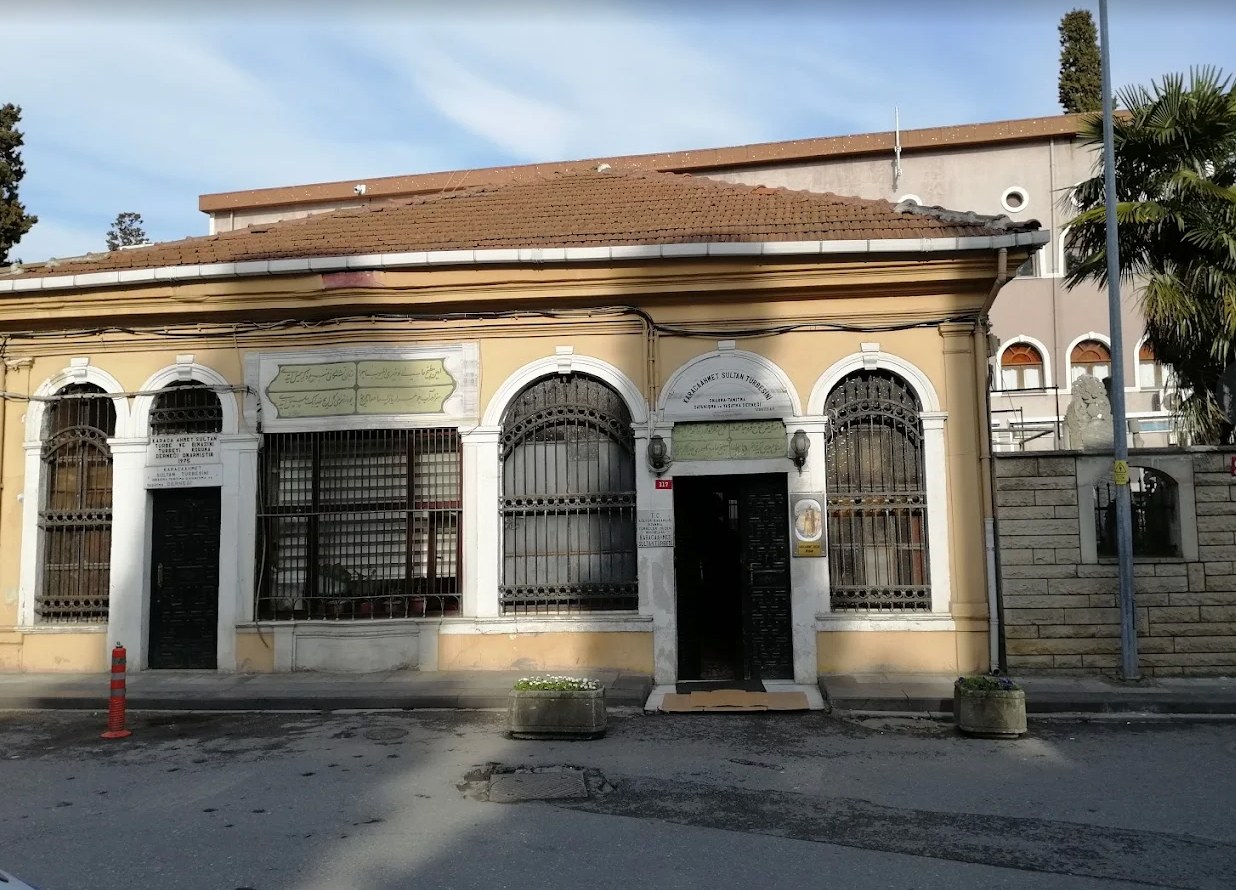
The tomb is a rectangular structure built of finely cut stone.
It has a hipped roof.
An inscription dated 1866 above the entrance states that the building was restored by Ziya Bey, the Matbah-ı Amire Emini (Chief of the Imperial Kitchen).
The cornices continuing over the arches give a wavy appearance outward.
The interior is illuminated by high, round-arched windows. The entrance facade and interior are modest in terms of decorative elements, with blind round arches on two sides.