Changes After Construction
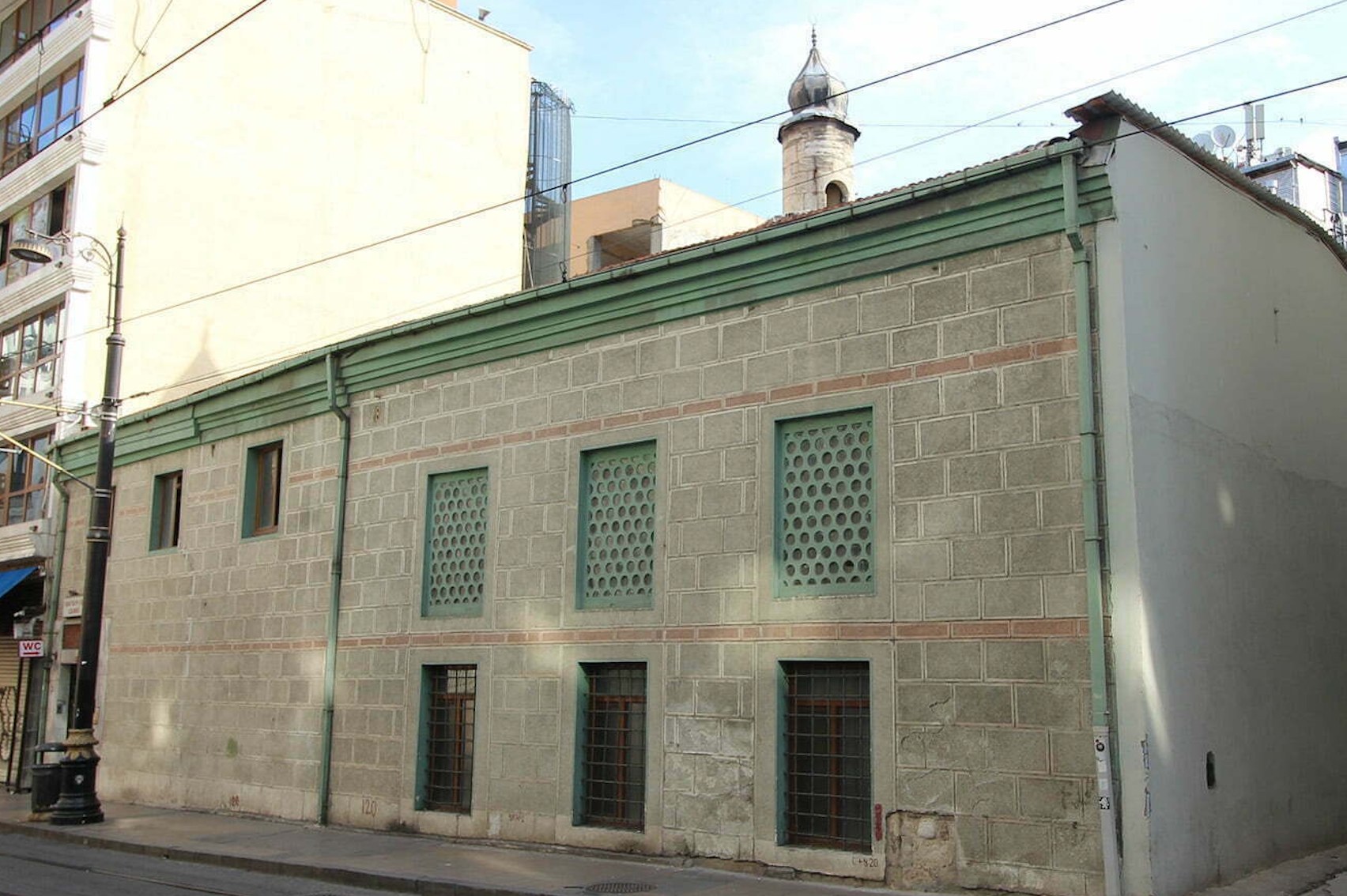
It was rebuilt by Minister of Protocol Affairs, Mumtaz Ebubekir after a great fire in 1871; cut stones and iron railings were used.
During the widening of the tramway in 1938, the minaret that overflowed onto the street was demolished and moved to the courtyard.
The wooden ceiling was rebuilt in concrete due to decay.
Featured Highlights
It is also known as Salkım Söğüt, Karaköy, Karakedi and Kara Kadı Mosque.
It attracts attention with its walls built of cut stone, wooden pulpit and minbar; its mihrab is covered with tiles. It has no dome and a roofed structure. The interior walls are covered with paneling (a joinery wall made of hard or semi-hard components).
It is located in one of the first Muslim neighborhoods of Istanbul before the conquest and was founded according to the agreement made with Byzantium.
The name of the mosque is based on the name used by Kadı Hüseyin Çelebi, who came from the city of Karak in Jordan. It is also possible that the name of the mosque is Kara Kadı, which is due to him being a Qadi.