
Changes After Construction
At its initial foundation, the structure was a zawiya; in the 17th century, a minbar was added and it was converted into a mosque.
It fell into ruin over time; for a long period, only the minaret base and its graveyard remained.
The mosque was completely rebuilt in 1984.
Featured Highlights
The structure is popularly known not only as “Kovacı Dede Mosque” but also as “Koğacı Dede Tomb Masjid.”
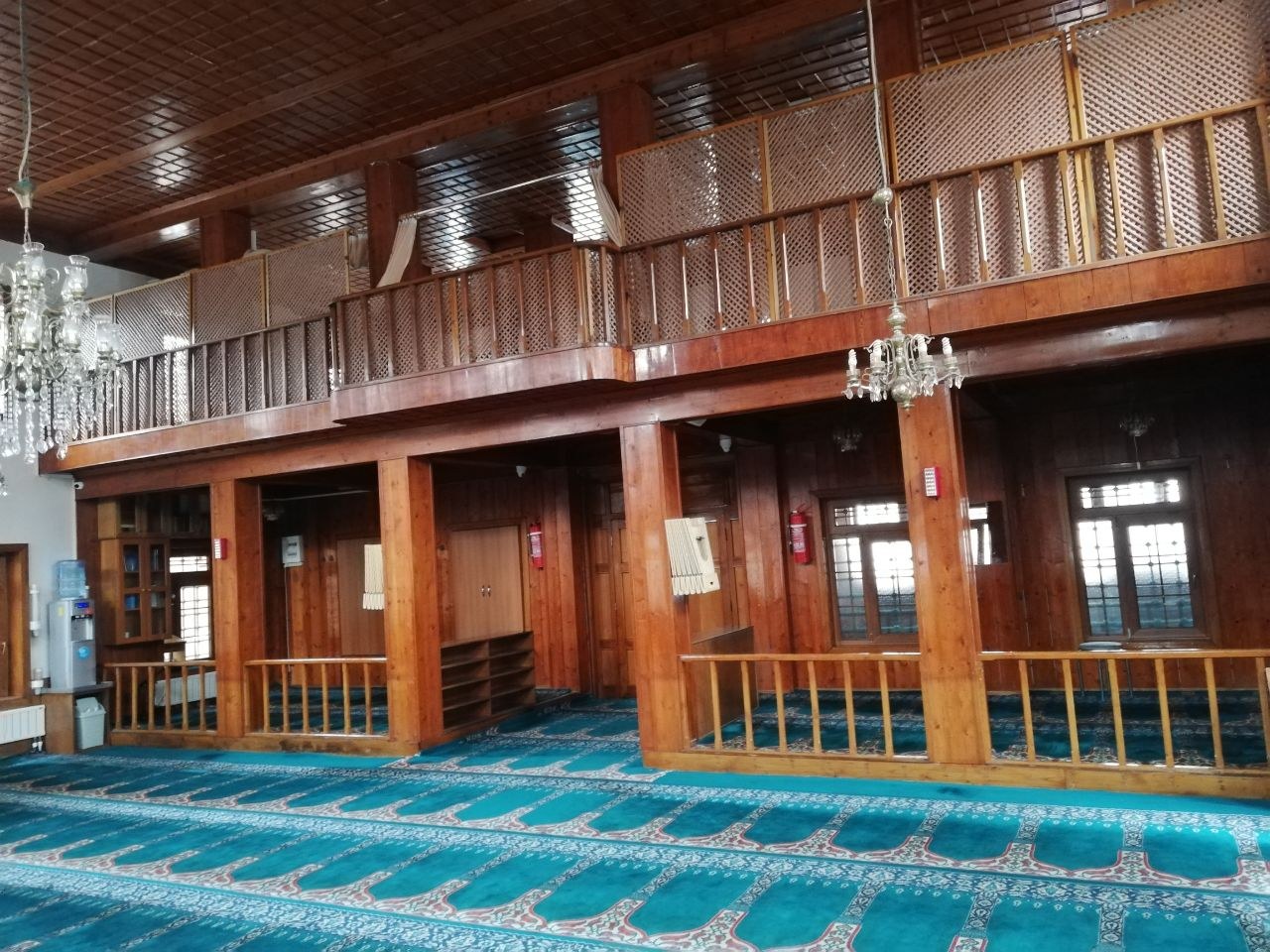
The mosque is a small-scale worship structure; a wooden ceiling arrangement stands out in the interior, and the ceiling displays a composition divided by laths.
Its mihrab is tile-covered; the minbar and pulpit are wooden elements.
The women’s gallery is arranged on four posts; this composition clearly shows the “gallery on supports” type seen in small-scale mosques.
Its minaret has a single balcony; its base and balcony are of stone, while its shaft is of brick construction.
In its graveyard are the patron’s grave and the graves of important figures around the Sufi Lodge; this feature makes the mosque not only a place of worship, but also a structure carrying a layer of visitation/remembrance.