
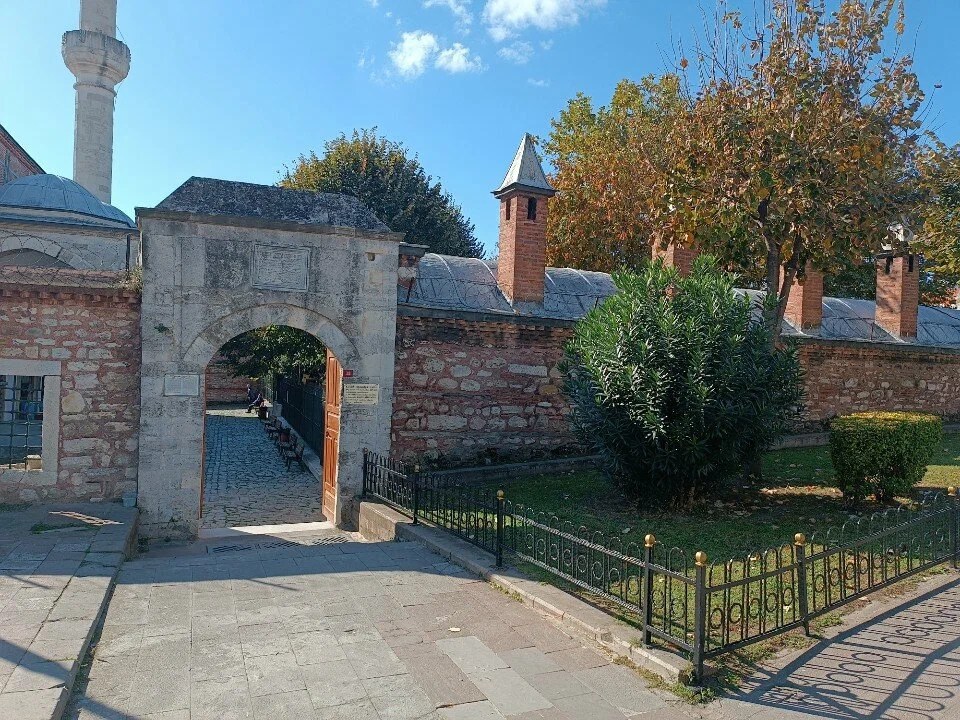
Changes After Construction
The lodge-madrasa component was formed in the early 16th century as part of the complex.
The structure, which fell into a ruined condition over time, was used for a period for sheltering purposes.
It underwent a restoration in the mid-20th century.
In the late 20th century, repairs were carried out again, and the structure was used with the function of a waqf center.
Today, the structure is used with a workshop/exhibition function associated with traditional handicrafts.
Featured Highlights
It is also known as the Chief White Eunuch Hüseyin Agha Madrasa.
The complex forms an integrated whole consisting of a mosque, tomb, lodge-madrasa, primary school, and bath.
The madrasa is evaluated within a layout associated with the fountain courtyard of the mosque; it is stated that the lodge was integrated with units converted into a madrasa.
It is recorded that the madrasa was known as having an arrangement of 24 cells.
The emphasis on a large garden and a fountain at the center makes the courtyard-garden character of the structure distinctive.