
People in the Tomb
Sekbanbaşı Yakup Ağa served as the commander of the sekbans (irregular infantry) under Mehmed the Conqueror.
He reportedly saw ‘Abd al-Qadir al-Gilani in a dream and, inspired by it, founded the Oğlanlar Tekke (Lodge) in Aksaray.
He also took part in the Conquest of Constantinople and was later buried at the tekke he established.
İbrahim Efendi became a disciple of Hakîkîzâde Osman Efendi in Eğrikapı, where he completed seven years of spiritual retreat (çile).
He revitalized the “Melami path” by transferring its principles to the Oğlanlar Tekke in Aksaray.
He became well known among the scholars and statesmen of Istanbul.
Upon his death, he was buried in the tekke’s hazire (graveyard).
About the Mausoleum
- Year Built
- Commissioned By
- Architect
- Location
Featured Highlights
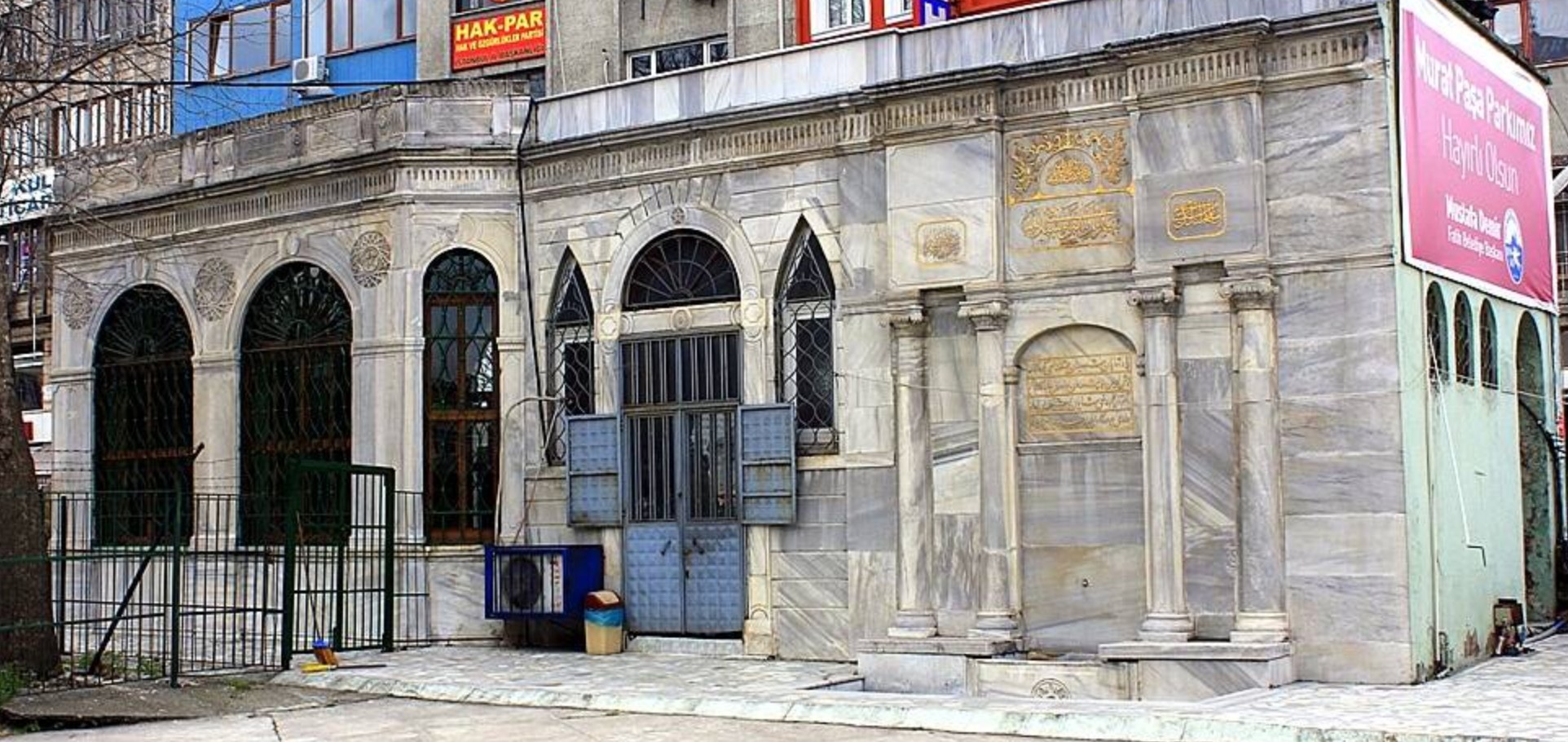
The tomb includes a sebil (public fountain), representing a late example of the architectural combination of tomb and sebil, a feature seen in Ottoman architecture particularly from the 17th century onward.
In this example, both functions are integrated into a single space.
The fountain is flanked by two engaged Ionic columns and topped with a basket-handle arch.
Relief carvings of Qadiri roses appear between the windows; beneath the arch is a 1874 poetic inscription in taʿlīq script.
Buried within the tomb are Yakup Ağa, founder of the tekke, and several sheikhs including Sheikh İbrahim Efendi.
The interior suffers from humidity damage; while recent renovations have cleaned the façade stones and restored some areas, several gravestones remain broken.