Changes After Construction
t was built as a dervish lodge, a mosque and a tevhidhane (the name given to the place where rituals are performed and daily prayers are performed in dervish lodges).
It suffered a fire in the third quarter of the 19th century and was rebuilt by Sultan Abdulhamid II in 1886-1887.
The building, which was left abandoned after the dervish lodges were closed in 1925, was used for illegitimate purposes for many years and became a shelter for the drunkards in the area.
The mosque was used as a club building by the Zeyrek Sports Club for a while but was evacuated by court order in 1988.
In 1989, it was reopened for worship on the Laylat al-Qadr of Ramadan with the support of philanthropist Osman Topbaş.
In 2023, the courtyard gate of the mosque and the inscription on it were restored by Fatih Municipality.
Featured Highlights
The first sheikh of the lodge was El-Hac Ahmed Efendi, who passed away in 1826.
It is one of the first lodges representing the Shadhili Sufi Order in Istanbul.
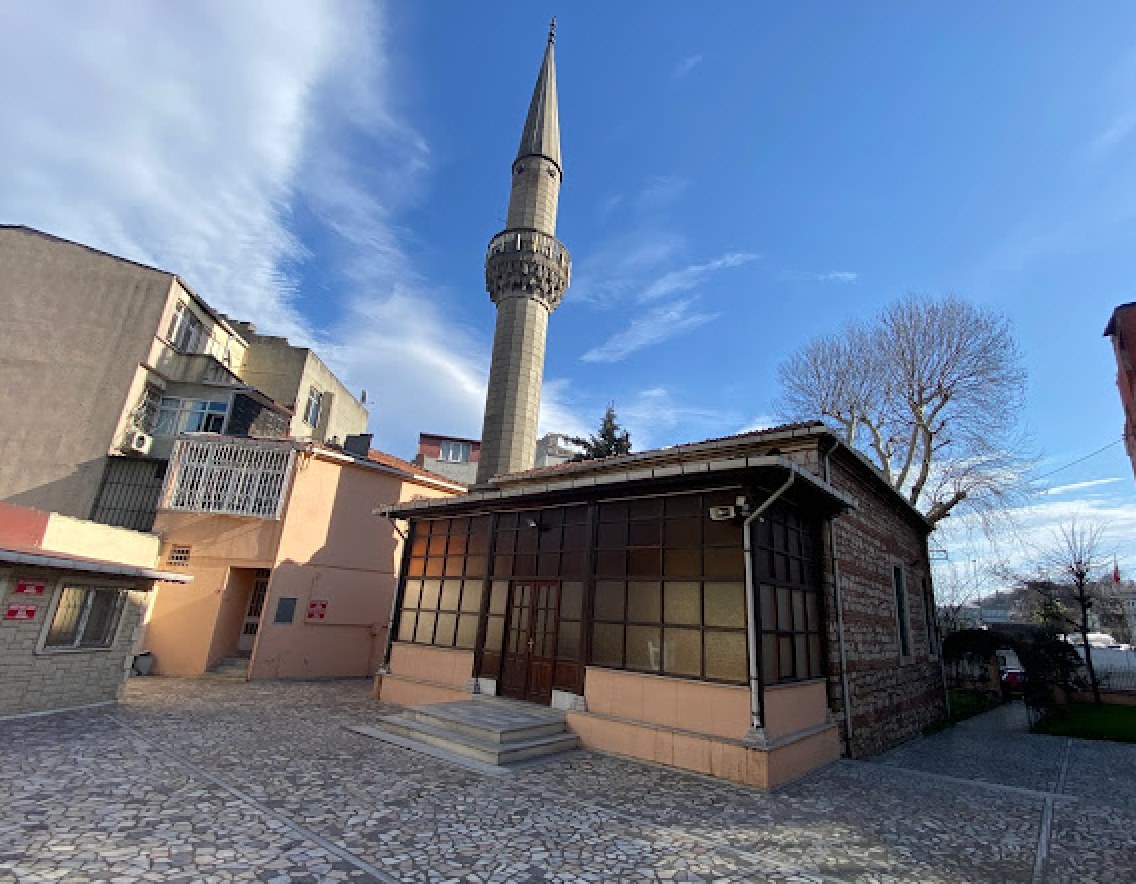
It has a rectangular plan, its walls are made of stone and brick, and its roof is made of wood.
The ceiling is covered with concrete and wood.
The minaret has a structure that can be accessed from the outside and is made of concrete, like the women's gallery.
Its mihrab is covered with Kütahya tiles and has the inscription "Ya Seyyid el-Imam Ali Ebu’l-Hasan eş-Şazeli" on it.
There are two windows on each wall.
The rectangular window and door openings are surrounded by jambs made of limestone.
Its minbar is made of wood and decorated with decorative motifs.
The inscription above the courtyard gate of the mosque bears the signature of Sultan Abdulhamid II.
It has a very large garden and there are entrances from two sides.
The main entrance door of the mosque is single and located in the middle.