
Changes After Construction
It was built by Sheikh Resmi Mahmud Efendi, an Ottoman Sufi, in the 15th century.
The mosque, which fell into disrepair at the end of the 19th century, was restored by Sheikh al-Islam Mehmed Cemaleddin Efendi.
It was completely destroyed by fire in Fatih in 1918.
The mosque plot remained vacant for nearly 100 years, and only its name and memory survived in the neighborhood.
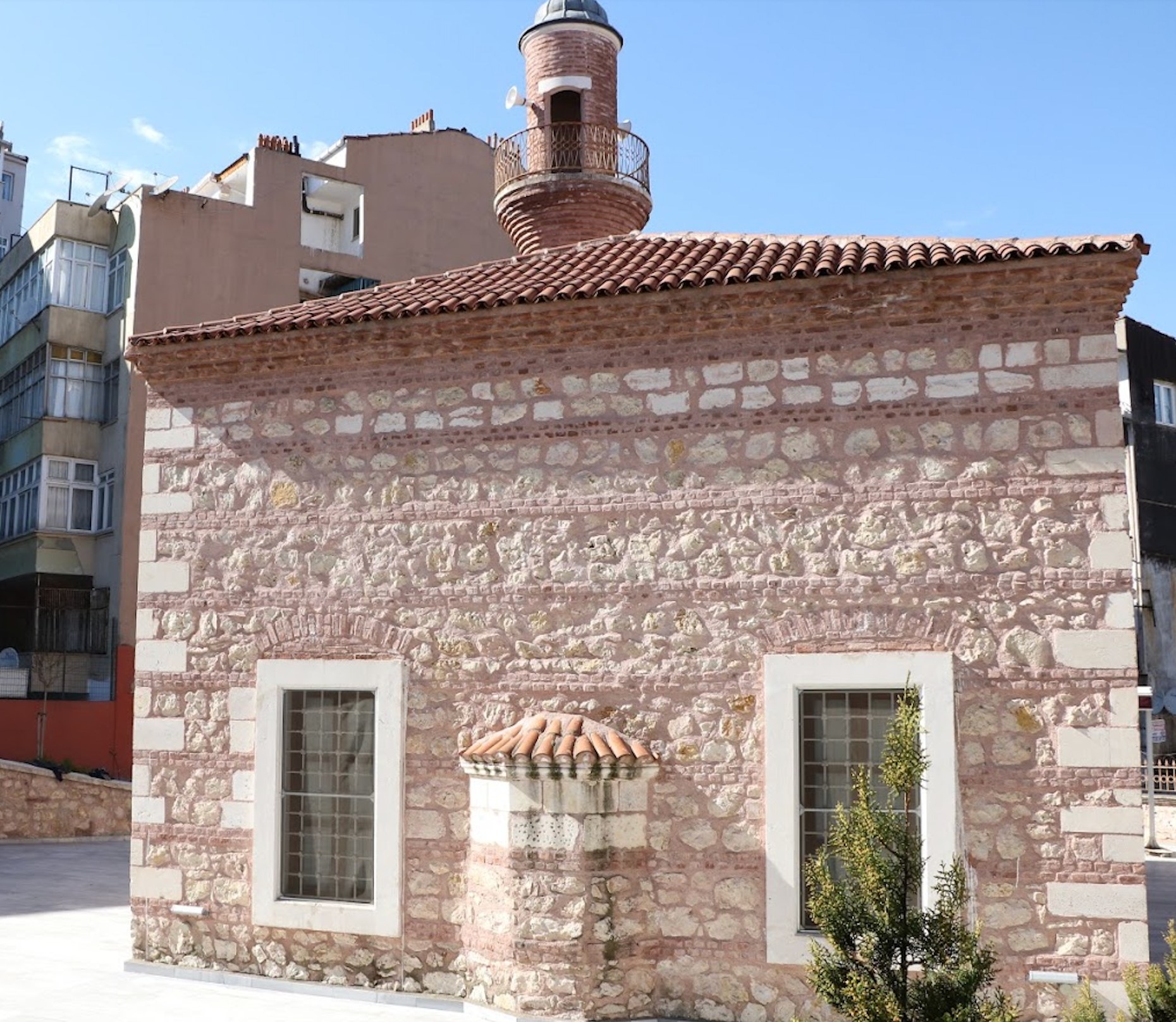
It was rebuilt in 2016, remaining true to its original architecture, and opened for worship.
The current name of the mosque commemorates both its founder, Sheikh Resmi Mahmud Efendi, and Sheikh al-Islam Mehmed Cemaleddin Efendi, who revived it in the 19th century.
Featured Highlights
It is also called the “Şeyhülislam Mosque” because Şeyhülislam Cemaleddin Efendi had the mosque rebuilt.
The Şeyh Resmi Mosque is a small-scale place of worship in accordance with the tradition of Ottoman neighborhood masjids.
Its general plan is rectangular, almost square, and consists of a single congregation area.
The walls were built with an alternating wall technique consisting of cut stone and brick.
It is covered with a pyramidal roof covered with tiles.
The mihrab is decorated with a simple muqarnas arch in accordance with classical Ottoman architecture.
The minbar and the preacher’s pulpit are made of wood.
The minaret has a single balcony and a brick body and is in the classical Ottoman style.
At the north entrance, there is a balcony with wooden railings used as a women's gallery.
There is a fountain made of cut stone in the courtyard of the mosque and is called "Mehmed Cemaleddin Efendi Fountain".
The tomb and graveyard of Sheikh Resmi were completely destroyed in the fire of 1918, and no tomb elements can be found today.
The mosque, together with the ruins of the Yeniçeşme Madrasa next to it, is an important heritage that keeps the historical texture alive.