Person in the Tomb
Mehmet Turabi Efendi was a sailor serving in the Imperial Arsenal, the heart of the Ottoman navy, and a sheikh of the Qadiri Order. He established a tekke (dervish lodge) in Kasımpaşa, where he guided the spiritual training of the local dervishes.
He passed away in 1812 and was buried next to his tekke. The lodge building served as both a religious and social center during the Ottoman period and the early years of the Republic. During the occupation of Istanbul, it was used to support the national resistance and is remembered as one of the first places where the Address to the Youth was read. The tekke building burned down in 1975, leaving only the tomb intact.
About the Mausoleum
- Year Built
- Commissioned By
- Architect
- Location
Featured Highlights
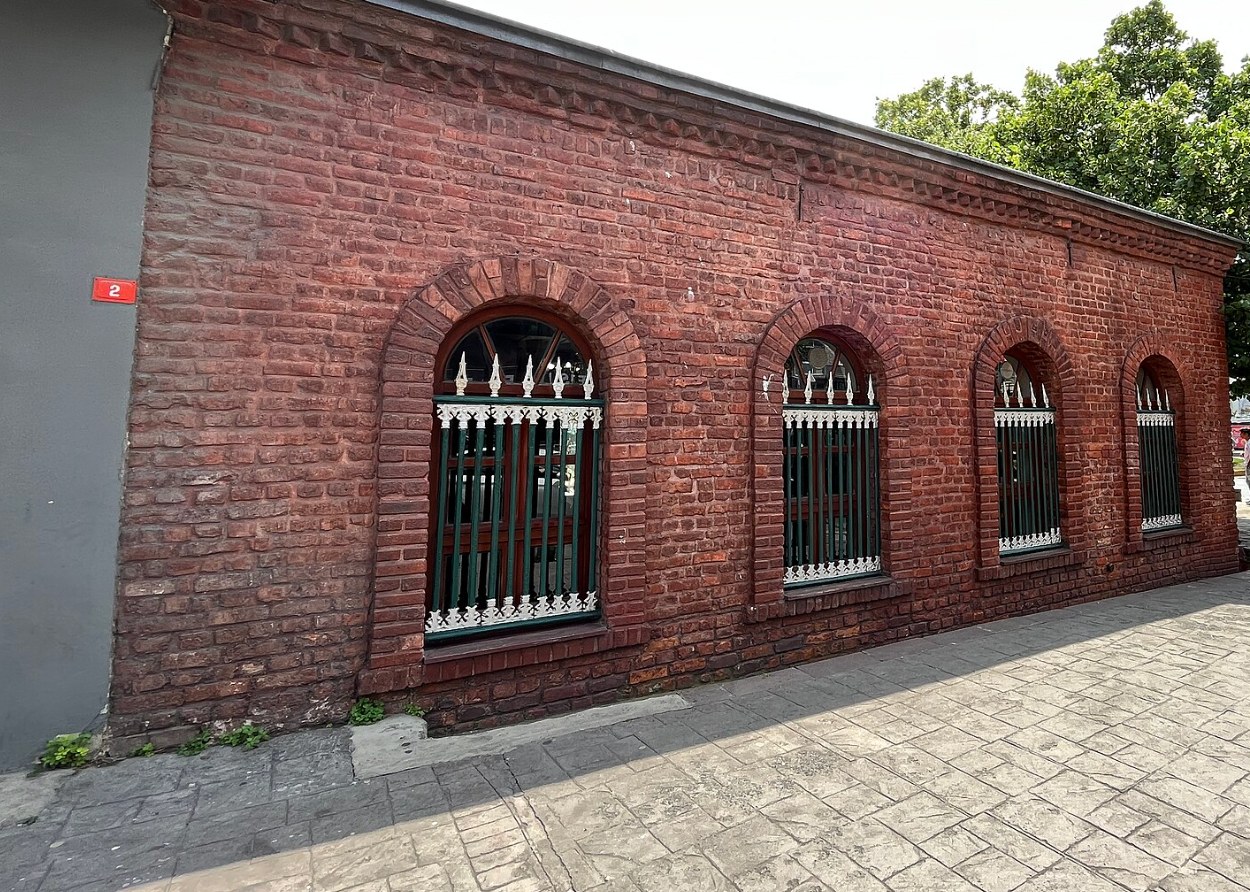
It is a rectangular, flat-roofed Ottoman tomb.
The walls are built with rubble stone and brick, and the façades are adorned with rows of brickwork that provide a distinct appearance.
On the Golden Horn side, there is a fountain and three arched windows.
The roof structure is made from repurposed ship masts from the arsenal and reinforced with traverse rails, making it unique among Istanbul’s tombs.
Turabi Baba’s sarcophagus is enclosed in a wooden lattice; the single marble grave belongs to Kadırga Architect Mustafa Ağa.
The tomb was restored in 2007 and reopened as the “Turabi Baba Library.”
The original Qur’an inside the tomb survived the 1975 fire unharmed, an event considered a “miracle” by the local people.