
Person in the Tomb
Abdurrahman Paşa was a statesman who was educated at the palace and served as the Babüssaade Ağa during the reign of Sultan Ibrahim I.
He served as governor of Anatolia and Egypt in the 17th century and died in 1652.
He is described as a large-bodied, outspoken, generous and brave man. He is one of the white eunuchs of Enderun origin.
He became the Bosphorus Guardian in 1649, the Governor of Anatolia and then Egypt in 1651; he was dismissed from his post in 1652 and became the governor of the Kuban, and died at the beginning of 1653.
About the Mausoleum
- Year Built
- Commissioned By
- Architect
- Location
Featured Highlights
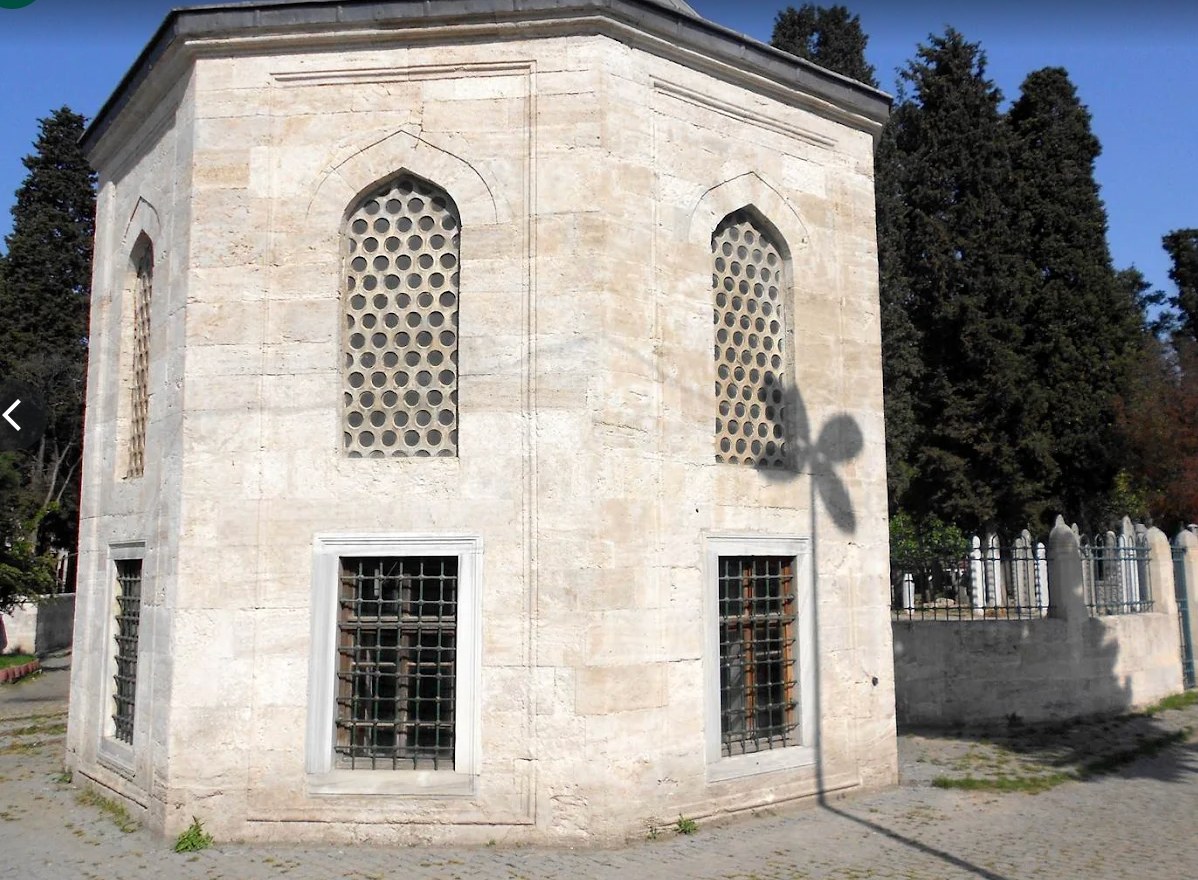
The tomb, built with an octagonal plan and a single dome, reflects the classical Ottoman architectural style.
Masonry (cut stone) was used in its construction.
The dome transitions are provided by pendentives.
The interior is illuminated by windows arranged in two rows: the lower row has rectangular sills and marble grids, while the upper row has stucco stained glass with pointed arches. The stained glass contains bouquets of flowers in medallions.
The two-columned portico at the front of the tomb has disappeared over time.
In front of the tomb, there is a well collar without an inscription and a sarcophagus.
There are two coffins in the tomb today.
There is a 14-line inscription in Ottoman Turkish above the entrance gate, explaining that the tomb was purchased by Abdurrahman Paşa and Hasan Ağa in 1648.
Hasan Ağa, the then Treasury Chief, and Fatma Hanım, the wife of former Grand Vizier Mustafa Naili Pasha, are also buried in the tomb.
The tomb was first built for Sultan Ibrahim’s companion, Şekerpare Kadın. However, when Şekerpare Kadın fell out of favor and was exiled to Ebrim, the tomb was sold to Babüssaade Ağa, Abdurrahman Ağa, and Treasury Chief, Hasan Ağa, in 1648.
It was used as a carpenter’s workshop
for a long time; it was repaired in 1942, and remained in a pit when the road level was raised in 1957. The fountain
adjacent to the building was removed in 1942.