
Changes After Construction
The lodge underwent repairs several times in the 19th century.
After the closure of the dervish lodges and zawiyas in 1925, it continued for a time to shelter Afghan dervishes; afterward, it was abandoned and fell into ruin.
In 1942, a large part of the lodge was demolished; the inscription above the main gate was taken to the Museum of Turkish and Islamic Arts and later transferred to the Amcazade Hüseyin Pasha Complex.
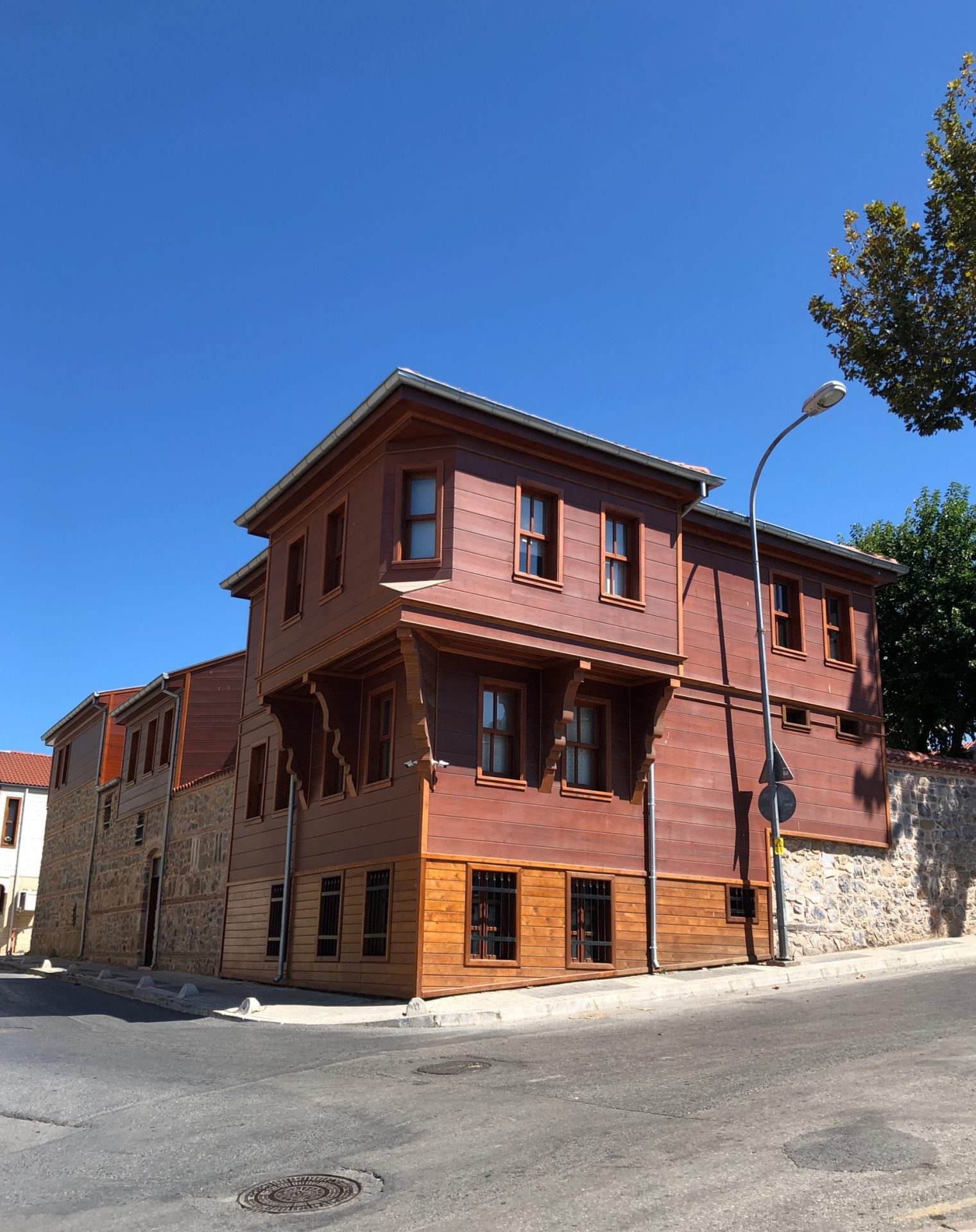
To the present day, the enclosure wall, main gate, fountain, cemetery section, part of the meşruta, and the selamlık pavilion have survived.
Featured Highlights
The names Afghans’ Lodge, Afghani Kalenderhane, and Kalenderhane Lodge were used.
The lodge, located near Çinili Mosque, is associated with the Naqshbandi tradition; its founding purpose was to shelter unmarried and traveler dervishes arriving from Afghanistan.
Until its closure, only Afghan celibate Naqshbandi sheikhs sat on the post of the lodge.
A broad program oriented toward accommodation was implemented in the complex; the masjid-tevhidhane, sheikh’s meşruta, dervish cells, large kitchen, pantry, dining hall, selamlık pavilion, fountain, pool, and cemetery section were designed together.
The selamlık pavilion is a single-storey and single-space structure; inside, there are opposing wooden benches with a marble pool and fountain arrangement between them, while the floor decoration draws attention with its mosaic layout.
The lodge is entered through a cut-stone gate with an arch and jambs; within the garden are the cemetery section, a pool and well arrangement, and a fountain with an inscription dated 1845 (Hijri 1261).