
Changes After Construction
According to its waqf deed, the Sufi Lodge was founded as a zawiya “belonging to the Kalenderan-i Uzbekiyya”; it was stipulated that the sheikhdom be entrusted to Mehmed Efendi, the sheikh of Kalenderhane Sufi Lodge, and that it be assigned to a person from the Uzbekiyya.
The waqf deed required the building to function in connection with the Eyüp Özbekler (Uzbeks) Sufi Lodge; the building was designed as a small-scale Sufi Lodge where guest dervishes arriving from Central Asia were accommodated.
In the waqf deed, the ritual day was initially Friday and Monday, but in the later period it was reduced to Friday; the Mecmua-i Tekaya record gives the ritual day as Thursday.
The inscription above the gate opening to Balcı Slope was erased during the alphabet reform period; the minaret was demolished in the same period.
In 1851, the Sokullu Mehmed Pasha Fountain on the boundary of the Sufi Lodge graveyard was repaired and a water reservoir was added.
During the road works of 1956-1957, the gravestones of some historical figures were moved to the slope.
With the closure of the Sufi lodges and zawiyas, the function of the Sufi Lodge came to an end; of the Sufi Lodge structures, mainly the semahana mass and the graveyard have survived to the present day.
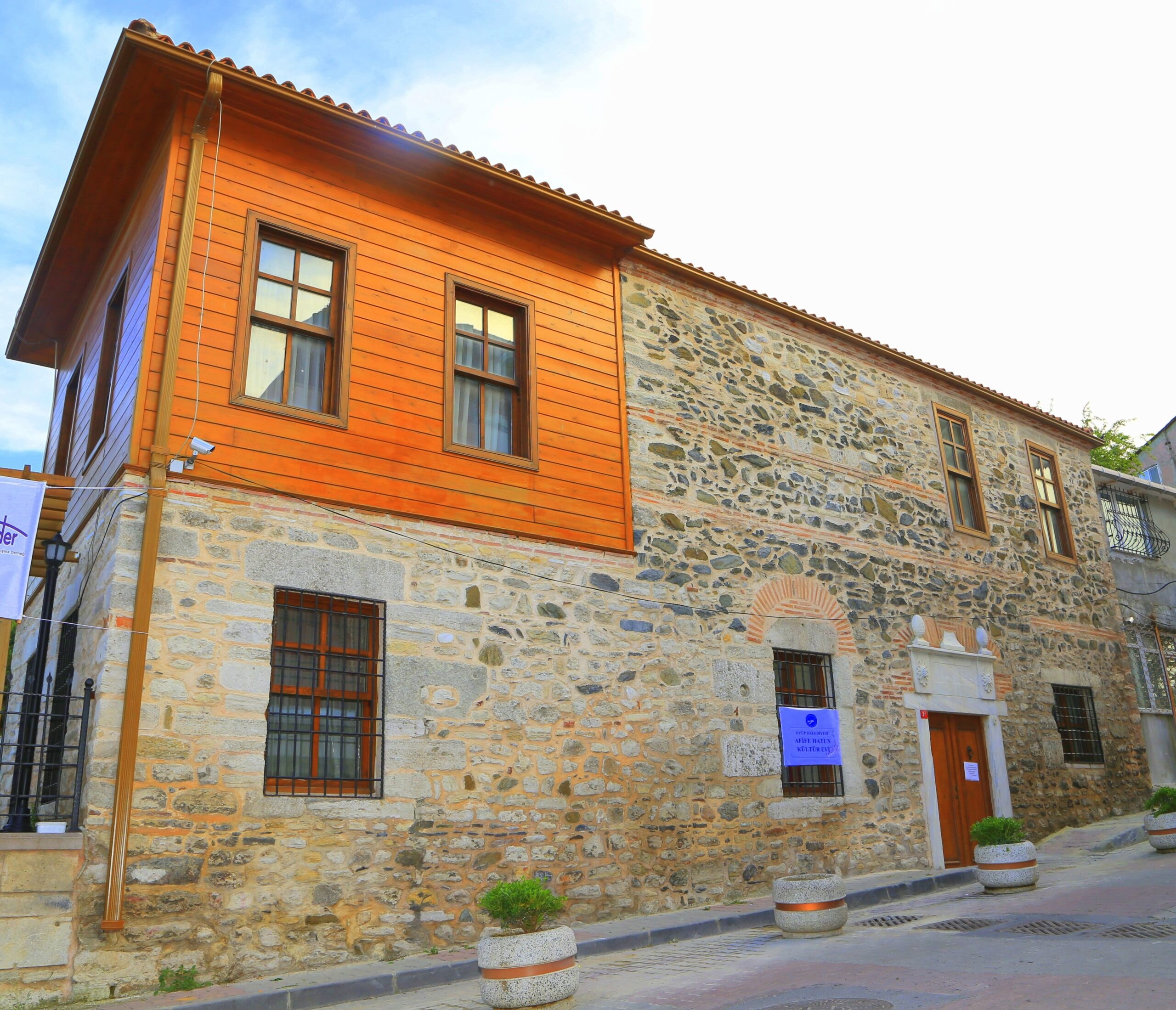
Eyüp Municipality carried out a restoration application on the building; today, the building is included within the municipality’s use as the “Afife Hatun Cultural House.”
Featured Highlights
The building is also referred to in the sources as Balcı Sufi Lodge, Abdünnâfî Sufi Lodge, Nâfî Efendi Sufi Lodge, and Balcı Hill Sufi Lodge.
Today, the semahana of the Sufi Lodge survives; the building is two storeys high and is defined as a masonry rubble-stone mass with a wooden roof.
In its plan scheme, the ground floor contains an entrance hall, staircase, kitchen, sheikh’s room, sarcophagus room, and water reservoir; the upper floor contains the tawhidkhana together with the sherbet room, ablution room, and harem units.
The graveyard is the main component of the Sufi Lodge identity; a significant part of the gravestones in the graveyard has been lost.