Changes After Construction
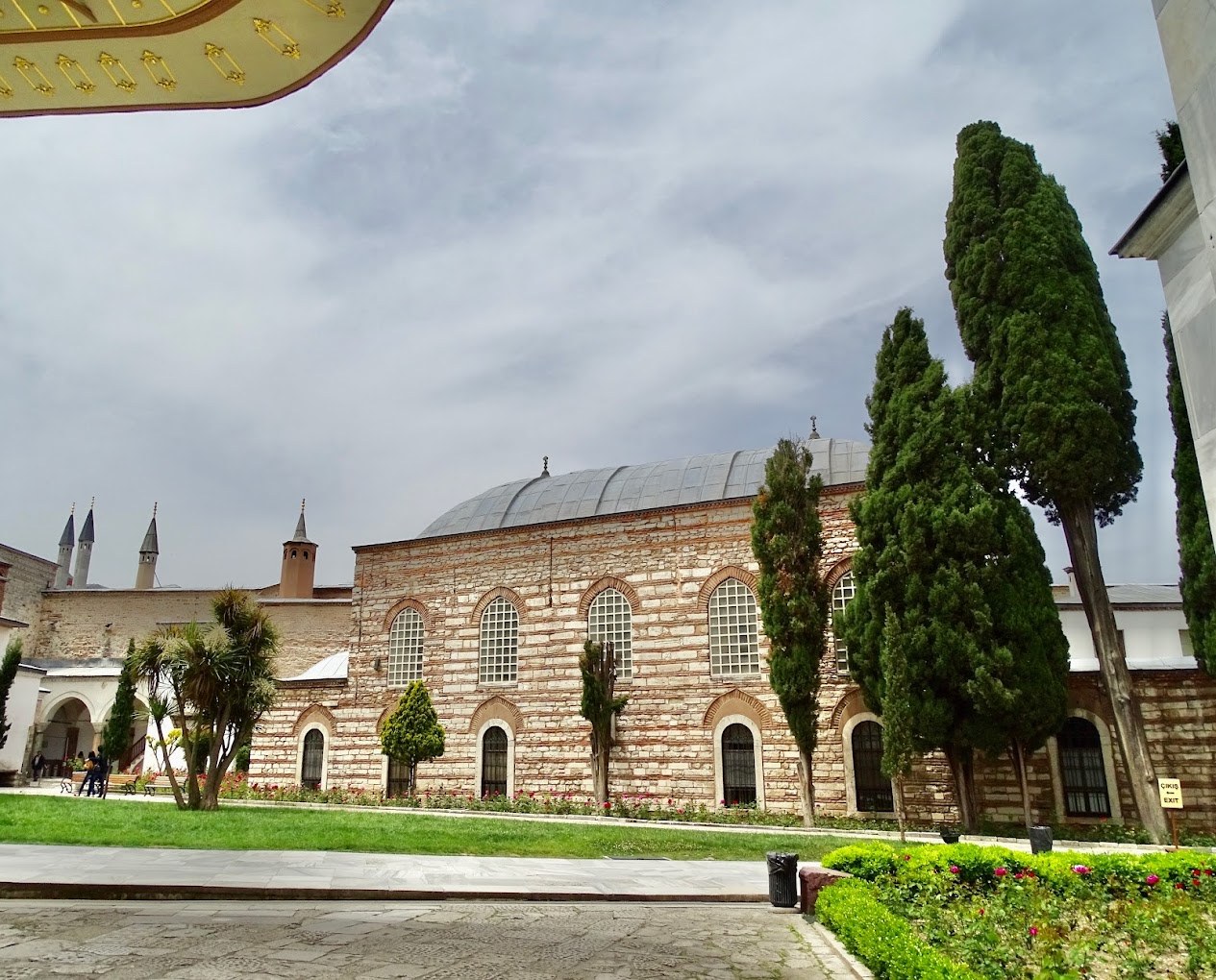
In its first construction, it was a small and flat building; it had a wooden roof and a tiled roof.
It was extensively repaired by Seyyid Mehmed Agha in 1723-24.
It was used as a warehouse and dining hall in 1881, and was stripped of lead and left to collapse.
After 1925, it underwent extensive restoration and was converted into a library and reading room.
Featured Highlights
It is also known as the Topkapı Palace Mosque or the Holy Relics Aga Mosque.
It is a rectangular planned, transverse structure.
The Harim was expanded and a mosque with a reading room was added.
Stone and brick rows were used on the outer walls and it has round arched windows that were renewed in the 18th century.
The walls of the adjacent masjid are decorated with 18th-century tiles.
The upper part is covered with a large barrel vault, which is contrary to Turkish architectural tradition.
It is said that the decision to abolish the Janissary Corps was taken here during the reign of Sultan Mahmud II.