
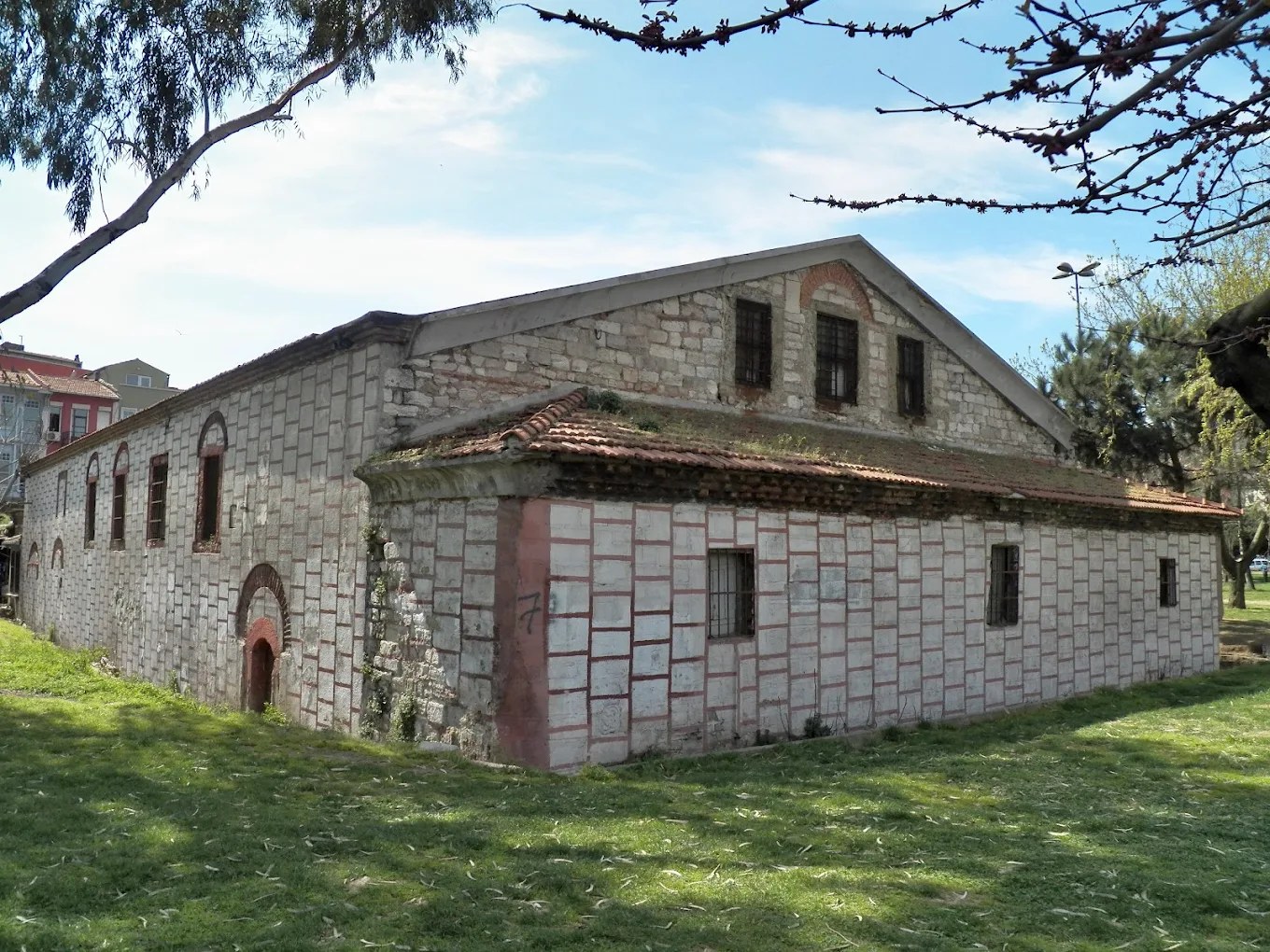
Changes After Construction
After the fire, an ownership and repair document was issued by a decree dated 1623.
The building burned in 1640.
The church and its annexes were transferred in 1686 to the Monastery of Saint Catherine on Mount Sinai; they were rebuilt with Russian assistance.
The building suffered another fire in 1730; it was rebuilt again by Nikeforos of Crete.
The church’s inscriptions confirm that the building underwent repairs in the early 18th century and in the 19th century.
It was identified in 1974 as an old monument requiring preservation; after the demolitions around it in the 1980s, it remained in the middle of an empty area.
The wooden gallery staircase was renewed in October 2010.
Featured Highlights
The church is a metochion structure used as the Istanbul representation of the Monastery of Saint Catherine on Mount Sinai.
The building is dedicated to John the Baptist; it is also known as the Church of Tur-i Sina and the Balatkapı Ioannes Prodromos Metochion Church.
The church is opened for worship on certain feast days, including the days of John the Baptist and Saint Catherine.
The complex includes, together with the church, a library, a priest’s house/guesthouse, and a holy spring; the holy spring and the well are located in the southeastern side aisle.
The building was constructed in a three-aisled basilica layout; the central aisle is separated from the side aisles by eight columns.
There are birdhouses on the walls; this detail is associated with the birdhouse tradition seen in Ottoman geography.
The depiction of a hand above the door is today preserved in the garden of the Greek Orthodox Patriarchate in Fener.