Person in the Tomb
Aziz Mahmud Hüdayi is one of the leading figures of the Ottoman Sufi tradition and the founder of the Jelveti Order.
Being one of the great scholars and mystics of his time, Hüdayi studied in many parts of Anatolia and completed his mysticism journey by becoming a follower of the Halveti (Khalwati) sheikh Üftade.
The dervish lodge he founded in Üsküdar became a center of science and knowledge; many sheikhs, judges, pashas and even sultans attended his talks.
He was also the teacher and mentor of the Ottoman Sultan Ahmed I. Aziz Mahmud Hüdayi tomb is one of the spiritual focuses of Ottoman-Turkish architecture.
About the Mausoleum
- Year Built
- Commissioned By
- Architect
- Location
Featured Highlights
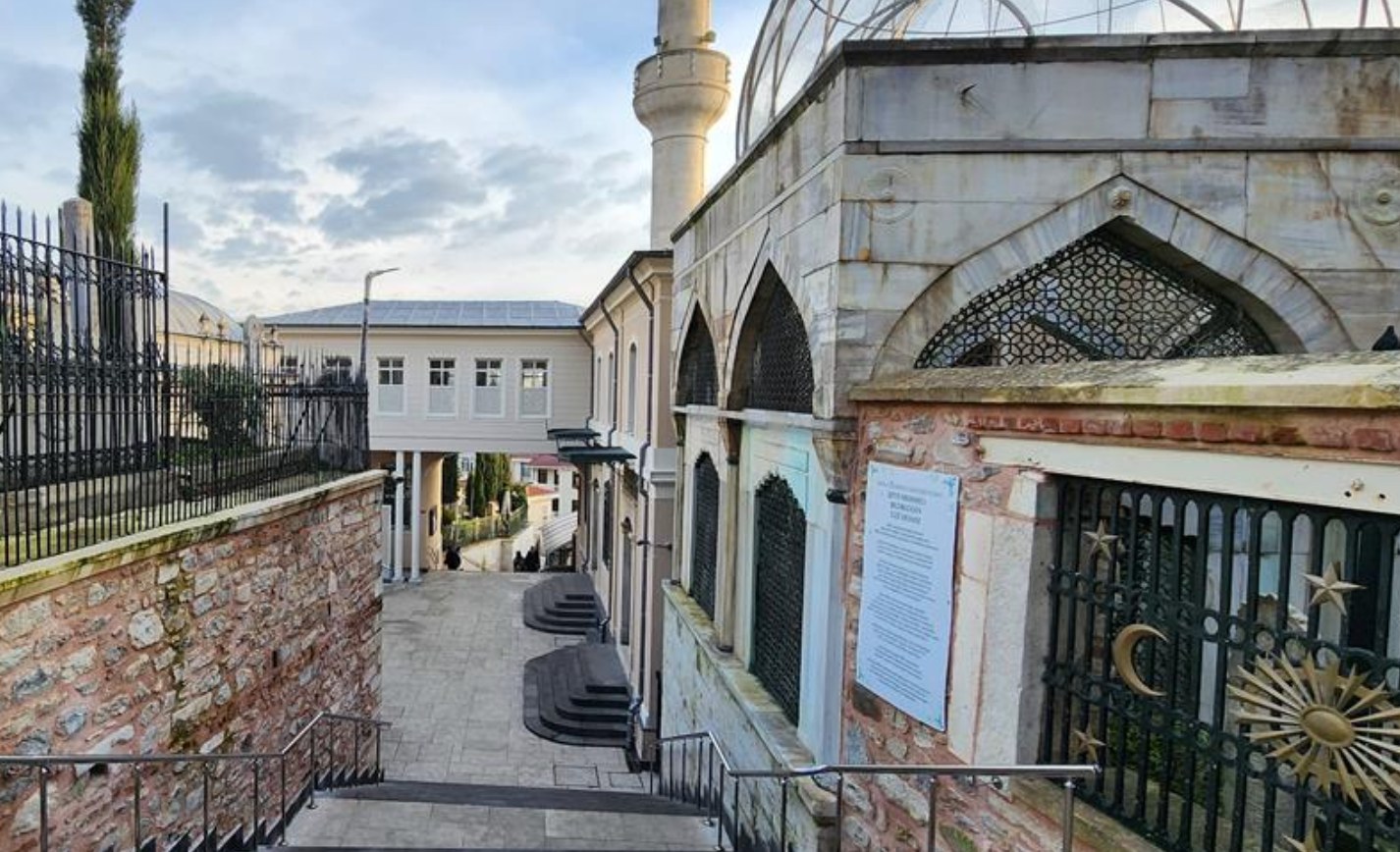
The tomb is positioned as a building adjacent to the mosque; there is a glass section (camekan) at the entrance.
The tomb, which was damaged by lightning striking the mosque’s minaret in the 1910s, was restored in 1918.
There are two different inscriptions written in Taliq script at the entrance: one is located on the entrance door of the tomb, the other is located on the door frame.
In the glass case, there is the old shrine room where mentally ill patients were treated with inculcation.
Inside the tomb, there is a sofa with a well, a traditional lectern, an inkwell, a Venetian chandelier, a well with a copper bucket and a room where accounting documents are kept.
It is believed that the water of the well is holy and is connected to the Zamzam Water.
The tomb is accompanied by a poetic plaque that begins with the words, “Enter with decency, my dear, the tomb of the most pure Hüdayi.”
The interior of the tomb attracts attention with its elegant ceiling decorations, carpets and spiritual atmosphere.