
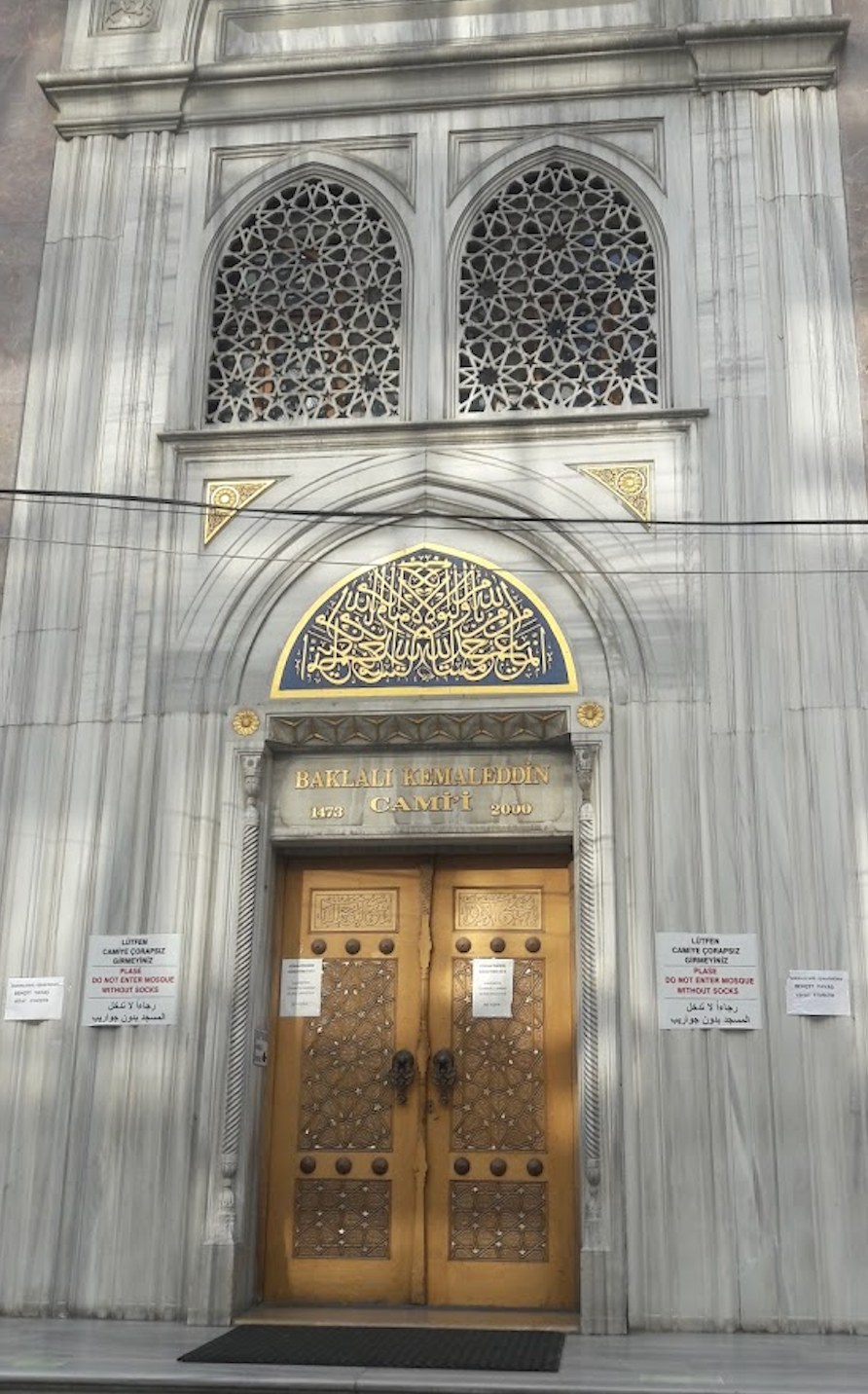
Changes After Construction
It was completely destroyed by fires in 1876 and the first years of the Republic.
It was repaired by Abdul Hamid II in 1908.
Its wreckage was sold in 1932, and in 1935 it was decided that there was no need to preserve the mosque land.
In 2000, it was rebuilt as a two-story reinforced concrete building with the support of the public.
Featured Highlights
It is also known as Baklalı Mosque and Koğacı Mosque.
Its founder is the dervish Kemalettin, nicknamed Baklacı, from “Ni'me'l Ceyş”, a name given to those who participated in the Conquest of Istanbul.
The entrance is through a long marble door, the entrance section is wide and is used as the narthex.
The mihrab, minbar and preacher’s pulpit are made of marble.
Its interior is located on a platform with five or six marble steps.
The walls are covered with tiles from floor to ceiling.
There is a small dome on top and a suspended upper gallery above the stairs. There is a women's gallery.
The minaret is made of reinforced concrete and has two balconies.