
Changes After Construction
According to the surviving historical inscription written by a poet named Rahmi, the construction of the külliye, which lasted two years, was completed in 1745. The same inscription also states that the külliye was built on the site of an older mosque.
Between 1826 and 1839, it underwent a major repair by Sultan Mahmud II.
In 1950, the tekke building within the complex suffered a fire and was repaired by the Directorate of Foundations.
In 1986, the courtyard section of the mosque was completely altered; an underground ablution fountain and toilets were built.
The külliye acquired its present form after an extensive restoration in 2010.
Featured Highlights
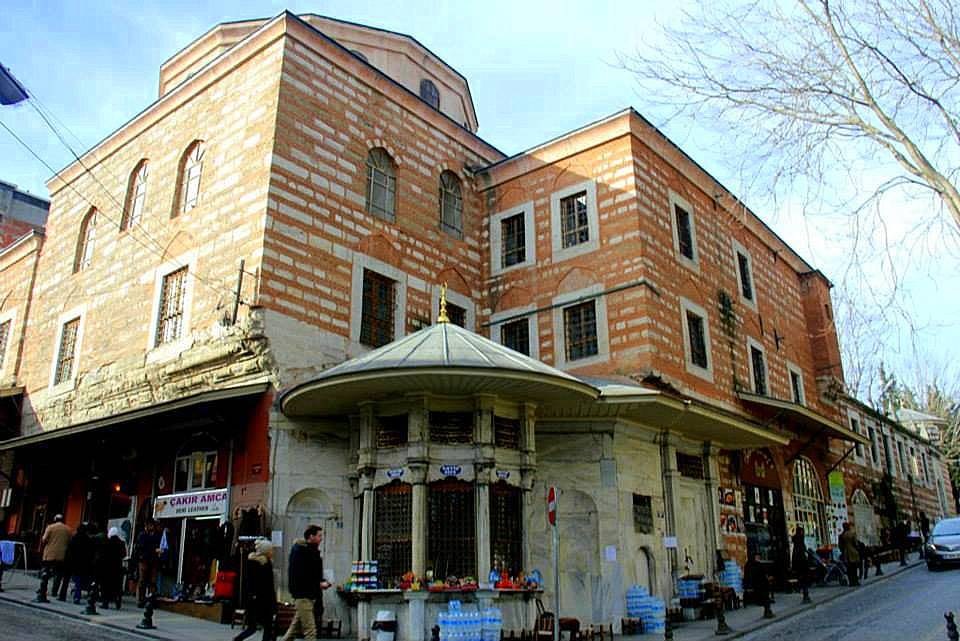
The külliye is a small-scale complex consisting of a mosque, library, sebil, tekke, primary school, and madrasa.
Although not certain, according to many historians, Architect Çelebi Mustafa Ağa, the chief architect of the period, undertook the design of the building.
On the entrance gate of the mosque is the original tughra of Sultan Mahmud II.
The complex reflects the Baroque influence of the post-Tulip Era as one of its early examples.
The sebil at the corner is made of marble and holds a special place among Istanbul sebils as one of the earliest applications of the Baroque style.
The madrasa, like the mosque, was built in a mixed stone-and-brick technique. Its construction date is given as H. 1157 / 1744, and it is recorded that it had 12 cells during the period when it was active.
According to the inscription of the tekke, or zawiya, it dates to H. 1158 / 1745. It consists of dervish cells, a kitchen, dining hall, selamlık, and tevhidhâne.
The foundation deed of the külliye was prepared in the same year and is held in the Süleymaniye Library.
Hacı Beşir Ağa, who administered the Ottoman imperial harem continuously for 30 years between 1717 and 1746, became one of the most powerful and influential figures of the palace.