Changes After Construction
Yayabaşı Cafer Agha rebuilt the abandoned building and revived the foundation.
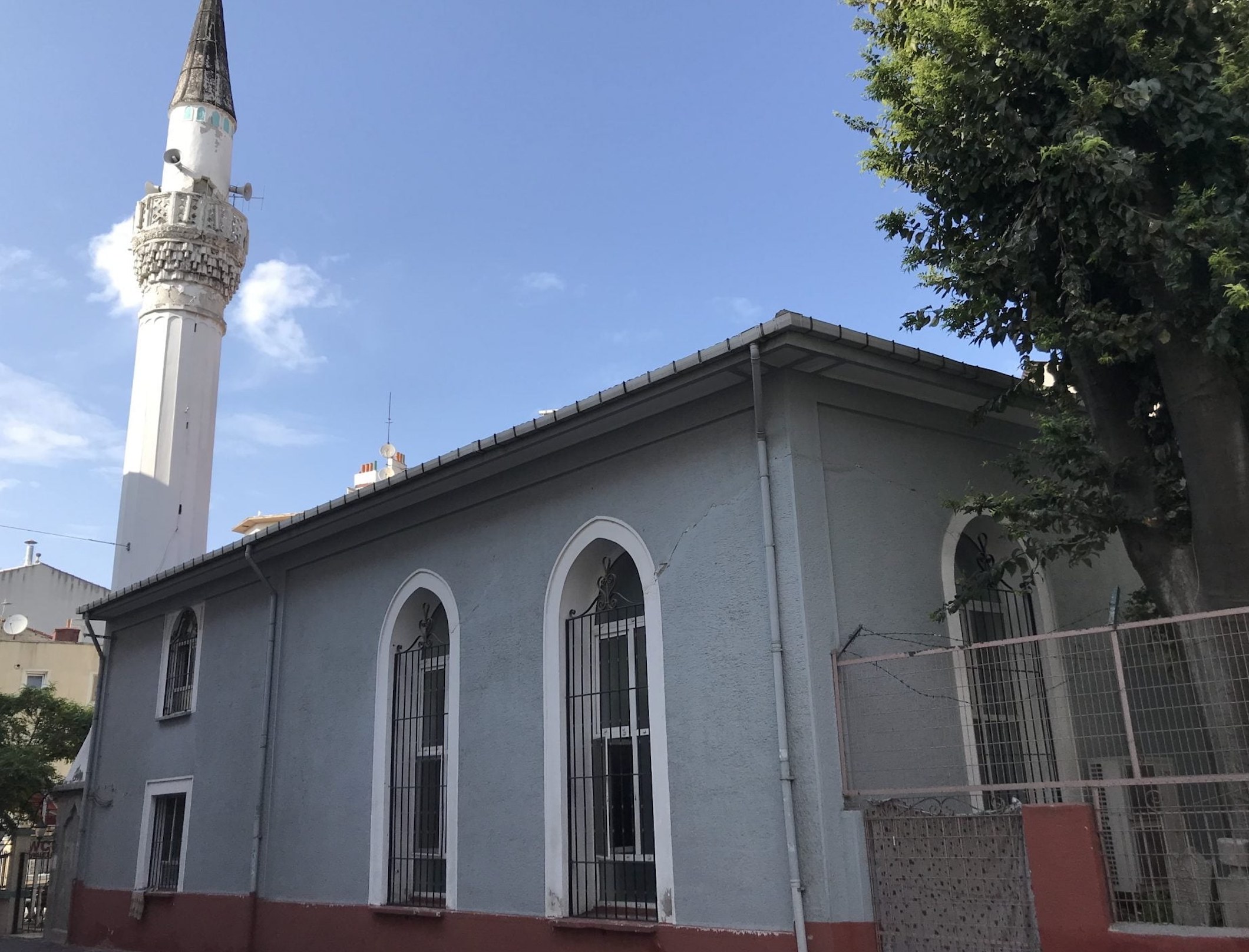
The mosque, which fell into disrepair over time, was completely demolished and rebuilt with reinforced concrete in 1970.
In 1970, a Quran course was opened under the same roof as the mosque.
Featured Highlights
It is also known as Yusuf Fakih Mosque.
The Harim has a trapezoidal, quadrangular plan.
The minbar is made of tiles, the mihrab and the preacher’s pulpit are made of wood.
The inner wall skirts are covered with panelling for about half a metre.
There is a muezzin’s gallery and a women's gallery.
There are two long windows on each wall.
The ceiling is flat with pencil engravings.
The women's gallery is supported by two concrete pillars.
Its minaret is made of concrete and the bottom of its balcony is decorated with muqarnas.
There is a well at the entrance of the mosque and a fountain built in 1970 to the left of the entrance.
The graveyard is in front of the mihrab and there are a few more graves here.