
Person in the Tomb
Sultan V. Murad, 1840 yılında İstanbul’da doğmuştur. Babası Sultan Abdülmecid, annesi Gürcü asıllı Şevkefza Kadın’dır.
Fransızca öğrenmiş, edebiyata ve sanata düşkünlüğüyle tanınmış; Ziya Paşa ve Namık Kemal gibi dönemin önemli şairleriyle yakınlık kurmuştur. Piyano çalmayı öğrenmiş, Batı müziğine ilgi duymuş ve besteler yapmıştır.
1876 yılında amcası Sultan Abdülaziz’in tahttan indirilmesinden sonra padişah olmuştur. Ancak akli dengesinin bozuk olduğu gerekçesiyle üç ay sonra tahttan indirilmiş ve Osmanlı tarihinin en kısa süre tahtta kalan padişahlarından biri olmuştur.
Hayatının geri kalanını Çırağan Sarayı'nda geçirmiştir. Batı düşüncesine yakınlığıyla tanınan V. Murad’ın, masonlukla ilgilendiği ve bu düşüncenin Gal Prensi ile tanıştıktan sonra geliştiği aktarılır.
About the Mausoleum
- Year Built
- Commissioned By
- Architect
- Location
Featured Highlights
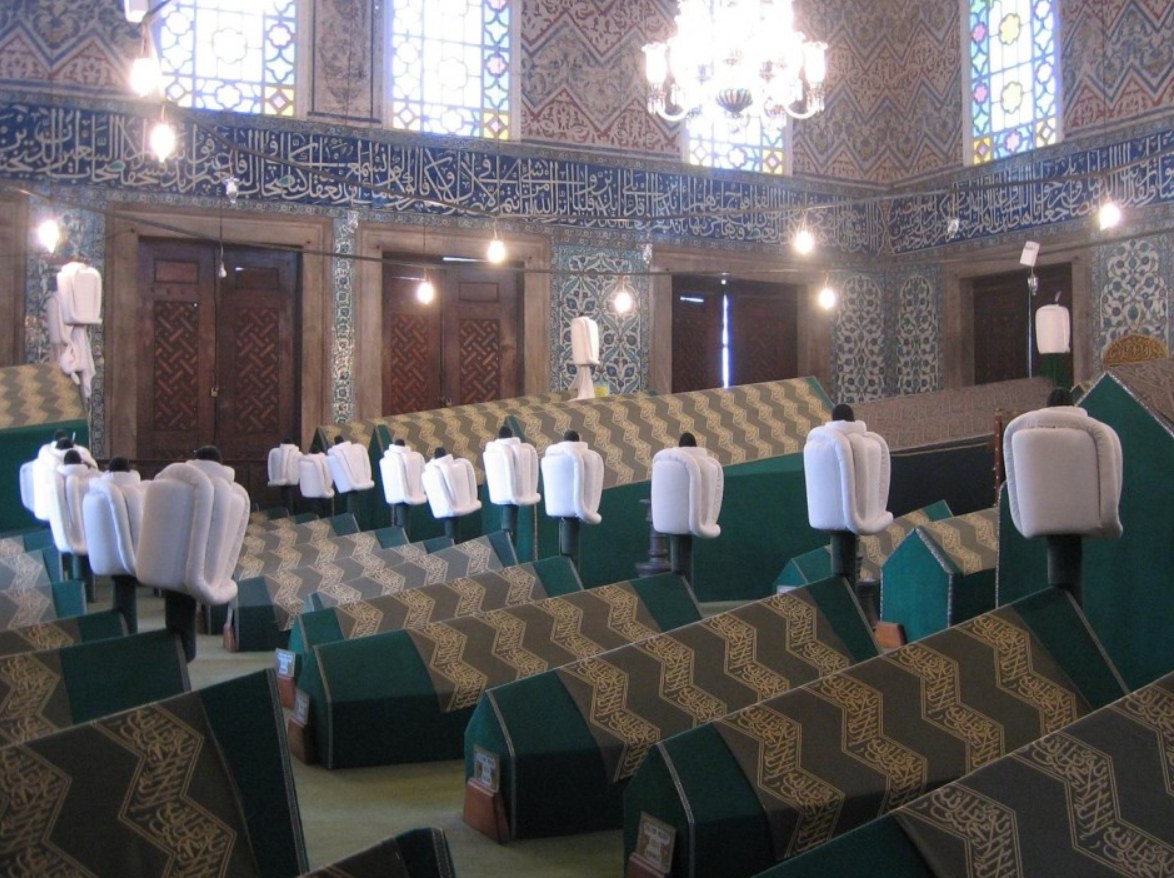
The Cedid (New) Havatin Tomb is a new tomb built as an addition to the Havatin Tomb, which was added for women after the Hatice Turhan Sultan Tomb became insufficient. The rectangular planned structure has a dome on its northwestern part. The tomb can be entered from both a door on the western side and a window on the northern side of the Havatin Tomb.
The lighting of the space is provided by the lower windows on the east and west facades and the upper windows on the north. The lower windows have socketed iron grids.
The dome, drum and pendentives are decorated with hand-drawn ornaments in black and blue-grey tones. The flower motifs, especially the ones overflowing from the basket-woven vases, are decorated with leaf frames. Also noteworthy are the frescoes depicting the Kaaba and Medina.
The coffin belonging to Sultan Murad V is surrounded by brass grids of high artistic value. On some coffins there are silk embroidered scarves on velvet. The architecture of the tomb reflects the Ottoman ornamentation and monumental burial tradition of the period.