Changes After Construction
By a memorandum dated 10 November 1858, the Ministry of Education opened a girls’ rüştiye in the building.
During the implementation of Law No. 1057 dated 28 May 1927, the tughra and panegyric elements above the entrance and the fountain were damaged.
In 1929–1930, it was used by the State Printing House as a printing school.
After the fire at the Courthouse in 1932, some court offices operated in the building.
For a period, the structure was used as a storage depot for the Prime Ministry Archives.
It was reopened as a primary school in the 1945–46 academic year and took the name “Cevri Kalfa School” in the 1955–56 academic year.
It remained vacant for a period in the 1980s and, after 1985, was allocated to a foundation.
In the restoration yearbook of the Directorate of Foundations, the structure is listed as a “2010 allocated” project.
Featured Highlights
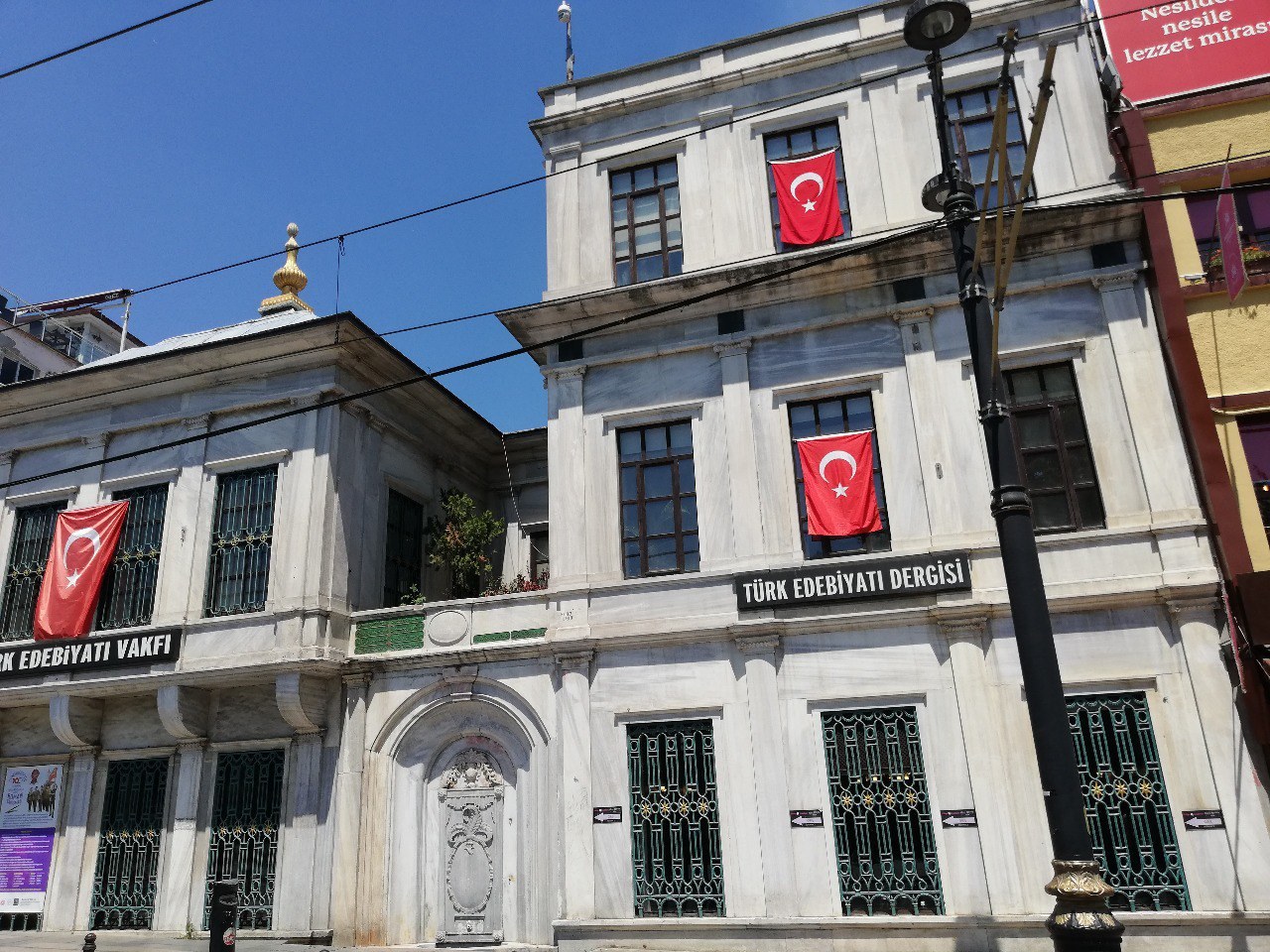
It is among the largest examples in terms of volume among the sıbyan mektepleri in Istanbul.
The structure is in the Turkish Empire style; Western influences are pronounced in its facade and plan arrangement.
The poetic inscription written by Keçecizade İzzet Molla gives the date 1235 (1819–20).
The mass is arranged in a three-block composition; the structure has a two-storey and multi-room layout.
The structure stands at the beginning of Sultanahmet Square–Divanyolu, opposite the Firuz Agha Mosque.