
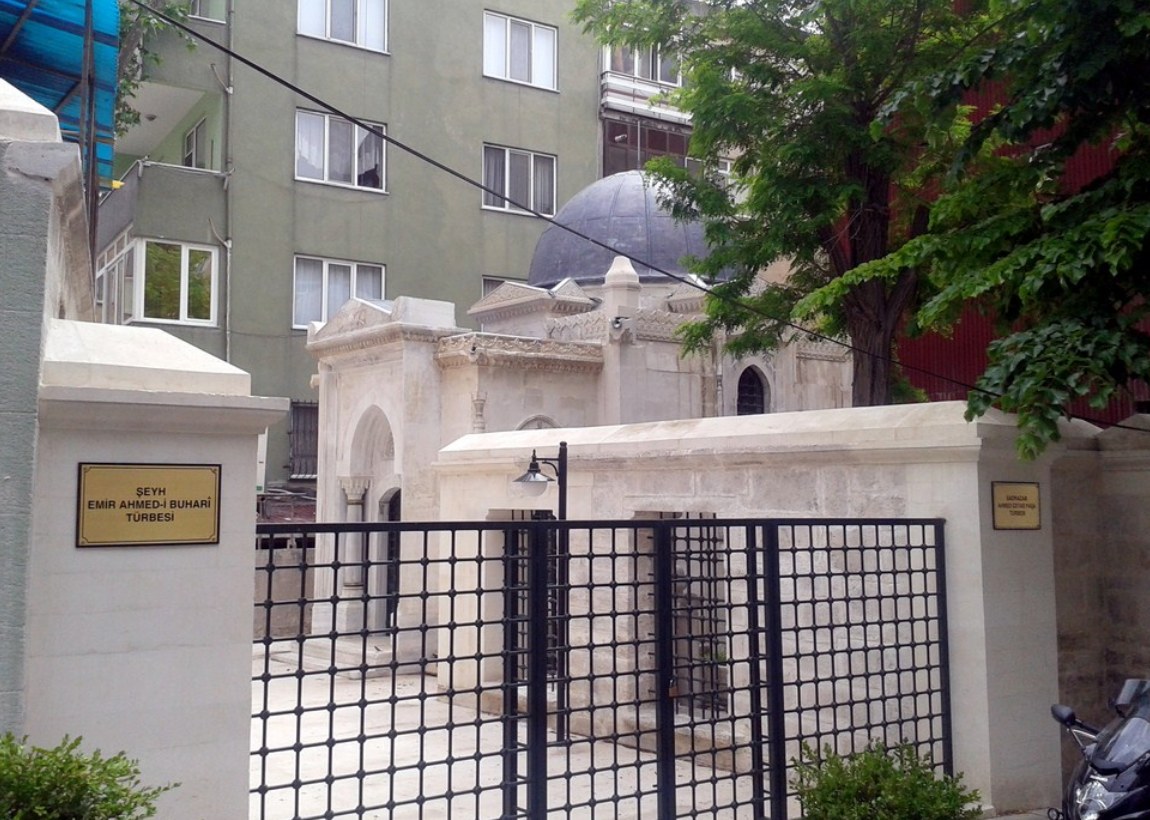
Person in the Tomb
Seyyid Emir Ahmed-i Buhari was born in Bukhara in 1445 and was descended from Husayn, the grandson of the Prophet Muhammad. In Sufism, he belonged to the spiritual lineage of Mahmud-ı Fağnevi and Ubeydullah Ahrar and was one of the leading figures of the Naqshbandiyya path.
He was sent to Anatolia together with Abdullah-ı İlâhî and served in Simav. After completing the pilgrimage, he settled in Istanbul. In the 1470s, he turned his house near Fatih into a dervish lodge. With the support of Sultan Bayezid II, this lodge remained for centuries one of the oldest and most important centres of the Naqshbandiyya order in Istanbul. As the number of his disciples gradually increased, two more lodges were opened, one in Ayvansaray and one in Edirnekapı.
He died in 1516 at the age of 73 and, in accordance with his will, was buried in the garden of his lodge.
About the Mausoleum
- Year Built
- Commissioned By
- Architect
- Location
Featured Highlights
Emir Buhari, who died in Istanbul in 1516, was buried in the garden of the tekke, and the tomb built over his grave was commissioned by Sultan Murad III.
The tomb, which fell into ruin over time, was repaired in 1782 according to the inscription on it.
The tomb has an octagonal plan and a projecting mass.
The façades are entirely clad in marble; horizontal mouldings and pilasters at the corners add movement to the architecture.
Around the tomb there is a small cemetery. Although many gravestones have not survived, the remaining stones are notable for their calligraphy and stonework.