
Ahmed Cevdet Paşa
Profile summary
Highlights
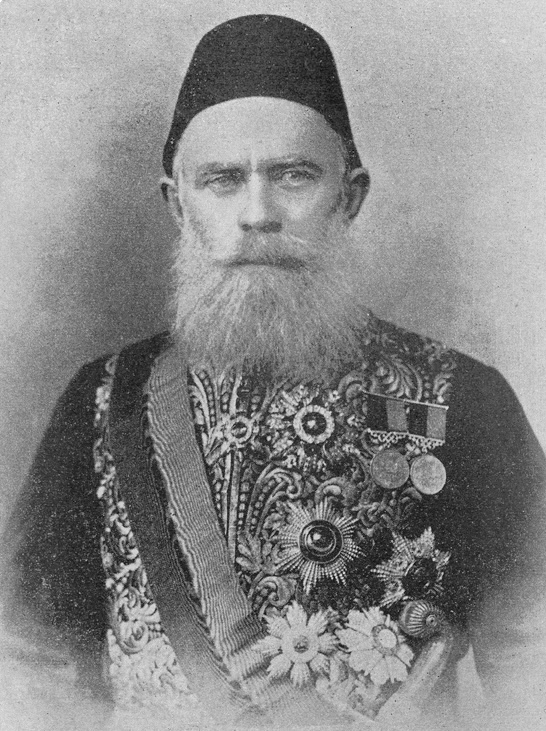
Ahmed Cevdet Paşa was born in Lofça in 1822 and belonged to the Yularkıran Ahmed Ağazâde family, one of the notable families of the town. He came to Istanbul in 1839 and, alongside his madrasa education, studied literature, logic, philosophy and mathematics. The pen name “Cevdet” was given to him during his studies in Istanbul by the poet Süleyman Fehim Efendi.
Ahmed Cevdet Paşa entered the ilmiye profession through the path of judgeship and soon became one of the notable figures of the madrasa circle. At a young age he was appointed to offices such as membership in the Meclis-i Maârif-i Umûmiyye and directorship of the Dârülmuallimîn; in 1855 he was appointed official chronicler and began to write Ottoman history. Târîh-i Cevdet, Tezâkir and Ma‘rûzât are among the most important works he left as both a historian and a statesman who read his own age from within.
Ahmed Cevdet Paşa was not only influential in law and history, but also one of the most effective figures in state administration during the Tanzimat period. After extraordinary reform missions in Shkodra, Bosnia and Kozan, he rose to the rank of vizier and held the governorship of Aleppo as well as the ministries of Justice, Education, Interior, Pious Foundations and Commerce.
One of the defining services of Cevdet Paşa’s life was the preparation of the Mecelle-i Ahkâm-ı Adliyye, a civil law text based on Hanafi Islamic law. He chaired the Mecelle Commission and thus played the leading role in transforming the classical legal tradition into a systematic legal text applicable in the modern Ottoman courts. During his ministry of justice, he also worked on the nizamiye courts and new legal regulations.
The Mecelle, one of the most important works of Ottoman modernization and the first and most important civil code of the Islamic world, retained its importance after the fall of the Ottoman Empire. It remained in force in the early years of the Republic of Turkey, in Syria until 1949, in Cyprus into the 1960s, and in Palestine until 1984.
Ahmed Cevdet Paşa, who also authored Kavâid-i Osmaniye, one of the first works treating the grammar of Ottoman Turkish, was awarded the first-class Osmânî and Mecîdî orders.
The family life of the Paşa also holds special importance for late Ottoman intellectual and literary history. His daughters Fatma Aliye Hanım and Emine Semiye Hanım, through their education and writing lives, became pioneering figures in Ottoman women’s thought. Fatma Aliye wrote Ahmed Cevdet Paşa ve Zamanı, describing her father’s life and age, while Emine Semiye became one of the early representatives of the women’s movement as an educator, journalist and writer.
According to his daughter Fatma Aliye, when Cevdet Paşa was a madrasa student, he suffered great hardship during a harsh winter after money he expected from Lofça failed to arrive. He never forgot the six lira of help he happened to receive from a friend of his father. His later habit of helping madrasa students was remembered together with this difficult memory from his own student days.
After a short illness, Ahmed Cevdet Paşa died on Sunday, 1 Dhu al-Hijja 1312 (26 May 1895), at his waterfront mansion in Bebek, and was buried in the Fatih Mosque Cemetery.
Epitaph
He is the Eternal. He was the Ibn Kemal of our age. Alas, he departed life. He was a man of letters and left many works behind. He adorned himself in every respect. Allah showed him His pleasure, and he went to Paradise saying Allah. Let the pen that wrote the date be broken: "Ahmed Cevdet Paşa has passed away." Sunday, 26 May 1895.
Ahmed Cevdet Paşa, who made this grave illuminated with light a place of forgiveness, was the son of Hacı İsmail Ağa, son of Hacı Ali Efendi, son of Ahmed Ağa, son of Vehbi Efendi, son of Yularkıran Ahmed Ağa, from a well-known family of Lovech. He was born in Lovech in 1822 and came to Istanbul in 1834, receiving diplomas in religious sciences and higher sciences, philosophy and mathematics. In 1844 he passed the examination for judgeship and gradually rose to the rank of Rumeli Kazasker. In 1866 his rank was converted to that of vizier, and he served in various governorships and repeatedly as Minister of Justice, Education, Interior, Pious Foundations and Commerce, among many other offices. Just as he contributed with his pen and thought to the preparation of many laws of the Ottoman State, he also chaired the commission established for the Mecelle. In addition to many scholarly, literary and political works in Arabic, Persian and Turkish, he wrote an excellent history and a grammar of Ottoman Turkish. He performed important duties in Shkodra, Bosnia and Kozan. He was honored with many medals. He was a jurist, man of letters, poet, historian and a vizier of fine character. Working day and night for his religion and state until his last breath, and adorning that last breath with the declaration of divine unity, he turned to his Lord in 1895 and left this borrowed mortal life so that his name might live forever.
A Fatiha for his/her soul