
Ali Emiri Efendi
Profile summary
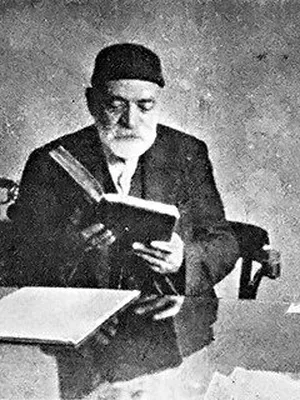
Highlights
Ali Emîrî Efendi was born in Diyarbakır in 1857 and belonged to a rooted family known as the Emîrîzâdeler. His father was Seyyid Mehmed Şerif Efendi. He received his first education at the Sülûkiyye Madrasa in Diyarbakır, learned Arabic and Persian, and from his youth developed an interest in poetry, history and biographical books.
He began his official career in the Ottoman provincial administration. He served as accountant in Leskovik, Kırşehir and Tripoli of Syria; as treasurer in Ma‘mûretülazîz and Erzurum; and as finance inspector in Ioannina, Shkodra and Yemen. During these duties he travelled through Anatolia, Rumelia and the Arab provinces, continuing to collect books, documents and manuscripts wherever he went.
Ali Emîrî Efendi’s true fame comes from opening the rare works he had collected throughout his life to public use. He donated around 16,000 volumes, many of them rare or unique copies, to the Millet Library he founded in the Feyzullah Efendi Madrasa in Fatih, and served as its director until his death. His insistence that the library be named “Millet,” not after himself, transformed his books from a personal collection into a public trust.
His greatest service to Turkish language and cultural history was finding the only known copy of Kâşgarlı Mahmud’s Dîvânü Lugāti’t-Türk and bringing it to the scholarly world. The manuscript, which he noticed in a bookseller’s shop in early 1914, was prepared through the intense work of Kilisli Rifat Bilge and published during the First World War, saving it from disappearance.
After retirement, Ali Emîrî Efendi intensified his scholarly and literary work. He served in institutions such as the National Research Council, the Historical Documents Classification Council and the Ottoman Historical Society. He also played a role in the formation of the “Ali Emîrî Classification” in the Ottoman Archives. Works such as Tezkire-i Şuarâ-yı Âmid, Mardin Mülûk-i Artukıyye Târihi, Osmanlı Vilâyât-ı Şarkıyyesi, İşkodra Şâirleri, Yanya Şâirleri and Yemen Hâtırâtı show his interest in history, literature and biography.
Ali Emîrî Efendi never married. He was known for his devotion to books, powerful memory, sharp temperament and sensitivity toward old works. He died in Istanbul on 23 January 1924 and was buried in the Fatih Mosque Cemetery.
Ali Emîrî Efendi’s gravestone was written by his fellow townsman Hâmid el-Âmidî, better known as Calligrapher Hamid Aytaç. Born in Diyarbakır, Hamid Aytaç was one of the most important figures of twentieth-century Turkish calligraphy, especially known for his large-scale scripts and for the inscriptions of Şişli Mosque and many other mosques in Istanbul.
Epitaph
He is the Eternal. This is the eternal resting place of the late Ali Emirî Efendi of Diyarbakır, founder of the Millet Library in Fatih, among the most virtuous of Muslims, one of the poets worthy of respect, and the pride of men of letters. Fatiha. Birth: 1857 / Death: 1924. Written by Hâmid Aytaç of Diyarbakır.
A Fatiha for his/her soul