
Ali Haki Bey
Profile summary
Highlights
Ali Hâkî Bey was the son of el-Hâc Ahmed Amiş Efendi, the Halvetî-Şa‘bânî sheikh known as the Tomb Caretaker of Fatih.
Ahmed Amiş Efendi was raised in Tırnova, served as a battalion imam in the Crimean War, came to Istanbul after 1877, and became famous as “Fatih Türbedarı” by taking up the caretaking of the Tomb of Mehmed the Conqueror.
Ali Hâkî Bey served as an examiner in the Legal Consultancy Office of the Imperial Pious Foundations. This duty belonged to the Evkaf bureaucracy, where legal matters concerning foundations and the processes of cases and documents were examined.
Studies on the family of Ahmed Amiş Efendi especially note that Ali Hâkî Bey died before his father. A short Sufi saying recorded as belonging to him is also preserved in Amişnâme.
After Ali Hâkî Bey’s death, the place beside him in the Fatih Mosque Cemetery was reserved for his father Ahmed Amiş Efendi.
Ali Hâkî Bey died in 1908 and was buried in the Fatih Mosque Cemetery. His father Ahmed Amiş Efendi, who died twelve years after him in 1920, was buried beside him.
Epitaph
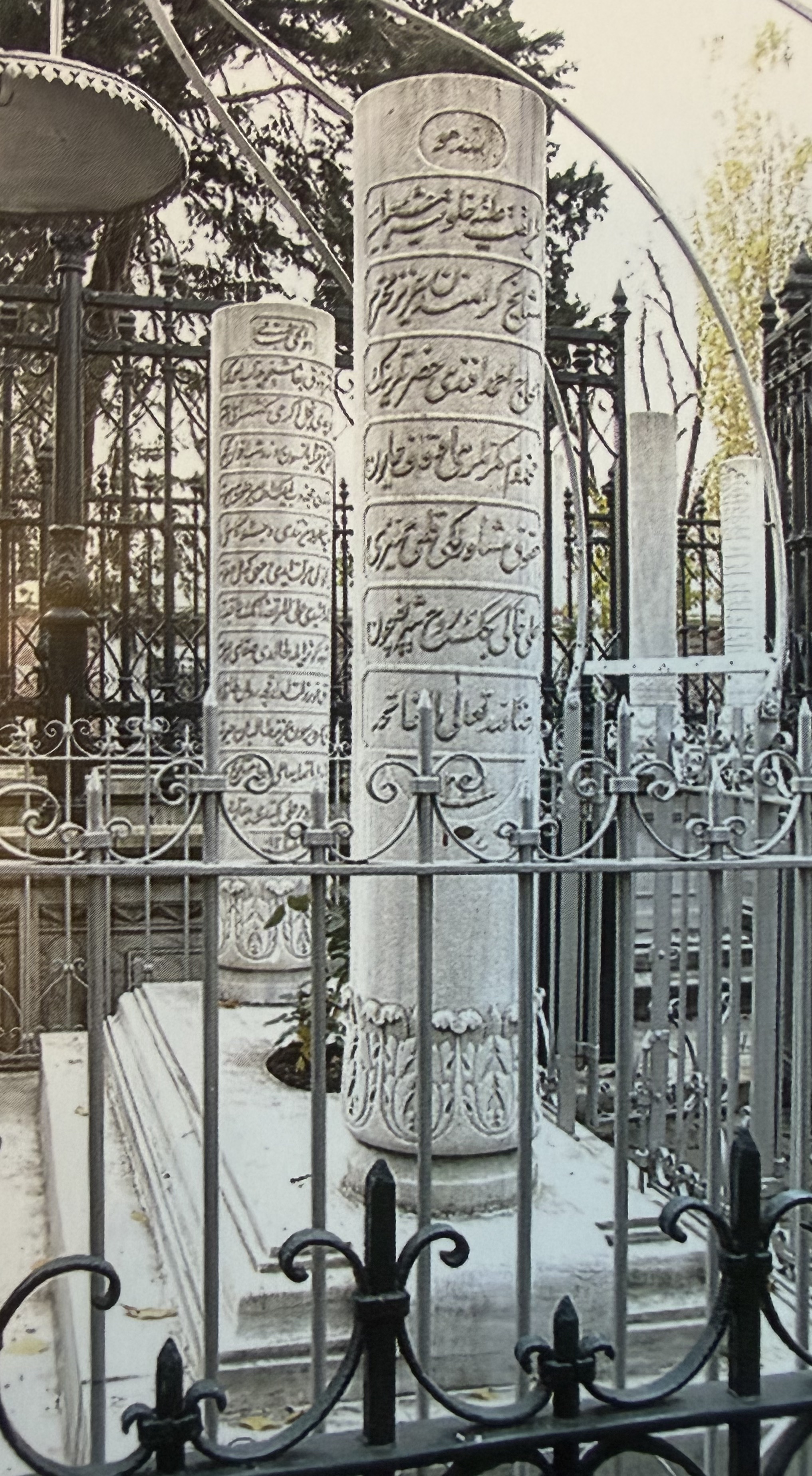
He is the Living, the Eternal. The noble son of my sheikh, Hazrat Ahmed, who spread the joy of eternity, migrated to the palace of Paradise. Let his brothers burn day and night with the fire of separation. We were bound heart and soul to that noble person. His mature being was always adorned with beautiful morals. He was a fine mirror of purity and sincerity. He bore the name of Hazrat Ali, and with the joy of Kawthar entered the delight of union. Immersed in the light of the Divine Essence, he travelled like a bird. May Allah grant long life to those who seek wonder. Sami, in mourning, spoke a complete chronogram for his death: "Saying Hû, Ali’s soul went to the realm of unity." 1908.
Allah Hû. For the sake of Allah, a Fatiha for the soul of Ali Hâkî Bey, examiner in the Legal Consultancy Office of the Pious Foundations and son of the beloved and respected Hazrat Hacı Ahmed Efendi, one of the leading sheikhs of the Şa‘banî branch of the Halvetiyye. 1908.
A Fatiha for his/her soul