
Emrullah Efendi
Profile summary
Highlights
Emrullah Efendi was born in Lüleburgaz in 1858 as the son of the merchant Ali Efendi. After completing his primary and secondary education in his hometown, he graduated from the Mekteb-i Mülkiye and learned French well. He began his official career in the education administration and served as director and inspector of education in the provinces of Ioannina, Salonica, Aleppo and Aydın.
While in Aydın, he travelled to Europe for a time and made contact with Young Turk circles in Geneva. After returning to Istanbul, he was appointed member of the Council of Education, gave lectures at the Darülfünun, and served as director of Galatasaray Mekteb-i Sultânîsi and president of the Scientific Department of the Council of Education. After the Second Constitutional Period, he entered the Chamber of Deputies as deputy for Kırklareli.
In 1910 Emrullah Efendi became Minister of Education in the cabinet of İbrahim Hakkı Paşa, and in 1912 was appointed to the same post for a second time in Said Paşa’s cabinet. During his ministry, he worked on the organization of educational institutions from primary education to higher education; he dealt with the transformation of idâdî schools into sultânî schools, the expansion of the Darülfünun’s organization, the renewal of curricula and the regulation of the Ministry of Education’s functioning.
His most famous view in the history of education is the “Tûbâ Tree Theory.” According to Emrullah Efendi, educational reform should begin with higher education; if the Darülfünun were strengthened, the cadres trained there could transform secondary and primary education as well. This view was debated in the Second Constitutional period with Sâtı Bey and other educators, and was supported by some thinkers, especially Ziya Gökalp.
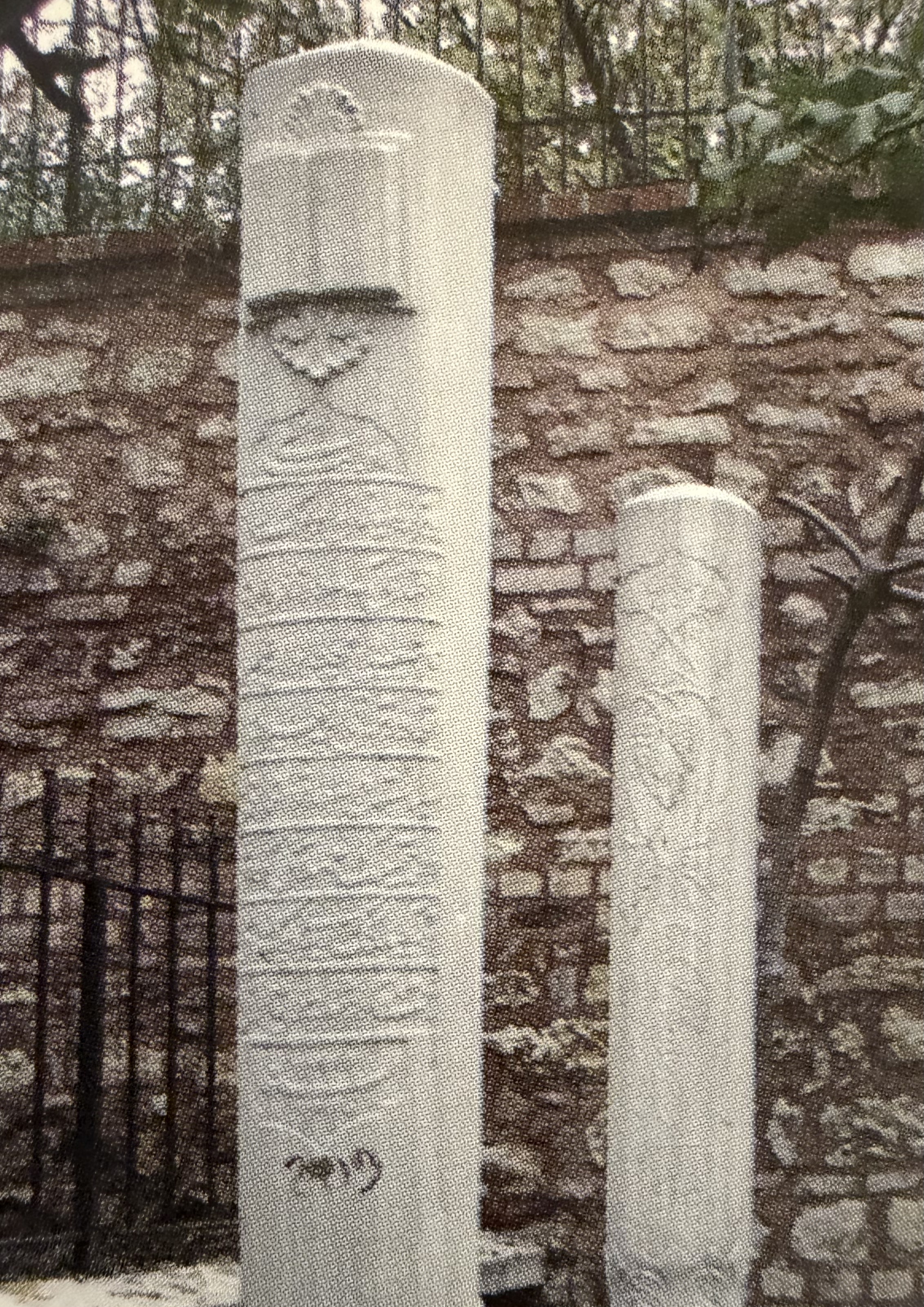
Emrullah Efendi’s intellectual side was not limited to education policy. In 1908 he was among the founders and administrators of the Turkish Association, and took part in one of the circles that helped Turkism gain a cultural and scholarly basis. The phrase “the grandfather of Turkism” on his gravestone points to his place in this early Turkist intellectual environment.
His encyclopaedist side is also notable. Under the title Muhîtü’l-Maârif he attempted to prepare a comprehensive modern encyclopedia in Turkish, but only the first volume of this large project could be published. After the Second Constitutional Period, he sought to revive the same initiative under the title Yeni Muhîtü’l-Maârif. This unfinished work is regarded as one of the pioneering attempts in the history of Turkish encyclopaedias.
Emrullah Efendi, an influential figure in education, politics and intellectual life, died on 11 August 1914 at his house in Yeşilköy and was buried in the Fatih Mosque Cemetery.
Epitaph
He is the Eternal. The great Emrullah Efendi lying in this grave opened new horizons in National Education. With his profound knowledge in every field, he was a guide of the Committee of Union and Progress. In politics, education and ethics he followed the principle of "statism." He was the great father of Turkism. May the Lord grant him His mercy. Year 1914.
A Fatiha for his/her soul