
İlber Ortaylı
Profile summary
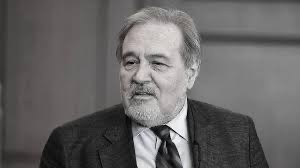
Highlights
İlber Ortaylı was born in Bregenz, Austria, on 21 May 1947 into a Crimean Tatar family. His father was Kefeli Kemal Ortaylı and his mother was Akmescitli Şefika Karaşay Ortaylı. His family’s post-war journey from Europe to Turkey shaped his childhood and youth amid Istanbul, Ankara, different languages and a wide historical geography.
He completed his primary and secondary education in Istanbul and Ankara, graduating from Ankara Atatürk High School in 1965. He studied at Ankara University Faculty of Political Sciences and the History Department of the Faculty of Language, History and Geography. He took courses in Slavic and Oriental studies at the University of Vienna and completed his master’s degree at the University of Chicago under Halil İnalcık. This educational line formed the basis of his broad view of Ottoman history together with the Balkans, Central Europe, Russia, the Caucasus and the Mediterranean world.
His academic work focused on Ottoman administrative history, post-Tanzimat provincial administration, imperial institutions, urban history and legal history. Works such as Tanzimat’tan Sonra Mahallî İdareler, Osmanlı İmparatorluğu’nda Alman Nüfuzu, İmparatorluğun En Uzun Yüzyılı and Türkiye Teşkilât ve İdare Tarihi became fundamental studies for understanding Ottoman modernization and state structure.
He taught at many institutions, especially Ankara University, Galatasaray University and Bilkent University. He served as visiting professor and gave lectures in Vienna, Berlin, Paris, Moscow, Rome, Sofia, Cambridge, Oxford and other centres. As a multilingual historian, he approached Ottoman history not only from within Turkey, but together with European and Eurasian archives, languages and historical traditions.
Between 2005 and 2012 he served as president of the Topkapı Palace Museum. Through his work and talks emphasizing that the palace was not merely a museum but one of the densest spaces of Ottoman state memory, he contributed to the wider public recognition of Topkapı Palace’s historical identity.
İlber Ortaylı became one of the most influential figures in bringing academic history to broad circles of readers and listeners. With his distinctive style, powerful memory, command of languages, witty narration and ability to connect historical detail with daily life, he awakened an interest in history across several generations.
His work on Mehmed the Conqueror, published in the later period of his life, is one of his books that examines him, a central figure of Ottoman historiography, in the context of empire, the Renaissance, the Mediterranean and world history. His burial in the cemetery of the mosque bearing the name of Mehmed the Conqueror therefore carries a strong historical symbolism.
İlber Ortaylı died in Istanbul on 13 March 2026. A commemoration ceremony was held for him at Galatasaray University on 16 March 2026; on the same day, after the funeral prayer at Fatih Mosque, he was buried in the Fatih Mosque Cemetery.