
İsmail Efendi
Profile summary
Highlights
Judging by his age at death, Gürcü İsmail Efendi was born around 1790. He was from Ahıska and was also known as İsmail Nebil Efendi. He was one of the late Ottoman scholars engaged in the spread of learning in Istanbul. Sicill-i Osmânî records that he was a dersiâm, that in 1260 he was appointed mudarris of the Hâmise-i Süleymaniye, and that he was counted among the learned men of his time.
Gürcü İsmail Efendi was one of the teachers who gave lessons at Fatih Mosque. He was especially known for presenting the commentary Rûhu’l-Beyân in his lessons. Rûhu’l-Beyân, the Qur’anic commentary of İsmail Hakkı Bursevî, was one of the fundamental works long read in Ottoman madrasa and Sufi circles.
He served as mukarrir in the Huzur Dersleri. These were Qur’anic commentary lessons held before the sultan during Ramadan, and mukarrir was the title given to the scholar who presented the lesson.
His work Mefâtîhu’t-Tahkîk was printed in 1285 in the Hijri calendar. This work shows that he was known not only through his lesson circles but also through studies in the auxiliary sciences used in madrasa learning.
Gürcü İsmail Efendi died at around the age of seventy on 15 Safar 1277, corresponding to 2 September 1860, and was buried in the Fatih Mosque Cemetery.
Epitaph
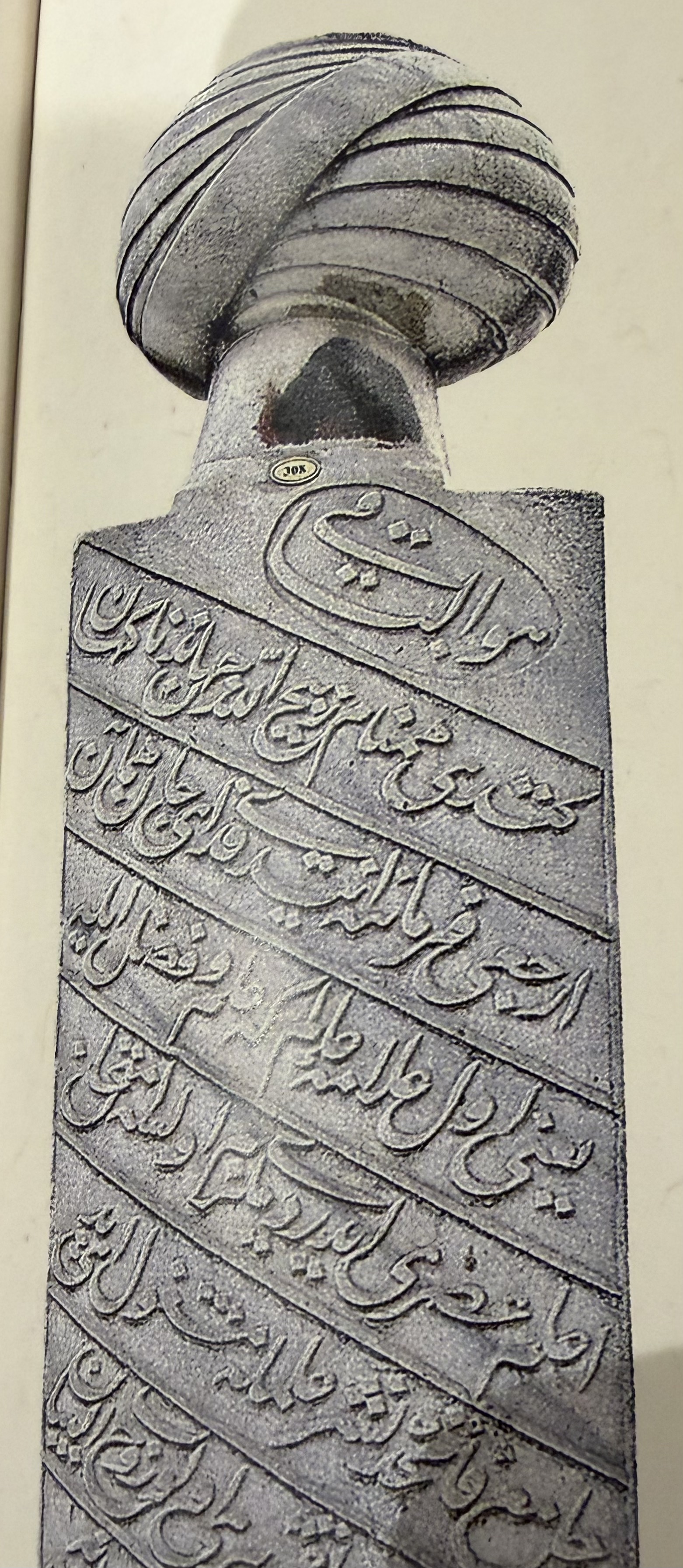
He is the Eternal. Like his namesake, Hazrat İsmail, he suddenly departed the world as a sacrifice to Allah. He immediately gave his life to the command "Return." If tested, he would silence even the greatest scholar of the age with his knowledge and virtue. He worked to spread learning in Fatih Mosque. He taught the tafsir Rûhu’l-Beyân. He delivered the lessons held before the sultan. He always silenced those present in his assembly with his learning. After reaching the age of seventy, he departed. May Allah illuminate his grave and make his abode Paradise. Saying that he went to nearness to Allah and to increase, I pronounced the date of death: "Gürcü İsmail Efendi longed for the presence of the Truth." 2 September 1860.
A Fatiha for his/her soul