
İsmail Hakkı Sami Efendi
Profile summary
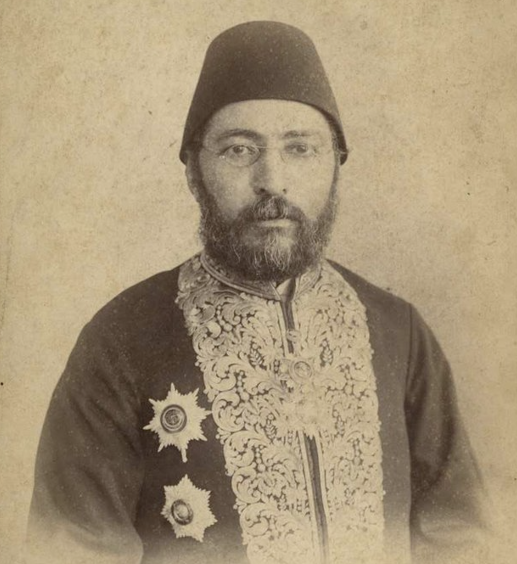
Highlights
İsmail Hakkı Sâmi Efendi was born on 13 March 1838 in the Haydarhâne neighborhood of Fatih in Istanbul. He was the son of Hacı Mahmud Efendi, steward of the quilt-makers, and Nefise Hanım. Because he was born after the Feast of Sacrifice, he was given the name İsmail Hakkı, and he became known by the pen name “Sâmi” that he received at the Bâbıâli. In his youthful writings he sometimes used the nickname “Yorganîzâde.”
After his education at the primary school, he began calligraphy training. He learned sülüs and naskh from Boşnak Osman Efendi and ta‘lik from Kıbrısîzâde İsmail Hakkı Efendi. He trained himself in various scripts such as divanî, celî divanî, rika, celî sülüs and celî ta‘lik, and over time came to be regarded as one of the strongest figures in Ottoman calligraphy, especially in celî sülüs and celî ta‘lik.
Because of financial hardship, he entered the Finance Office at a young age, and later worked in the Mühimme Kalemi of the Imperial Council. In 1878 he was appointed teacher of various scripts in the Imperial Council Office, then rose to senior clerkship in the Imperial Order Chancery and, in 1883, to the post of examiner in the same office. The Imperial Order Chancery was one of the offices in the Ottoman central bureaucracy concerned with orders, patents and official writing.
Sâmi Efendi was not merely an official serving in state offices; he was also a great master who created a new style in calligraphy. Inscriptions at Üsküdar Yeni Valide Mosque, Aksaray Pertevniyal Valide Sultan Mosque, Cihangir Mosque, Altunizâde Mosque, Hamidiye Etfal Hospital and some around Yıldız Palace are among the works associated with his celî sülüs and celî ta‘lik scripts. Gravestones he wrote on stone also form an important part of his calligraphic production.
With his mastery in sülüs, ta‘lik, divanî and tughra, Sâmi Efendi became a master consulted by the calligraphers of his own age. He influenced the training of great calligraphers such as Kâmil Akdik and İsmail Hakkı Altunbezer, whose careers extended into the Republican period.
Sâmi Efendi suffered health problems in his final years and died on 16 Rajab 1330 (1 July 1912). He was buried in the Fatih Mosque Cemetery beside his wife and daughter, who had died before him.
The gravestone of İsmail Hakkı Sâmi Efendi was written in celî sülüs by his student Hacı Kâmil Akdik. Kâmil Akdik, later known by the title “reisü’l-hattâtîn,” was one of Sâmi Efendi’s leading students; the decoration of the gravestone belongs to another of his students, İsmail Hakkı Altunbezer.
Epitaph
He is the Creator, the Eternal. A Fatiha for the pure soul of our very gracious and elegant master İsmail Hakkı Sâmi Efendi, former examiner at the Nişan-ı Hümayun Chancery, one of the notable statesmen, who departed this mortal world as a person famed for beautiful character, complete mastery and authority in every branch of calligraphy, and universal admiration; he attained Allah’s mercy and forgiveness. 1911. This inscription was written by Hacı Kâmil Akdik, student of the late Sâmi Efendi, who attained Allah’s mercy.
A Fatiha for his/her soul