
Kemal Haşim Karpat
Profile summary
Highlights
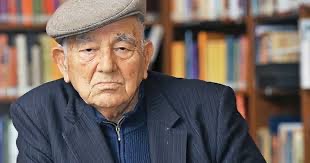
Kemal Haşim Karpat was born on 15 February 1923 in Armutlu, a village near Babadağ in Romanian Dobruja, into a Turkish family of Crimean origin. His childhood passed in a multilingual and multicultural environment inhabited by Turkish and Muslim communities who had remained in the Balkans after the Ottoman period. This environment later played a decisive role in his turn toward questions of migration, population, identity, urbanization and social change.
He began his education at Mecidiye Madrasa and continued it in Turkey. After graduating from Istanbul University Faculty of Law, he went to the United States, completing his master’s degree at the University of Washington and his doctorate at New York University. This movement between law, political science and the social sciences gave his historiography a broad perspective.
Kemal Karpat approached Ottoman history not only through dynasty, war and state organization, but also through population movements, migrations, urbanization, rural-to-urban transition, social strata and identity formation. Works such as Ottoman Population, 1830-1914, The Politicization of Islam and Turkey’s Politics: The Transition to a Multi-Party System became fundamental studies for understanding the social transformation from the Ottoman Empire to modern Turkey.
The longest and most influential period of his academic life passed at the University of Wisconsin-Madison. There he helped institutionalize Ottoman and Turkish historical studies, trained many students, founded the International Journal of Turkish Studies and created an international network in Turkish studies. His works earned him many awards and decorations in Turkey, Romania and the United States.
His own life was, in a sense, a mirror of the subjects he studied: born in Dobruja, raised in Istanbul and the founder of an academic centre in America, he made visible within world historiography the movements of people and experiences of modernization in the lands left from the Ottoman world. The title he gave to his memoir, Acıyı Bal Eylemek, also reflects the personal side of this long life marked by migration and separation.
Kemal Haşim Karpat died in Madison on 20 February 2019. His body was brought to Istanbul, and after the funeral prayer at Fatih Mosque on 25 February 2019, he was buried in the Fatih Mosque Cemetery.