
Mahmut Esad Efendi
Profile summary
Highlights
Mahmud Esad Efendi was born in 1856 in the Seydişehir district of Konya and belonged to the Çopur Kadıoğulları family, which produced many jurists. His father Güzelzâde Emin Efendi served as a deputy judge and his grandfather as a judge; this family background nourished his identity in both the learned and legal fields.
After completing his primary education in Seydişehir, he came to Istanbul in 1870 and studied the religious sciences at the Fatih Madrasa under Elbasanlı Abdülkerim Efendi. He became a dersiâm in 1881.
Mahmud Esad Efendi’s education was not limited to the madrasa. He turned to the positive sciences at the Menşe-i Muallimîn-i Askerî and then, by special permission, became the only civilian student to attend the Staff Class of the Military Academy. He received a diploma as a teacher of higher mathematics, and in the same years entered the Law School, graduating in 1886.
He began his official career as a teacher at the Gülhane Military Rüşdiye. He was later appointed president of the İzmir Court of First Instance and served in İzmir for about ten years. Alongside his judicial work, he taught at İzmir İdâdî and contributed, together with Halid Ziya Uşaklıgil and Tevfik Nevzat, to the publication of the newspapers Hizmet and Âhenk. After returning to Istanbul, he taught economics, international law, the Mecelle and Islamic history at the Mekteb-i Mülkiyye, the Law School and the Darülfünun.
In 1909 Mahmud Esad Efendi became Minister of the Defter-i Hâkânî, the Ottoman land registry and cadastre administration. He played an important role in renewing Ottoman land registry and cadastre legislation. Because of the laws issued during this office, he was later remembered in Turkey as one of the pioneers of modern land registry and cadastre work; in the Republican period, his family adopted the surname Kadaster in reference to this service.
In 1913 he was appointed president of the Tanzimat Chamber of the Şûrâ-yı Devlet, and on 17 October 1915 he was elected deputy for Isparta.
A prolific author, Mahmud Esad Efendi wrote works in law, fiqh, hadith, history, economics, natural sciences and the history of religions. Usûl-i Hadîs, Usûl-i Fıkıh, Ferâidü’l-Ferâiz, Hukûk-ı Düvel, Târîh-i Dîn-i İslâm and Târîh-i İlm-i Hukûk are among his notable works. He was also interested in Western languages, learning English, French and German in order to follow Western publications on the Islamic world.
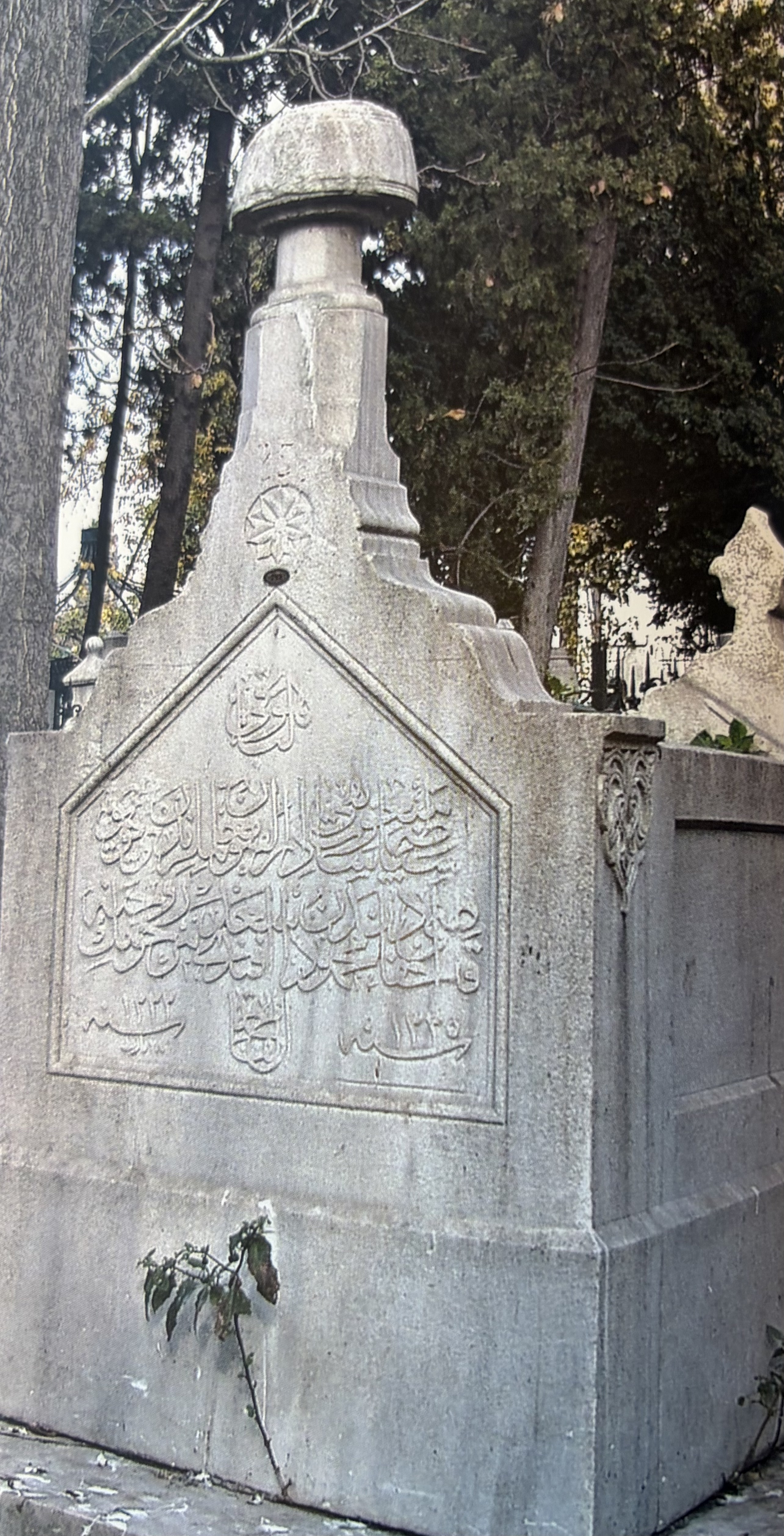
According to the date on his gravestone, Mahmud Esad Efendi died on 28 March 1917 and was buried in the Fatih Mosque Cemetery.
Epitaph
He is the Eternal. A Fatiha for the soul of the late Mahmud Esad Efendi, former Isparta deputy, one of the Darülfünun professors and descended from Çopur Kadı. 28 March 1917.
A Fatiha for his/her soul