
Ömer Hilmi Efendi
Profile summary
Highlights
Ömer Hilmi Efendi was born on 29 August 1842 in Karinâbâd and was the son of Karinâbâdî Abdurrahman Efendi, a madrasa professor and dersiâm. He memorized the Qur’an at a young age and studied hadith and Islamic law with important teachers of the period, receiving his ijazah from Kazasker Tikveşli Yûsuf Efendi.
He began his scholarly life at a young age around Fatih and started teaching at Fatih Mosque in December 1862. He then served in the Fetvahâne-i Âlî, the institution where fatwa procedures were carried out, and held duties such as fetva emini.
Ömer Hilmi Efendi’s most important place in legal history comes from his role in the Mecelle Commission. He served in the preparation of the last four books in particular of the Mecelle, one of the fundamental texts of Ottoman civil law, and in some sections held the title reisü’l-müsevvidîn, the head of the drafting clerks. It is also related that Ahmed Cevdet Paşa referred to Ömer Hilmi Efendi some questions on matters of Islamic law that were addressed to him.
Rising through the ilmiye ranks, he received the pâyeleri of Jerusalem and the Haremeyn mevleviyet, and later the Istanbul mevleviyet pâye. In 1888 he was appointed a member of the Civil Chamber of the Mahkeme-i Temyiz, the Court of Cassation, and shortly afterward became first president of the Mahkeme-i Temyiz.
His reputation in Islamic law and legal scholarship continued through his works. His İthâfü’l-ahlâf fî ahkâmi’l-evkâf, “A Gift to Later Generations on the Rules of Pious Foundations,” is an important work that treats foundation law in articles in the style of the Mecelle. Although it did not become an official law code, it became one of the basic reference books in matters of pious foundations and was translated into French, English and Arabic.
In the final days of his life, he was summoned to the palace and interrogated following a denunciation submitted to Sultan Abdülhamid II. Although the subject of the denunciation is not known with certainty, it is thought that it may have concerned the fatwa for the deposition of Sultan Abdülaziz.
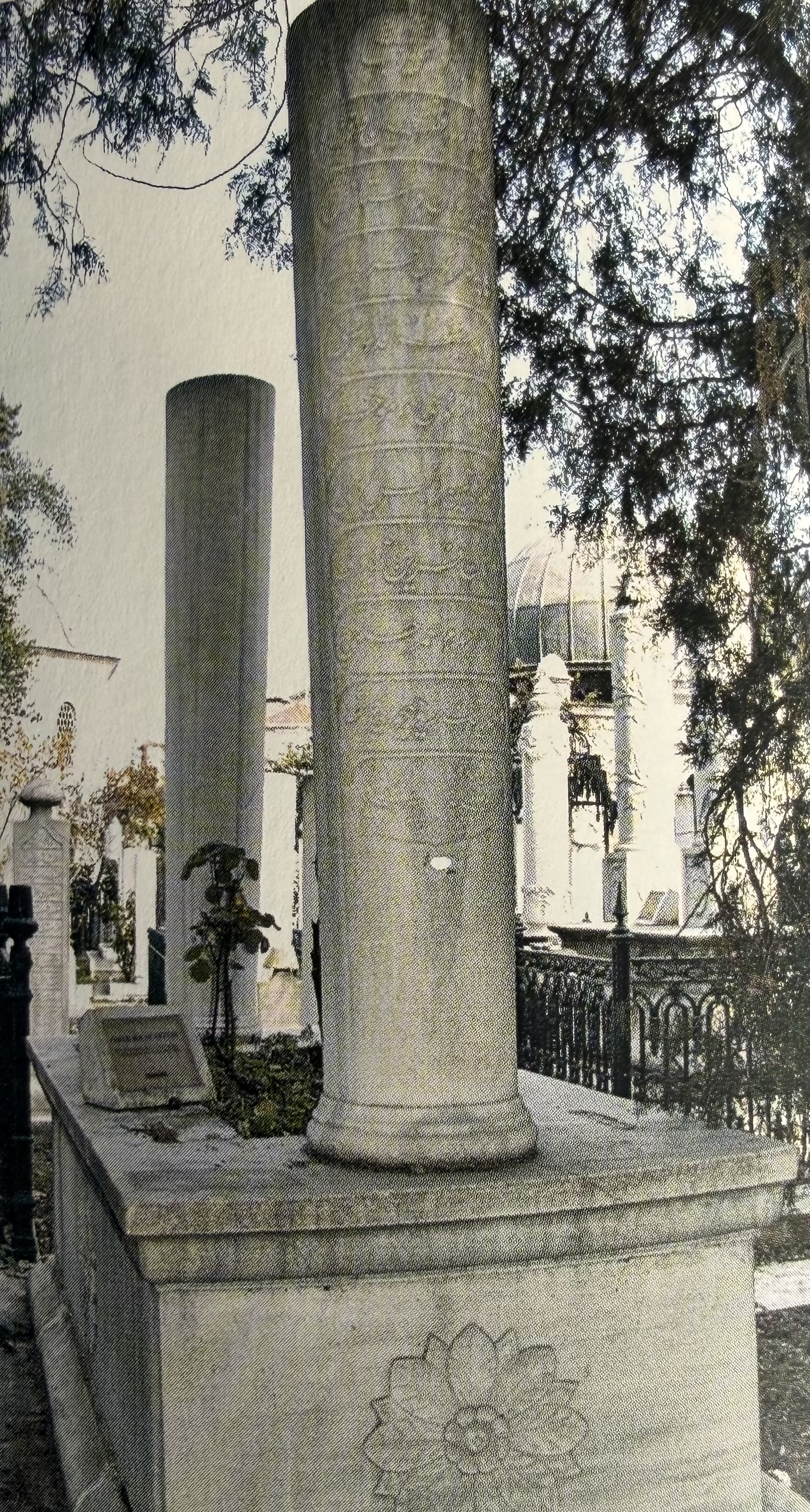
Karinâbâdîzâde Ömer Hilmi Efendi died shortly afterward, without any action being taken against him, on 2 Rabi al-Awwal 1307 (27 October 1889), and was buried in the Fatih Mosque Cemetery.
Epitaph
He is the Living, the Eternal. A Fatiha for the soul of Karinabadioğlu Ömer Hilmi Efendi, one of the scholars and jurists, holder of the Istanbul rank, unique in his age and its Abu Hanifa, former fetva emini and first president of the Court of Cassation. Date of birth: 1842 / Date of death: 1889.
A Fatiha for his/her soul