
Said Ünsi Efendi
Profile summary
Highlights
Said Ünsizâde was born in Şemahı, today within the borders of Azerbaijan, in 1842 and belonged to a scholarly and literary family from Shirvan. His father Abdurrahman Efendi was a scholar versed in Arabic and Persian and wrote poems under the pen name “Ünsî.”
Said Ünsizâde received his first education from his father. After completing the Şemahı Madrasa, he went to Baghdad and advanced his studies in religious sciences. After returning to his homeland, he became interested in education and pedagogy; in 1866 he was elected to the Şemahı Sharia Council, in 1873 to the Religious Council of the Baku Governorate, and in the same year became president of this council.
One of Said Ünsizâde’s most notable services in Şemahı was the Meclis School, which he opened together with his brother Celal Ünsizâde. In this school, which operated close to a modern method, Azerbaijani Turkish, Russian, Arabic, Persian and mathematics were taught alongside religious lessons.
Settling in Tbilisi in 1876, Said Ünsizâde served in the Caucasus Spiritual Administration and turned there to publishing activities. The newspaper Ziya, which he began publishing in 1879, was one of the early press initiatives published in Azerbaijani Turkish.
During his Tbilisi years, he not only published a newspaper but also wrote works for the education of children and students. The fact that Tonguç and Şafak, the newspapers of the famous Crimean thinker İsmail Gaspıralı before Tercüman, were also printed at the Ziya Printing House strengthened Said Ünsizâde’s place within the publishing network among the Muslims of the Caucasus and Russia.
When he was appointed judge of the Baku region and head of the spiritual administration in 1883, he returned to Şemahı and moved the Ziya Printing House there as well. The newspaper closed in 1884 because of financial difficulties; Said Ünsizâde came to Istanbul in 1890.
In Istanbul he was appointed a member of the Meclis-i Kebîr-i Maârif, the Grand Council of Education, and the Meclis-i Tedkîkât-ı Şer‘iyye, the Council for Religious-Legal Review. In 1896 he was sent to the Mabeyn to meet Sultan Abdülhamid II.
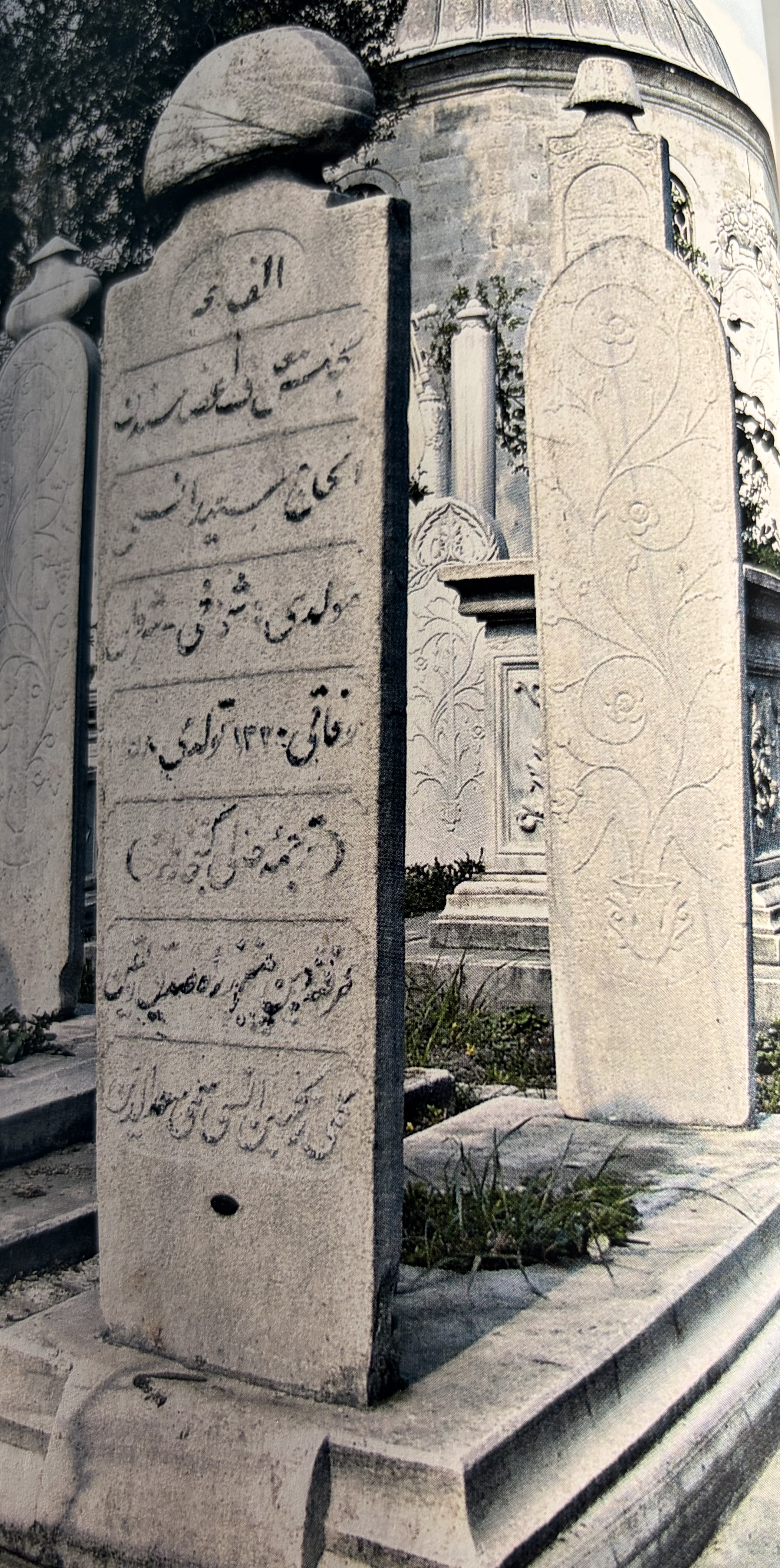
Hacı Said Ünsizâde, who left a mark in the fields of education, religious sciences, publishing and child education in the Caucasus, died in 1903 at the age of 61 and was buried in the Fatih Mosque Cemetery.
Epitaph
Al-Fatiha. Hacı Said Ünsî Efendi, member of the Council of Education. Place of birth: Şamahi-Şirvan / Death: 1903 / Birth: 1842. His life story is in the libraries. On the path of truthfulness and certainty, he was devoted to the religion of the Prophet, a rose among rose saplings, named Ünsî Sadeddin. 1903.
A Fatiha for his/her soul