
Şehbenderzade Hilmi Bey
Profile summary
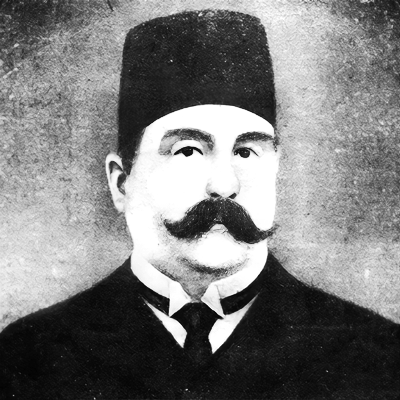
Highlights
Ahmed Hilmi Bey was born in 1865 in Filibe, now within the borders of Bulgaria. His father was Şehbender Süleyman Bey and his mother was Şevkiye Hanım. The nickname “Şehbenderzâde” relates to his father’s office as şehbender, or consul, while the nisba “Filibeli” refers to the city of his birth. After the Ottoman-Russian War of 1877-1878, he came to Istanbul with his family and continued there the education he had begun in Filibe.
Filibeli Ahmed Hilmi Bey began his official career at the Sirkeci Post Office, made contact with the Young Turks in Beirut, moved to Egypt in 1900, and after returning to Istanbul was exiled to Fezzan in 1901. These years of exile became an important turning point in his intellectual world; he became interested in Sufism and the Senûsî circle, and entered the Arûsiyye order.
After the proclamation of the Second Constitutional Period, Ahmed Hilmi Bey returned to Istanbul, taught philosophy at the Darülfünun, and soon became prominent in the lively press life of the period. Through publications such as İttihâd-ı İslâm, Coşkun Kalender and especially Hikmet, he brought his ideas to wide audiences.
In the controversial intellectual atmosphere of the Second Constitutional Period, Ahmed Hilmi Bey became known for his writings against imitation of the West, materialist philosophy and the political shifts of the time. He initially supported the Committee of Union and Progress, but later criticized it sharply; because of these criticisms, his journals and newspapers were frequently closed, and in 1911 he was exiled first to Kastamonu and then to Bursa.
Şehbenderzâde Ahmed Hilmi wrote works in kalām, philosophy, Sufism, history, politics and literature. His best-known work is A‘mâk-ı Hayâl. This philosophical novel about spiritual searching is regarded as one of the most important works of Turkish Sufi literature.
In his writings he sometimes used the pen name “Şeyh Mihridîn Arûsî,” in humorous pieces “Coşkun Kalender” and “Kalender Gedâ,” and in national poems “Özdemir.”
Şehbenderzâde Filibeli Ahmed Hilmi Bey died suddenly in 1914 and was buried in the Fatih Mosque Cemetery.
Epitaph
One night (...) / With such a wing of love (...) you found by enduring / The drop of your love is the vital point of the world (...) hidden in the knowledge of love / In all unity you found Allah / A Fatiha for the soul of the wise Şehbenderzade Hilmi Bey. Year 1913.
A Fatiha for his/her soul