
Yesarizade Mustafa İzzet Efendi
Profile summary
Highlights
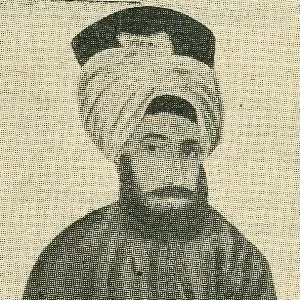
Mustafa İzzet Efendi is accepted as having been born in Istanbul in the early 1770s. He was the son of Mehmed Es‘ad Yesârî Efendi, one of the great masters of Ottoman ta‘lik calligraphy, and was therefore better known as “Yesârîzâde.” He received his calligraphy training from his father at an early age and obtained his ta‘lik ijazah in 1787.
At first Yesârîzâde produced works very close to his father’s celî ta‘lik style, but over time he formed his own manner of writing. This style became distinct from 1815 onward and matured especially after 1824, carrying Turkish ta‘lik calligraphy in monumental writing to one of its highest levels. Celî ta‘lik is the large ta‘lik script used in architectural inscriptions and large panels; Yesârîzâde gave this script a new elegance in terms of proportion, harmony and architectural integration.
His signature appears on many architectural works in Istanbul from the reigns of Selim III, Mahmud II and Sultan Abdülmecid. The Alay Köşkü, the Nusretiye Fountain, the inscriptions at the Imperial Arsenal and the inscriptions of fountains, mosques, sebils, palaces and official buildings of the period are among the examples showing Yesârîzâde’s mastery in celî ta‘lik. He is one of the foremost calligraphers whose signed inscriptions, numbering more than a hundred, remain on monuments in Istanbul.
Yesârîzâde was known not only for his calligraphy but also for his rise within the learned establishment. After holding mudarris and judicial ranks, he became acting Anatolian Kazasker in 1839 and Rumelian Kazasker in 1846. Kazaskerlik was one of the highest judicial and scholarly offices in the Ottoman learned hierarchy; in this respect, Yesârîzâde united artistic mastery with a high position in the state hierarchy.
In 1842 he was appointed director of the Takvimhâne, where Takvîm-i Vekāyi‘ was printed, and at the same time administered the Imperial Printing House. With moulds taken from the letters he wrote, the printing of books in small ta‘lik type began. One of the first works printed with these letters was Kasabbaşızâde İbrâhim Efendi’s Risâle-i İ‘tikādiyye.
His output in calligraphy was extremely large. It is reported that after his death, tens of thousands of lines of celî ta‘lik templates were found in his estate. His students included Ali Haydar Bey, Abdülfettah Efendi and other important calligraphers of the period. His celî ta‘lik style continued powerfully throughout the nineteenth century in Istanbul inscriptions and calligraphy exercises.
Yesârîzâde Mustafa İzzet Efendi died on 23 June 1849 and was buried behind the Fatih madrasas, in the cemetery of the Tûtî Abdüllatif Efendi Madrasa, beside his father Mehmed Es‘ad Yesârî Efendi. When this cemetery disappeared during the fires and road-widening works of the early twentieth century, the gravestones of the father and son, two great calligraphers, were later brought to the Fatih Mosque Cemetery.
The gravestone of Yesârîzâde Mustafa İzzet Efendi was written in celî ta‘lik by one of his students, Ali Haydar Bey.
Epitaph
He is the Eternal. For the sake of Allah, a Fatiha for the soul of the esteemed master Yesârîzade Hacı Mustafa İzzet Efendi, who attained Allah’s mercy and forgiveness. June 1849.
A Fatiha for his/her soul