
Yusuf Sıdkı Mardini
Profile summary
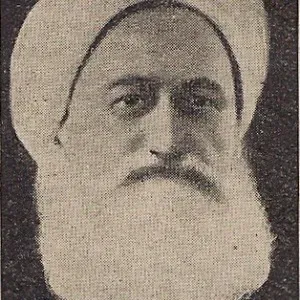
Highlights
Yusuf Sıdkı Mardinî Efendi was born in Mardin in 1237 in the Hijri calendar (1821) and was the son of Seyyid Ömer Şevki Efendi, Mufti of Mardin. He belonged to a well-established sayyid family linked to the lineage of Hazrat Husayn.
He began Qur’an education at a young age and, with his father’s support, soon distinguished himself in the religious sciences. After completing his studies in Mardin, he first served as chief clerk of the Mardin Court and then as Mufti of Mardin.
After long service in the ilmiye, he was appointed a member of the Meclis-i Tedkîkât-ı Şer‘iyye and was honored with the pâye of Anatolian kazasker. The Meclis-i Tedkîkât-ı Şer‘iyye was one of the high councils where matters coming from the sharia courts were reviewed and where the ilmiye and judicial organizations intersected. The kazasker pâye indicated a high rank and degree of prestige in the ilmiye hierarchy rather than an active office.
The greatest share in Yusuf Sıdkı Mardinî Efendi’s scholarly fame belongs to his extensive translation and commentary on Imam al-Ghazālī’s İhyâü Ulûmi’d-Dîn. This work, known as Mesîru Umûmi’l-Muvahhidîn Şerh u Terceme-i Kitâb-ı İhyâu Ulûmi’d-Dîn, has today been published in ten volumes by the Turkish Manuscripts Institution.
His command of Arabic, Persian and Turkish texts, and especially the fact that he held thousands of verses from Arabic literature in his memory, placed him among the scholars of his age distinguished by scholarly and literary power.
His family also left a mark on scholarship, law and intellectual life in the Republican period. Ebül‘ulâ Mardin, known for his studies in Turkish legal history and foundation law, was the son of Yusuf Sıdkı Efendi; the famous sociologist Şerif Mardin also belongs to later generations of this family line.
Seyyid Yusuf Sıdkı Mardinî Efendi died on Sunday, 20 Dhu al-Hijja 1319 (30 March 1902), and was buried in the Fatih Mosque Cemetery.
Epitaph
He is the Living, the Eternal. Yusuf Sıdkî Hazretleri of Mardin, the renowned mufti, peerless in the world and descended from the pure line of the Prophet, had gladdened the soul of his ancestor, the sultan of messengers. The perfected were astonished by his piety, abundant worship and beautiful character, and the people of the world admired his knowledge and spiritual insight. The fame of his virtue and skill filled the world. He had benefited from the knowledge of both East and West. Sunday, March 1902.
"All that is upon the earth shall perish." (Rahman 26) He spent sixty years of his life for the sacred law. He spoke only of Islamic jurisprudence, Qur’anic commentary and hadith. He also worked hard in writing works. His commentary on the work Ihya’u Ulumi’d-Din is unforgettable. Especially his Mecmua-i Fetva and Nevabiğ Şerhi were works that jurists would not put down, and became model texts for those who wished to express their meaning briefly, clearly and properly. When Yusuf Sıdkî’s lofty efforts outgrew the world, he made Paradise his abode. 1902.
A Fatiha for his/her soul