Changes After Construction
The complex was ruined in the fire of 1782; it was repaired in the same period.
After the fire of 1908, its surroundings fell into ruin; the structure was made usable again.
Repairs were carried out in 1943–1944; the structure was arranged with the function of a City Museum.
It was later arranged as the Museum of Caricature and Humour; following discussions in 1994 on the closure of the museum, the structure was preserved with its museum function.
Since 2014, the structure has been used for educational and cultural activities.
Featured Highlights
The complex consists of a madrasa, a tomb, and a sebil.
The structure is one of the early examples of small complexes established solely around a madrasa, without being attached to a mosque.
Within the outer courtyard there are a polygonal tomb and a sebil; the courtyard also contains a small graveyard consisting of graves.
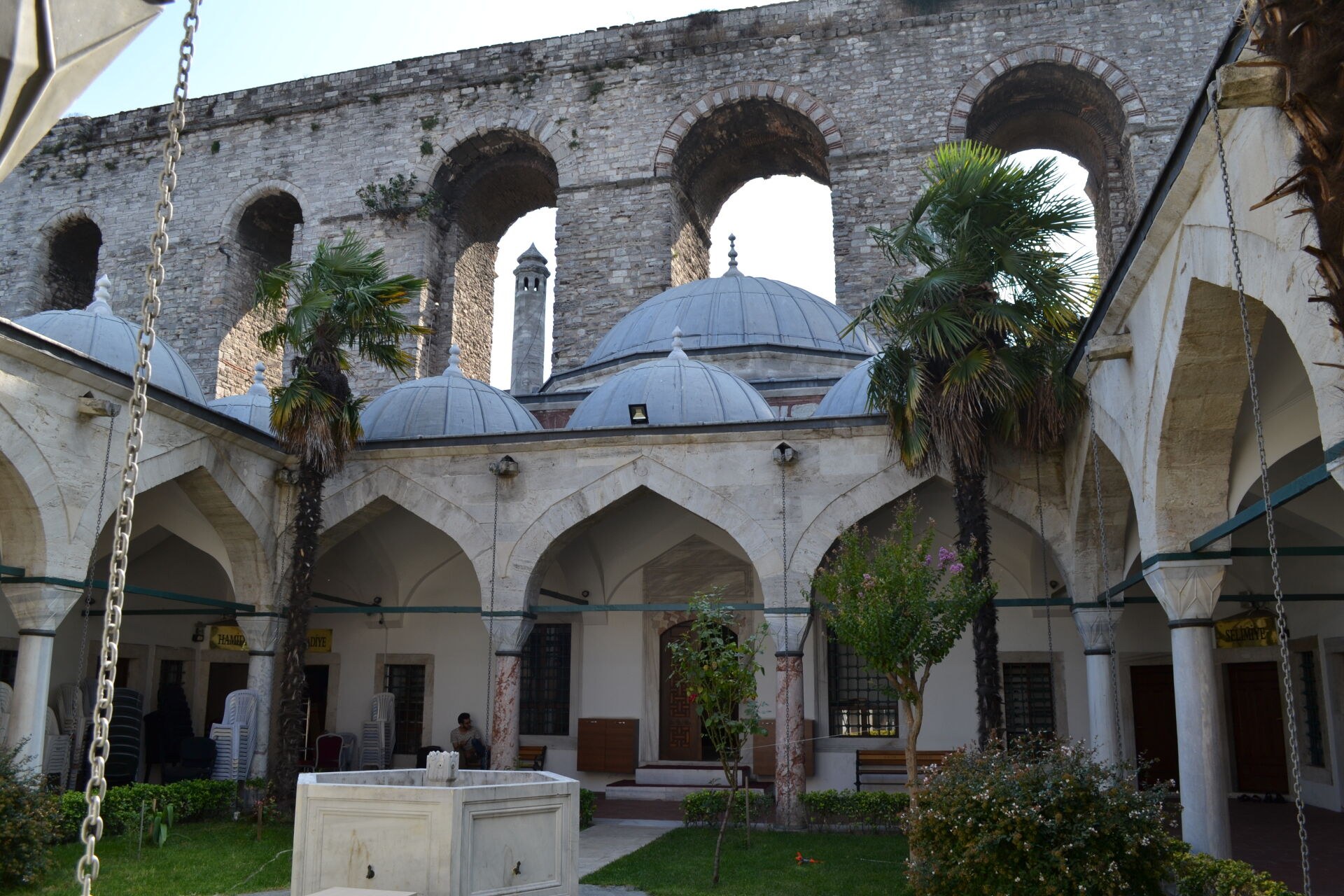
In the inner courtyard there are porticoes resting on marble columns with baklava capitals and student cells around them; on the entrance axis there is a square-planned, domed masjid-classroom.
The fountain at the center of the courtyard was built during the 1943–1944 repair; the presence of a fountain in the initial construction phase is not certain.
Its very close location to the Bozdoğan Aqueduct increased the humidity problem in the structure.
In the waqf deed, the madrasa is described as having 17 cells; every morning after the dawn prayer, the students recite the Qur’an for the soul of the founder.
There is a poem by Şehnâmeci Seyyid Lokman on the opening of the madrasa and the appointment of its first müderris.