
Changes After Construction
As understood from the inscription on the door, Sultan Abdulmecid had the mosque extensively repaired.
The mosque was largely destroyed in the fire in 1920.
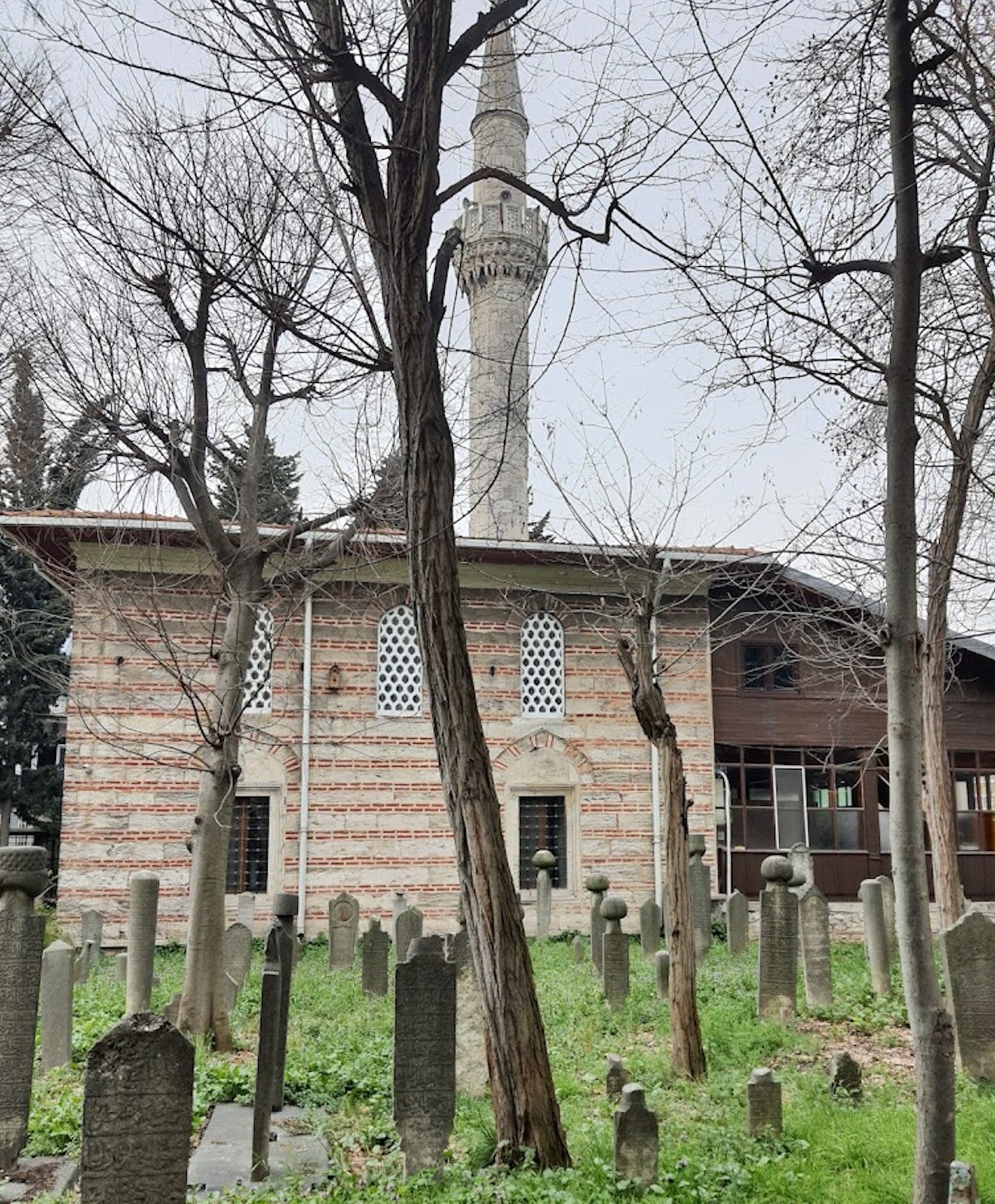
The building, which remained standing as four walls for many years, was repaired again in 1936-1943 and 1956 with the help of a benefactor; however, the roof and narthex were not rebuilt in accordance with the original during these restorations.
In the early days, the mosque was covered with lead and the windows were decorated with tiles; however, when it fell into disrepair and was abandoned, all the tiles were stolen.
Featured Highlights
The mosque is considered to be the exact replica of the Ramazan Efendi Mosque in its original form.
Its founder, Hacı Evhaddin, is buried in front of the mihrab.
It was built with a rectangular plan and a masonry structure; its walls were built of rubble stone and brick.
The narthex and its roof are made of wooden materials.
The minaret on the right is built of cut stone, has a single balcony and is elegantly decorated. The minaret's rostrum has corner columns with capitals at the corners, and between these columns are carved floral reliefs downwards.
The minbar and the preacher’s pulpit of the mosque are made of wood, while the mihrab is made of plaster.
There is a women's gallery and muezzin's gallery inside the mosque.
There are two courtyard entrance gates; on the western side of the courtyard, there is a lodge, a kitchen and a “tevhidhane” (the name given to the place where the Sufi worship are performed and the daily prayers are performed in the lodges).
The lodge section was later repaired and started to be used as a Quran course.
There is no trace left of the dervish cells on the northern side today; these cells hosted the poor widows of the neighborhood after the dervish lodges and zawiyas were closed.
In 1945, the late Ahmed Davudoğlu, one of the valuable scholars of the last period, also worked in this mosque.