
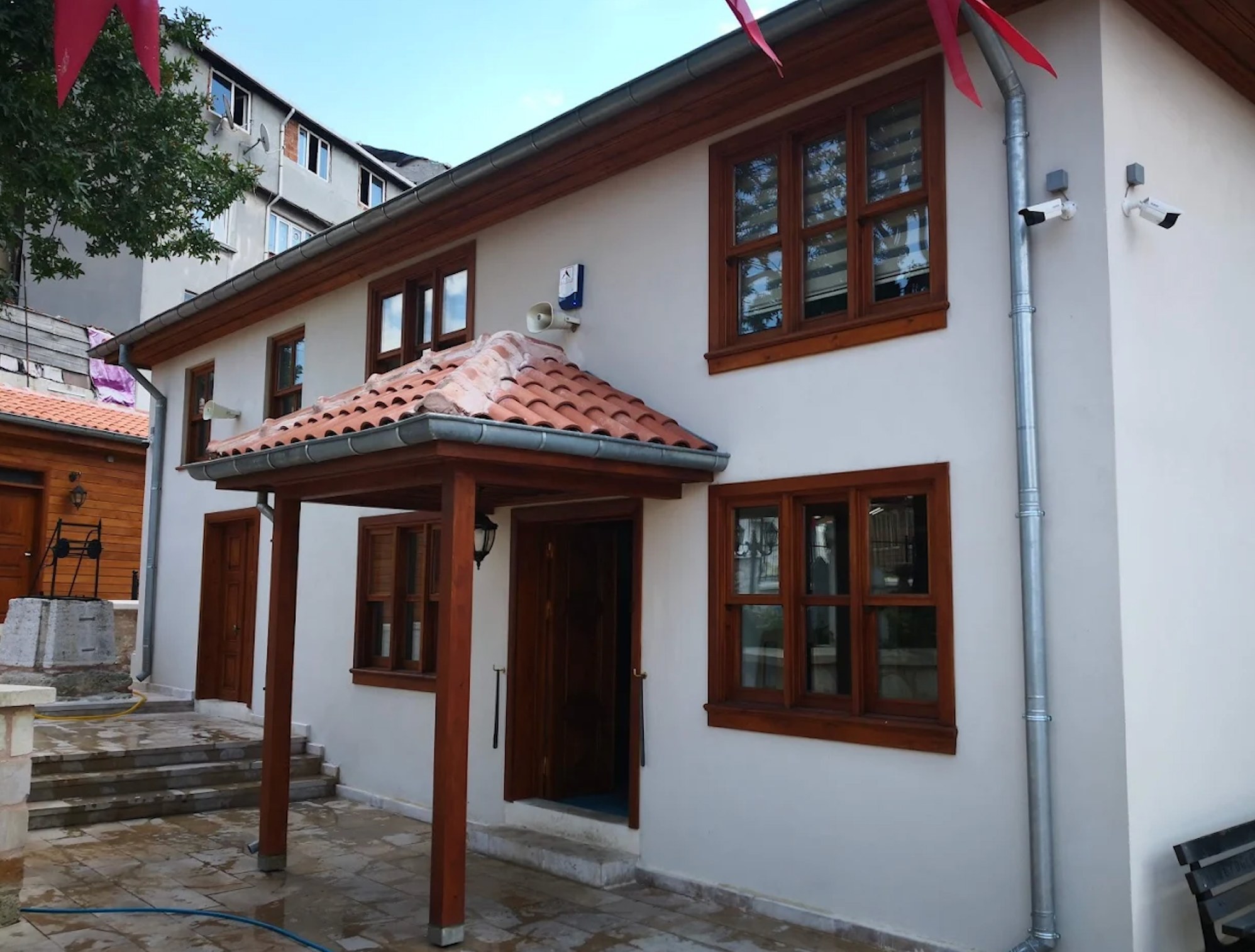
Changes After Construction
It remained neglected for many years, and was repaired at certain periods.
The interior is decorated with tiles.
The historical fountain was repaired by Grand Vizier Abak Halil Hamit Pasha in the 19th century.
An inscription dated 1611 was found during the construction of the garden wall.
Featured Highlights
It has a square planned main area. Its walls are made of stone, its roof and narthex are made of wood.
Its wooden roof is covered with tiles. Its single-balcony minaret is made of brick.
Its wooden minbar was built by Fatma Hatun, the granddaughter of Hacı Hüsrev.
It is illuminated by round arched windows on the north, southwest and west facades.
The women's gallery is accessed from the western corner of the wooden narthex.
Next to the mosque is the Çorlulu Ali Pasha Fountain.
There is a historical well, about ten historical tombstones and various ruins in its garden.
It is said that the grave next to the mihrab belongs to Hacı Hüsrev.
In the work named Hadika, it is stated that the wooden minbar of the mosque was built by Fatma Hatun, the granddaughter of Hacı Hüsrev .
The area where the mosque is located was an important center during the Ottoman period and there are various historical artifacts around it.
The interior space was expanded with the round arched opening on the east wall added to the mosque.