
Changes After Construction
Sheikh Mustafa İzzî Efendi purchased the house in which he lived as a tenant and the surrounding land, and founded the Sufi Lodge in 1785; he drew up its waqf deed in 1787.
Shortly after its foundation, the Sufi Lodge was enlarged and renewed, probably in the early 19th century during the reign of Selim III.
During the reign of Mahmud II, it was rebuilt twice, in 1816 and 1836; in this process, a Sultan’s Lodge was added to the tawhidkhana.
In 1887, Abdülhamid II had the buildings rebuilt except for the main gate; these structures were designed by Elif Efendi, the last Postnishin (post-holder) of the Sufi Lodge.
After the closure of the Sufi lodges in 1925, the tawhidkhana-tomb building passed into the ownership of the Foundations Administration; the tomb wing collapsed over time.
In the early 1960s, the tawhidkhana was repaired by the Foundations Administration; in 1979, its roof was overhauled.
The harem-selamlık section, which was the property of the Hasîrîzâde family, was destroyed by fire in 1983 together with the calligraphic panels, tariqah objects, and books it contained.
Featured Highlights
The Sufi Lodge is also known as “Hasırcızâde Sufi Lodge.”
Until the end of its history, the sheikhdom of the Sufi Lodge remained affiliated with the Sa’diyya order and was carried on by the Hasîrîzâdes, who descended from its founder.
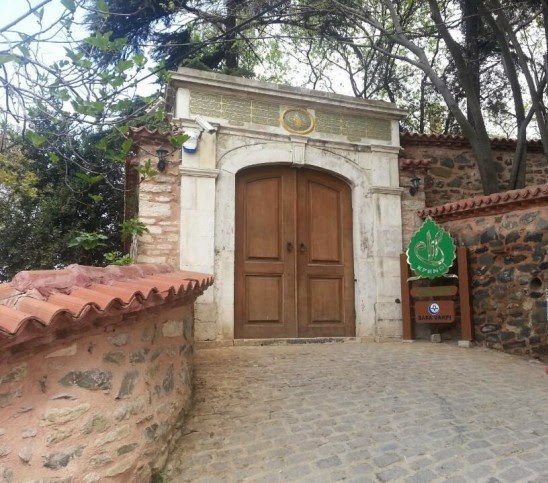
The main gate of the Sufi Lodge is built of cut küfeki stone; the gate, in the Empire style, bears the tughra of Mahmud II and a verse inscription dated 1836-1837.
It is recorded that the Sufi Lodge had a close relationship with the Mawlawiyya and that Mathnawi instruction in the Sufi Lodge began during the period of the second Postnishin (post-holder), Sheikh Süleyman Sıdkı Efendi.