
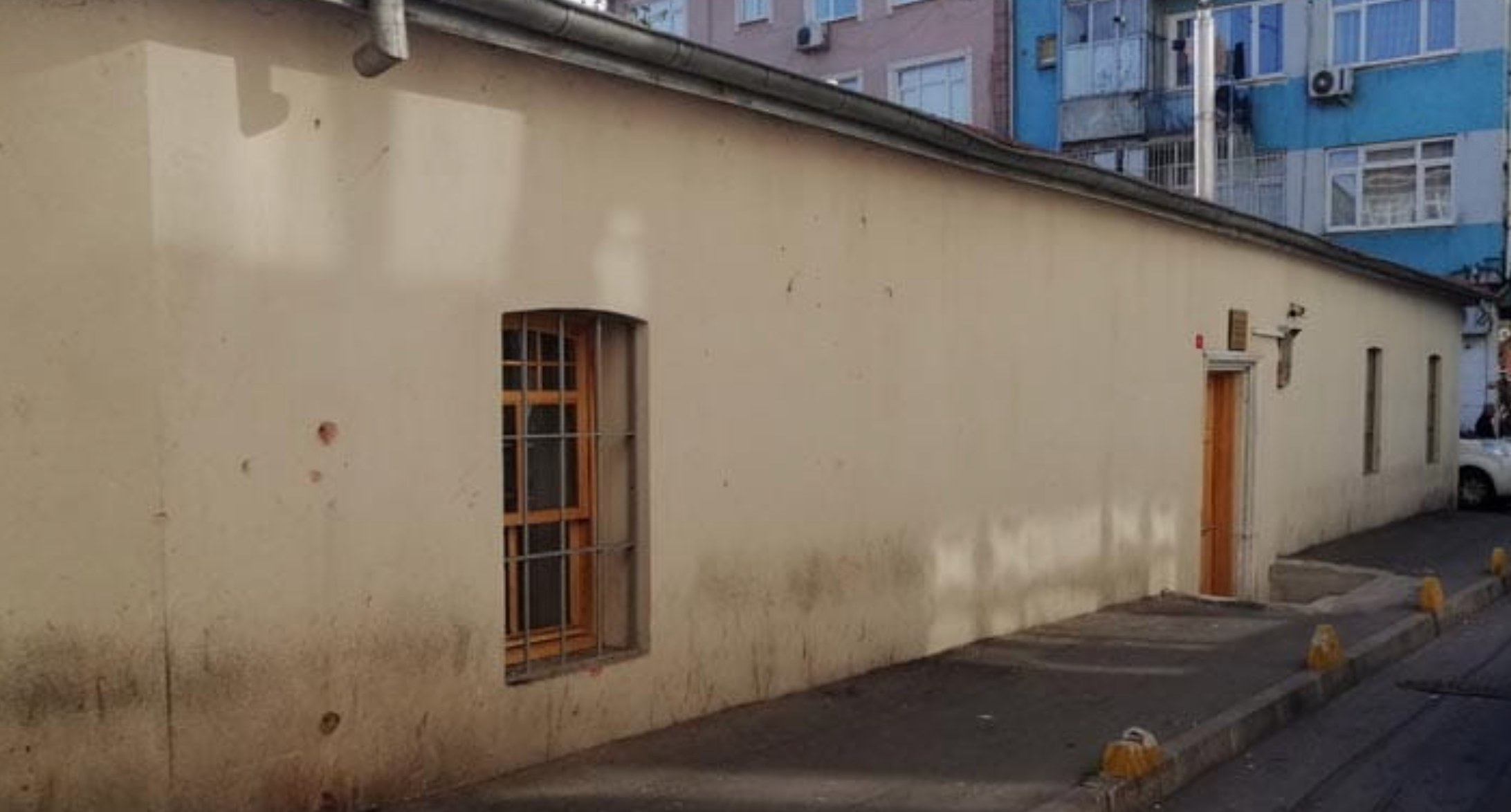
Changes After Construction
The earliest repair that can be identified in the madrasa is dated 1870.
Another repair was carried out in 1881.
The 1894 earthquake caused serious damage to the structure; in 1895, a plan was prepared for its demolition and reconstruction.
The reconstruction process could not be started until 1899.
The madrasa retained its function as an educational structure until 1914; after 1914, it acquired a residential function.
After the Beyazıt fire of 1918, those left homeless used the structure as a shelter.
In the early 2000s, most of the structure was used for housing; the classroom section was used as a depot.
Featured Highlights
It is also known as Horhor Madrasa and Hasan Agha Madrasa.
It has an arrangement of porticoes around a rectangular courtyard and cells behind the porticoes; the number of cells is 10.
Opposite the entrance there is a square classroom; next to the classroom there is a primary school.
It is one of the single-storey masonry madrasas that have survived in the Aksaray area; residential use has damaged the architectural integrity of the structure.
The traces of the courtyard and the cells remain legible despite late-period interventions.