
Changes After Construction
It is stated that Haydarhane Mosque was built as a masjid and functioned together with the Sufi Lodge-graveyard ensemble; records regarding the early existence of the structure are found in Ottoman waqf/register documents.
It is conveyed that in 1755 (during the reign of Osman III), Nişancı Bıyıklı Ali Pasha established a waqf, had the masjid furnished, and strengthened its mosque function by having a minbar installed.
It is recorded that by 1934 the structure had been demolished and that after this date its continuity as a place of worship was interrupted.
It is stated that in the second half of the 20th century, the last traces on the site were also erased in the 1970s and the structure became physically invisible for a long time.
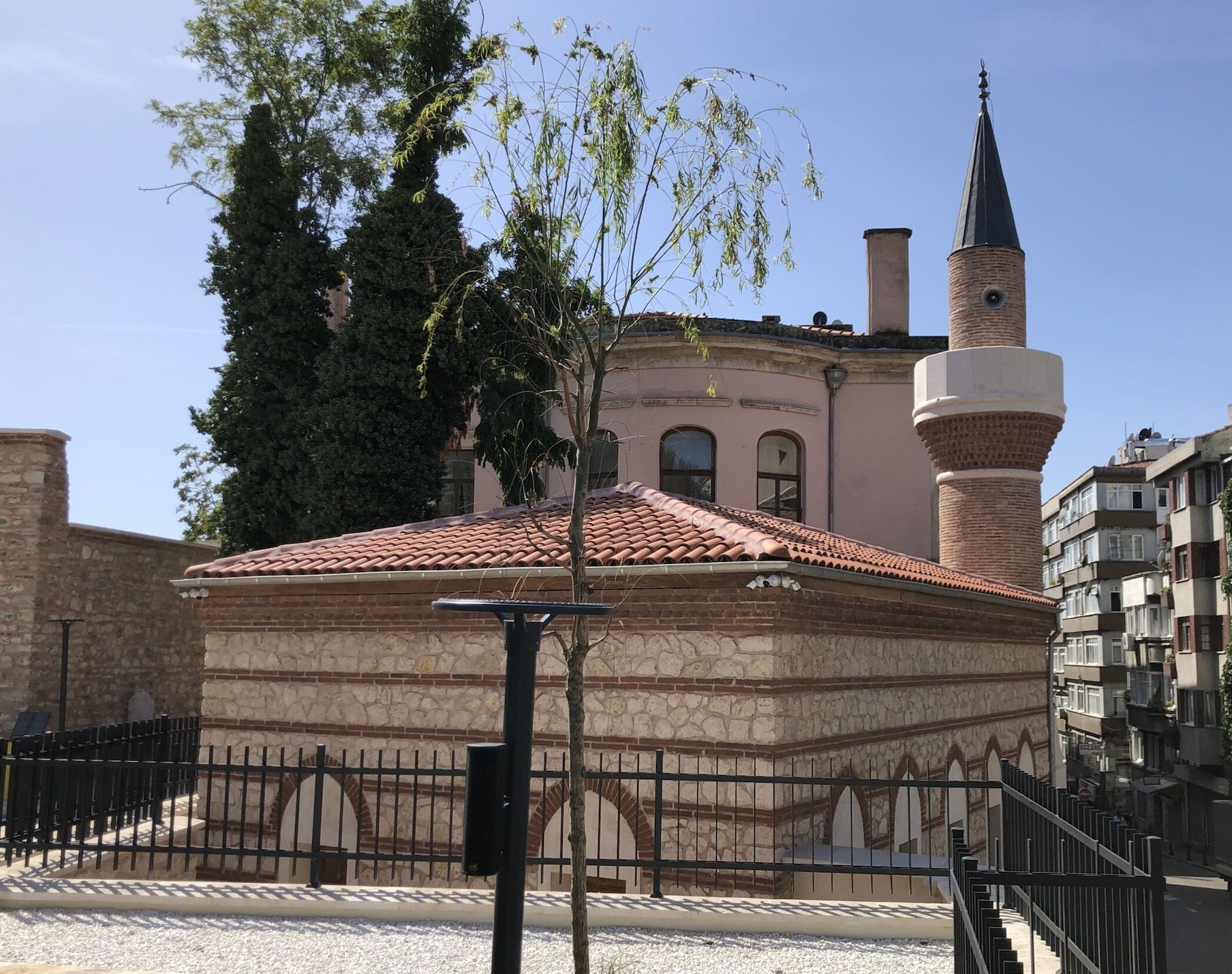
In the works carried out within the scope of İBB Heritage, the mosque was rebuilt on its former site, the restoration of 118 graves in the graveyard and garden was completed, and the structure was reopened for worship in 2022.
Featured Highlights
Haydarhane Mosque is not only a place of worship; with its combination of Sufi Lodge + mosque + graveyard, it is one of the clear examples of the multilayered religious space type formed at the neighborhood scale within the walled city.
The location of the structure is directly related to the historical transportation and street fabric on Horhor Avenue around Saraçhane; this makes the structure an element that turns it into a “neighborhood focus” within the craft/trade line and dense settlement fabric around it.
It is conveyed that in the revival process after the 2020s, a plain atmosphere was aimed for in the interior through material choices such as stone walls and a wooden ceiling; the arrangement in which the graveyard is reached by stairs makes the Sufi Lodge-graveyard relationship legible in space.
The joint handling and restoration of the 118 graves in the graveyard bring Haydarhane to the fore not as a “single structure” but as a space of memory (burial, visitation, neighborhood memory).